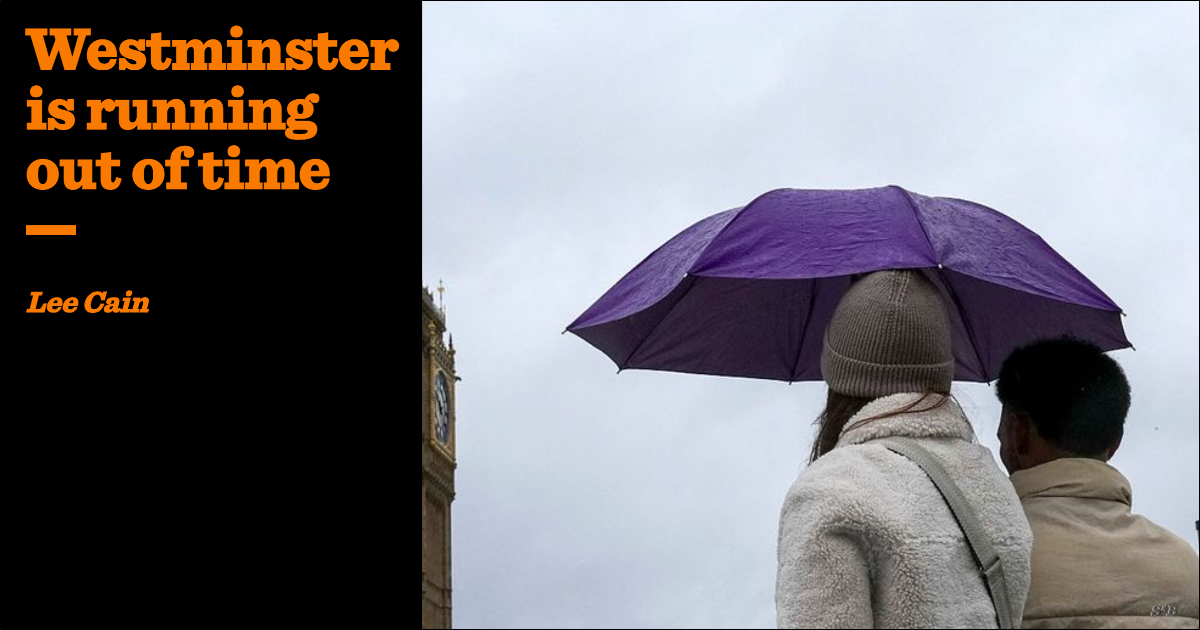
Exhausted voters aren’t angry so much as resigned to a country that no longer works
There is a noticeable vibe shift taking place in Westminster, and it isn’t coming from the usual outsiders. Increasingly, establishment voices are saying something that would have been taboo a few years ago — that the British state is not working.
When governments falter, SW1 obsesses over the wrong things. Do we need a better comms grid? Was the message unclear? Do we need better media handling? Or perhaps “we need some grown up”, in the hope a few new special advisers will somehow fix Britain’s ills. But political failure is rarely about spin or spads. It’s structural, and so after every reshuffle and relaunch the same problems recur, trapping us all in a kind of political Groundhog Day.
So what’s really going wrong? Anyone who has worked at the centre of government will tell you the same thing – they pull levers but nothing happens. Labour believed that the only problem with government was that it was run by Tories, but more and more are concluding that structurally it is a mess and long overdue serious reform. The Cabinet Office has become over-extended and unfocused. The Government Legal Service has accrued far too much influence and power, often slowing or blocking policy decisions that ministers were elected to make behind potential rulings of transnational bodies and a ruinous judicial review system. Recruitment is weak. Talent, especially among politicians, is terminally poor. Incentives across the civil service discourage risk, performance and accountability. The system is optimised to avoid blame, not to deliver results.
None of this makes for exciting headlines. A prime minister who prioritised civil service reform would be attacked for having the wrong priorities — one can imagine journalists asking why they’re tinkering with the apparatus of the state while NHS waiting lists continue to grow — and senior mandarins would brief and leak against them mercilessly to protect a status quo they benefit from. Political capital would be burned for little short-term credit, which matters in tight election cycles.
So leaders take the easier route: they blame the last lot, promise “grown-ups” are back in charge, hire a new set of comms people, recycle hollow slogans to get through the next 24 hours and move from one media crisis to the next without ever changing the things voters actually care about.
Out in the country, voters can see something Westminster refuses to admit — the machine itself is no longer fit for purpose
Over the past few months, I’ve been running focus groups across Britain to test the public mood. What comes through isn’t ideological rage but exhaustion and distrust. People don’t think politics is failing because the messaging is off, they think it’s failing because nothing works anymore (NHS waiting lists are unbearable, crime is out of control, it’s impossible to get on the housing ladder). In policy and personnel, the public simply do not believe we have a political elite capable of delivering on its promises. They are right.
Let’s start with leadership.
Keir Starmer is past the point of no return with his party and the public — he is deeply disliked, even hated by many. The word that dominates every session is “weak”. Even former Labour voters talk about over-promising and under-delivering, and many assume he won’t last longer than the local elections. Once voters start discussing a prime minister as if he has already gone, their authority has already evaporated.
The Conservatives should benefit. Instead, they are barely registering. Inside Westminster there is excitement about the so-called “Kemi bounce”, but it simply doesn’t exist. The party is sitting around 16% in the polls, dismissed and ignored. Kemi rarely comes up organically in discussion because people just don’t consider the Tories a solution to Britain’s problems. When we showed clips where she performed well, interest drained away the moment participants realised she was Conservative.
The verdict wasn’t really about her. It was about the brand. “Still a mess.” “Same lot.” The party label is so damaged it overwhelms the messenger. People aren’t ready to give the party a hearing and are moving elsewhere.
That leaves Nigel Farage. What’s striking is that he isn’t especially loved either. Voters worry he’s too divisive, wonder where his team is, and are concerned that — immigration aside — they don’t know what he stands for in many policy areas. But he is seen as a conviction politician, someone who, for better or worse, means what he says. In a field of leaders perceived as managerial and slippery, authenticity and conviction count.
But Reform’s rise more the result of resignation than enthusiasm. “We’ve tried Labour and the Conservatives. Might as well give him a go” is a typical refrain.
The same pattern repeats on policy. The NHS is described as broken. Taxes feel relentless. Migration numbers shock people when they see the scale, which they still dramatically unestimate. Public services feel stretched. Yet voters don’t primarily blame one party or one press strategy. They talk about a country that seems unable to do basic things competently.
Above all, they trust no one. Politicians are “in it for themselves”, and they see communications as “spin”. Westminster’s response is often to blame voters as misinformed, duped by social media, or voting against their interests. That’s comforting, but also wrong.
People aren’t confused, they’re rationally responding to years of visible failure. Trust is low because politicians aren’t delivering for them and, in many cases, take them for fools. For example, for more than a decade, voters have consistently backed lower immigration. In that time, governments have promised control while net migration reached record highs. Is it any wonder trust has collapsed?
Until someone tackles the dull, structural problems at the heart of the British state that will allow governments to deliver on their promises when in power, we will keep cycling through leaders and manifestos that pledge change but fail. May, Boris, Truss, Sunak, and now Starmer — the faces change, the system doesn’t, and the outcomes barely shift.
We don’t just need a new prime minister or a sharper grid. We need a government willing to spend political capital fixing how the country is actually run. Because if voters don’t start seeing results, they will keep searching for someone, anyone, who might deliver them. And the further establishment politics fails, the more extreme the alternatives become.