
WEIGHT loss jabs are not an acceptable solution to obesity in Britain, says Professor Chris Whitty.
England’s Chief Medical Officer said blockbuster injections like Mounjaro and Wegovy are not a quick fix and warned: “There’s a lot we don’t know about them.”

Two out of every three adults in the UK are overweight, including 30 per cent who are obese.
Health Secretary Wes Streeting has hailed weight loss injections, known as GLP-1 agonists, as a “game-changer” in the battle against the bulge.
He is pressing the NHS to roll them out faster and has offered GPs thousands in extra cash to prescribe them to more patients.
Former medical director at NHS England, Prof Sir Stephen Powis, predicted they could one day be dished out like statins, the most used drugs in Britain.

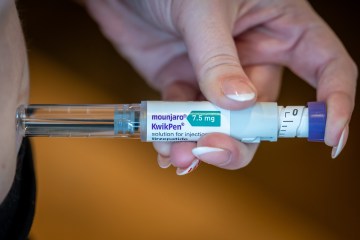
But Professor Whitty said the nation must not use them to dodge difficult choices.
Speaking in London on Thursday night, Sir Chris said: “I am really worried about obesity.
“It drives multiple diseases including several cancers, cardiovascular disease and diabetes.
“Making sure that obesity doesn’t happen in the first place is overwhelmingly better than allowing rates to go up in children and young adults and then sticking them on GLP-1 agonists at the age of 18.
“I think it is shocking if that is where we end up.
“I do not think relying on drugs to get us out of this hole is an acceptable answer.
“They are very good drugs but there’s a lot we don’t know about GLP-1s.
“Very small numbers of people have very bad reactions to them and a large number of people have unpleasant side effects.
“For people who need them they are transformational, and some people will always need them, but it should be a small minority.
“If it’s a high proportion of people then I think that is a societal failure.
“Relying on these drugs seems to me to be the wrong answer.”
The top doctor said the best step would be tackling obesity in children to help them grow up with healthy habits.
He wants less junk food advertising and fewer takeaways on the high streets.
Campaigners also want fat, salt and sugar in everyday foods to be reduced.
Sonia Pombo, from campaign group Action on Salt & Sugar, added: “If the Government is serious about improving the nation’s health it must address the root causes.”
Everything you need to know about fat jabs
Weight loss jabs are all the rage as studies and patient stories reveal they help people shed flab at almost unbelievable rates, as well as appearing to reduce the risk of serious diseases.
Wegovy – a modified version of type 2 diabetes drug Ozempic – and Mounjaro are the leading weight loss injections used in the UK.
Wegovy, real name semaglutide, has been used on the NHS for years while Mounjaro (tirzepatide) is a newer and more powerful addition to the market.
Mounjaro accounts for most private prescriptions for weight loss.
How do they work?
The jabs work by suppressing your appetite, making you eat less so your body burns fat for energy instead and you lose weight.
They do this my mimicking a hormone called GLP-1, which signals to the brain when the stomach is full, so the drugs are officially called GLP-1 receptor agonists.
They slow down digestion and increase insulin production, lowering blood sugar, which is why they were first developed to treat type 2 diabetes in which patients’ sugar levels are too high.
Can I get them?
NHS prescriptions of Wegovy is controlled through specialist weight loss clinics, while Mounjaro is available from GPs but only for the highest risk patients.
For Wegovy, a patient will typically have to have a body mass index (BMI) of 30 or higher, classifying them as medically obese, and also have a weight-related health condition such as high blood pressure. They will be expected to have tried diet and exercise already.
Mounjaro is available from NHS GPs for weight loss but only to a tiny group of patients, with the rollout starting with those with a BMI higher than 40 and with four weight-related health conditions.
Private prescribers offer the jabs, most commonly Mounjaro, to anyone who is obese (BMI of 30+) or overweight (BMI 25-30) with a weight-related health risk.
Private pharmacies have been rapped for handing them out too easily and video calls or face-to-face appointments are now mandatory to check a patient is being truthful about their size and health.
Are there any risks?
Yes – side effects are common but most are relatively mild.
Around half of people taking the drug experience gut issues, including sickness, bloating, acid reflux, constipation and diarrhoea.
Dr Sarah Jarvis, GP and clinical consultant at patient.info, said: “One of the more uncommon side effects is severe acute pancreatitis, which is extremely painful and happens to one in 500 people.”
Other uncommon side effects include altered taste, kidney problems, allergic reactions, gallbladder problems and hypoglycemia.
Evidence has so far been inconclusive about whether the injections are damaging to patients’ mental health.