After the appalling attack on Heaton Park Synagogue on Thursday, British politicians were quick to issue messages of support to the Jewish community. Prime Minister Keir Starmer told British Jews: “on behalf of our country, I express my solidarity, but also my sadness.” Home Secretary Shabana Mahmood echoed his words, saying “My prayers are with the victims and the families of all those who were murdered here today.” Leader of the opposition Kemi Badenoch told the country: “my heart goes out to all those hurt and affected.”
Our political leaders also made clear that they condemn this terrible incident, and the antisemitism that we assume was the motivation behind it. Some politicians went further, blaming the attack on the aggressively antisemitic pro Palestine marches that have been allowed unchecked in many of our city centres since October 7th 2023, protests that have made British Jews feel increasingly unsafe. Reform UK leader Nigel Farage accused the Prime Minister of “emboldening” these “hate marches” through his decision to recognise Palestine as a state.
The messages of support and condemnation can be summed up as “this must not happen again”. This is a heart-warming sentiment, but it will be of precious little comfort to Britain’s terrified Jewish community unless accompanied by a proper understanding of the causes of rising antisemitism and a robust plan to tackle it. So far, too few of our political leaders have dared to speak about the role of Islam in growing expressions of Jew-hatred both in this country and across the West.
I want to be clear; I am not accusing all Muslims of being antisemitic. The vast majority of Muslims would never carry out any kind of attack on their Jewish neighbours or wish them any harm. It is also the case that many of the examples of antisemitism we have witnessed in the last two years have been committed by non-Muslims — for example the hounding of Jewish students in our universities. The conflict between Israel and Hamas has awakened a latent antisemitism among the progressive Left, who seem intellectually incapable — or perhaps unwilling — to make the distinction between legitimate criticism of Israeli government policy and the demonisation and persecution of Jewish people. Middle aged, middle class pro-Palestine activists have become the “useful idiots” for a hardened group of radical Islamists, giving political credibility to a cause that most definitely does not share their progressive views when it comes to issues such as the rights of women, abortion or LGBT equality. Whatever the ethnicity or religion of those targeting British Jews, they should be condemned.
Yet Islamic antisemitism presents us with a unique challenge, one we must not be afraid to confront. Polling conducted last year by JL Partners on behalf of the Henry Jackson Society showed that British Muslims have markedly different views on these issues than the general public. Less than a quarter of British Muslims believe that Hamas committed rape and murder in Israel on October 7th, 2023. Over a half of young British Muslims sympathise with Hamas — the proscribed terrorist organization — more than with Israel. Nearly half of British Muslims think that Jews have “too much power” over UK government policy, compared to just 16 per cent of the general population.
The uncomfortable truth is that Islam itself has antisemitic teachings
How can these different attitudes be explained? Is it simply that British Muslims empathise more closely with Palestinian Muslims who, whether or not you believe Israel’s war in Gaza is a just one, are suffering terribly? Perhaps, but this does not explain why British Jews, who have no influence over Netanyahu’s war, would be targets of attack. Besides, the truth is that antisemitic views among British Muslims date back considerably further than the events of the last two years. In 2006, the Pew Global Attitudes Project found that only 32 per cent of British Muslims view Jewish people in a positive way, compared to 74 per cent in the general population. A report by the Institute for Jewish Policy Research in 2017 found that 10 per cent of religious Muslims say the Holocaust is a myth and 18 per cent that it has been exaggerated.
The uncomfortable truth is that Islam itself has antisemitic teachings. There are many references in the Quran to the Jews as a “cursed” people. Mohammed is believed to have authorised the massacre of at least 600 Jews after the siege of Banu Qurayza in 627 AD. One of the Hadiths — sacred Muslim texts containing the words of Mohammed — quotes the Prophet saying:
“The Hour will not be established until you fight with the Jews, and the stone behind which a Jew will be hiding will say. ‘O Muslim! There is a Jew hiding behind me, so kill him.’” (Sahih Bukhari 4:52:177)
Some scholars believe that this and other verses excuse — or even explicitly call for — the killing of Jews.
Many Muslims are not even aware of such teachings, just as many people who call themselves Christians do not attempt to follow all the teachings of the Bible. But nevertheless, if Islam is itself so vulnerable to anti-semitic interpretations, it is reasonable to expect that at least some of its followers will take it seriously and act on what they perceive to be its commands. Indeed, the evidence bears this out, with numerous recent antisemitic attacks carried out by Islamists. Just last year an Orthodox Jewish man was stabbed in Zurich by a teenager shouting “Allahu Akbar,” and a French synagogue was set on fire by an Algerian Islamist. And of course the October 7th atrocities in Israel were carried out by many of the Hamas terrorists in the name of Allah.
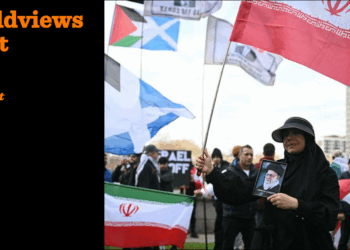
Many of those taking part in the UK ‘hate marches’ have been Muslims, with regular cries of “Globalize the intifada!” and “Jihad”. At one event, members of the extremist Islamist group Hizb ut-Tahrir bore a banner with the slogan “Muslim Armies! Rescue the people of Palestine”. Of course, the majority of British Muslims would not dream of chanting such slogans, but a minority would, and that minority is dangerous and growing.
Over the last decade there has been a 43 per cent increase in the number of Muslims in the UK, so there’s no point pretending that this problem is going to go away. Of course, encouraging more assimilation may be part of the solution — research shows that Muslims who are well-integrated to British society are less likely to hold antisemitic views than those who are not. But anyone who thinks this will solve the problem doesn’t understand religion.
We are all motivated by our beliefs, whether or not those beliefs are religious. But for those with a devout conviction that there is life after death, and that their fate in the next life depends on their actions in this one, threats of legal repercussions including prison or even death will not deter them from obedience to their faith. Of course this does not only apply to Muslims. All around the world, Christians are being persecuted (mostly in Muslim countries) but refuse to renounce their religion because the Bible promises eternal life to those who publicly confess their faith in Jesus.
Even in this country, Christians are willing to flout the law if it diverges from what they believe the Bible instructs them to do. For example, just last month, 75-year-old Rose Docherty was arrested in Scotland for standing outside an abortion clinic while holding a sign that read: “Coercion is a crime, here to talk, only if you want.” Earlier this year, a Christian teacher was sacked after refusing to call an eight-year-old girl by male pronouns. Fortunately in Britain, these are rare examples because British law is founded on Biblical law, which means that for Christians — and Jews — there is presently little contention between their faith and the British statute.
But this is not the case for Muslims, for whom in some cases the teachings of their religion conflict directly with British custom. More than half of British Muslims want to make it illegal to show a picture of the Prophet Mohammed. 65 per cent believe Eid should be a national holiday in the UK. 32 per cent of British Muslims believe it would be desirable to implement Shariah Law in this country and 21 per cent want polygamy to be legalised.
Political leaders must ditch the platitudes and start a serious conversation about Islam
It is dishonest to pretend that the teachings of the Quran, in their most fundamental interpretation, are compatible with British law. That is not to say that individual Muslims can’t integrate fully into British society; they very obviously can. Neither should we presume that any more than a tiny minority of British Muslims will ever break the law or commit acts of violence and terrorism. But we are deluding ourselves if we think that education, or “kinder politics” or more “diversity” can end antisemitic attitudes in the Muslim community.
If we are to have any hope of solving this problem — perhaps through immigration restrictions, crackdowns on hate-preaching in mosques, a ban on cousin marriage and higher requirements for integration — then we must first be able to speak openly about the tension between Islamic teaching and British law. Grand statements about unity, tolerance, and kindness will neither prevent another attack on Britain’s Jews nor preserve the unique and precious foundational freedoms of British culture. Political leaders must ditch the platitudes and start a serious conversation about Islam.