After a year when Tesla was never far from the headlines – whether that was due to lower than expected sales or owners plastering ‘I bought this before Elon went crazy’ stickers on their electric cars – 2026 marks a fresh 12-month period in which the embattled EV maker can do some serious brand rehabilitation.
Enter the Tesla Model Y Standard – the new cut-price version of its best-selling Model Y SUV designed to coax EV enthusiasts into Tesla ownership, no matter their opinion of a certain Mr Musk.
It finally delivers on Elon’s half-a-decade-old promise that a more affordable Tesla would emerge to cater for cost-conscious buyers – though at £41,990 it isn’t what you’d exactly call ‘cheap’.
The SUV arrives after Tesla announced its Master Plan IV in September – a move towards ‘sustainable abundance’ and becoming an energy retailer – and where car, energy, insurance, personal chauffeur are all available on Tesla.com.
Unveiled in early December, the electric SUV marks the new entry-point in the Model Y range without compromising on all things that makes a Tesla a Tesla: tech, range, efficiency, minimalist interior and practicality.
With a £7,000 saving on the normal Model Y, is the Standard tempting enough to help turn around the car maker’s fortunes? Motoring reporter Freda Lewis-Stempel drove it in the Cotswolds to find out…
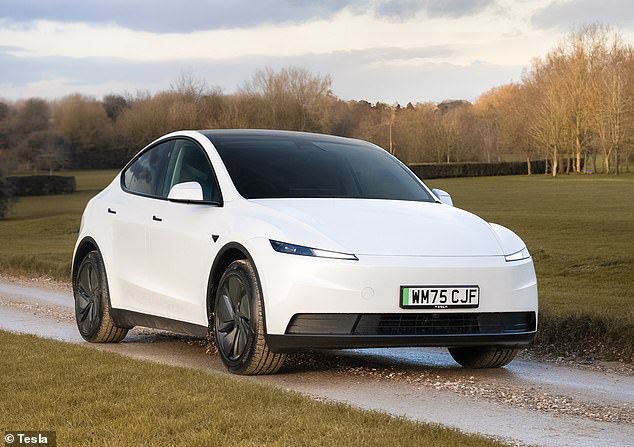
Tesla’s new Model Y Standard reduces the upfront cost of owning a Model Y by £7,000. It is part of Tesla’s new direction which will see the brand lean into being an energy provider, and offer customers more affordable cars. But what did we think of it when we got behind the wheel?
What are the noticeable differences with the Model Y Standard?
Not many, in all honestly. And that alone is an impressive feat.
At no point during my test drive did I think this is a noticeably downgraded car, insider or out.
To the untrained eye, the discernible exterior changes are the headlights and rear lights; the full-width front and rear light bars from the 2025 Model Y have been replaced by slinky – and cheaper to manufacture – individual light clusters.
The panoramic roof hasn’t been replaced – but it is no longer visible. It is still there (because of the structural strength of the glass) but there is a fabric roof inside now, concealing it from view.
Apart from these small changes, the Model Y Standard does, as Tesla promises, retain ‘all the features customers love’.
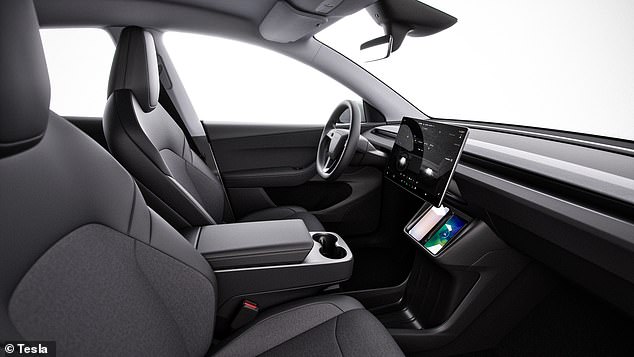
Inside the Standard changes are minimal: the panoramic roof has gone and the interior faux leather has been replaced with cloth. But you gain a centre console and have all the same tech
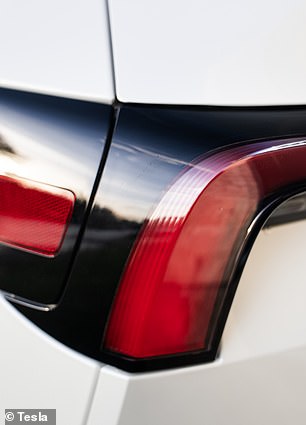
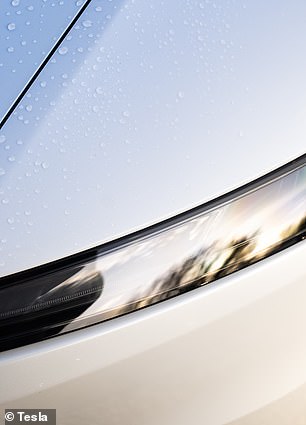
Exterior tweaks to the Model Y Standard are very minimal with only the headlights and a body panel or two changed
Inside, you get the same 15.4-inch touchscreen, the same practicality – a 835-litre boot which increases to 2,118 litres with the rear seats folded – and even an extra centre console-style storage facility in the front.
The key interior difference is the new textile and vegan leather seats, rather than the full vegan leather of the conventional Model Y.
That made little difference to the feel of the car, in my opinion.
Really, there’s not much room for grumbling that Tesla has cut corners to slash pricing – everything Model Y you want is still there.
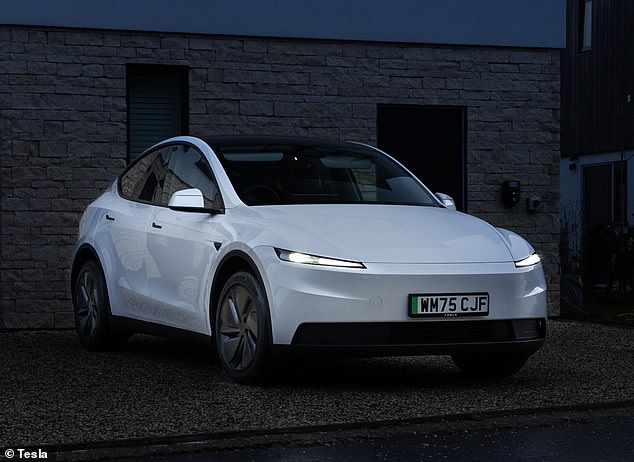
Tesla has lowered the cost of ownership long term by making tweaks to the Standard that means it falls into a lower insurance group (34). It also has better residual value and is more efficient reducing running costs
How the Model Y Standard has lower ownership costs long term
Say what you want about the Musk’s politics, but when it comes to making product decisions, Elon and his most trusted Tesla top bods make some astute decisions.
This is seen in the calculated calls that have enabled the Model Y Standard to not just be cheaper upfront but offer buyers lower long term ownership costs.
After all, what’s the use in a car that’s a few grand less to buy if it then costs you an arm and a leg to actually own?
To make sure this isn’t the case Tesla has made a number of impactful choices with the Standard.
Firstly, its brought the insurance group down so that it achieves the lowest rating of any Tesla ever.
This has been achieved by reducing the top speed to 110mph (it is either 125mph or 155mph for other Model Y variants) and the 0-to-60mph acceleration to 6.9 seconds (it can be as fast as 3.3 seconds for the Performance Model Y).
As a result, the Model Y Standard sits in Group 34 insurance.
The normal Tesla Model Y typically is one of the most expensive EVs to insure, and sits in the high 40s insurance groups or even the top bracket 50 categories.
So, while the Standard isn’t the most affordable EV to insure still, the saving will make a difference: Compare the Market found that 42 per cent of drivers who received their renewal between September and November 2025 saw their price rise by £72 on average.
Secondly, Tesla has made this its most efficient EV yet, able to eek out 4.5 miles per kWh and a range of 314 miles.
This means drivers will be able to cover more miles per pound sterling of charging.
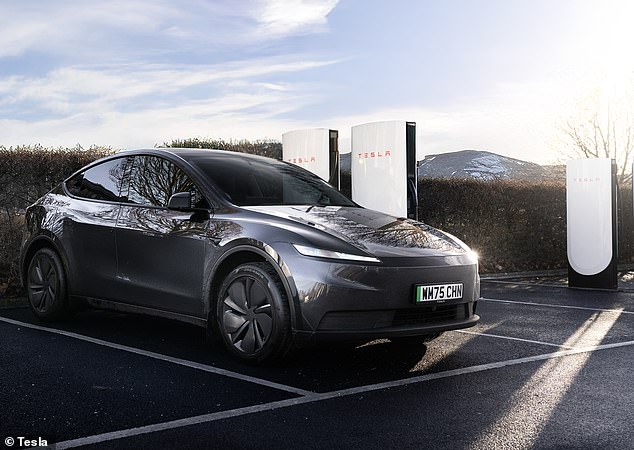
The Model Y Standard achieves the lowest insurance group rating of any Tesla ever – group 34. This has been achieved by reducing the top speed to 110mph and the 0-60 acceleration to 6.9 seconds
Thirdly, the US maker’s mantra ‘the best service is not service’ is another way it has kept long term costs low.
With Tesla there is no annual servicing requirements as the company doesn’t believe this is an area for profit.
You could be saving hundreds of pounds annually without servicing requirements.
Fourthly, PCP offers are low for the new Model Y Standard, with Tesla offering a £299 a month lease option (T&Cs apply).
This makes it surprisingly affordable to monthly budget for Tesla ownership.
And finally (as you can see Tesla has approached affordability from all angles), the Standard has enhanced residual values as UK market preferences have been considered fully for the first time, with options such as 19-inch Crossflow wheels picked to make sure the Standard resell at higher values.
It also keeps lease prices down.
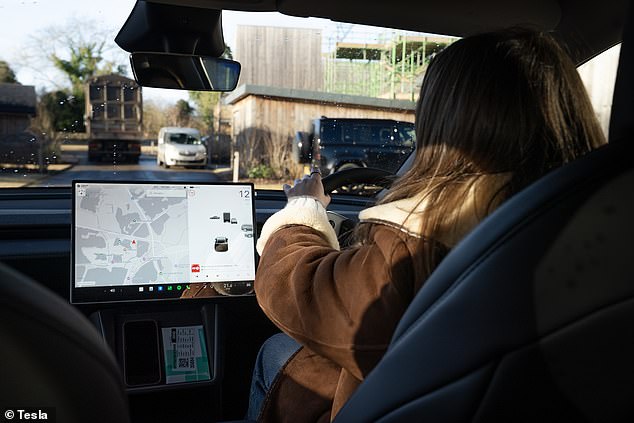
The Tesla Model Y Standard is slower than the Model Y but its 0-60mph is still 6.9 seconds and it has a top speed of 110mph and it delivers this acceleration smoothly – you get that instant acceleration feel you expect from Tesla still
What is the Model Y Standard like to drive?
For most people there probably won’t be enough difference between driving the Model Y Standard and the Model Y Premium Long Range Rear-Wheel Drive (£48,990) to not capitalise on the savings to be made.
It still drove like you’d expect a Tesla to drive: the acceleration retains the instant smoothness, even if it isn’t so throw-you-back-in-your-seat fast; the regenerative braking/one-pedal drive is one of the best systems out there; and the Standard feels like it is suctioned to the road in that way Teslas always have.
However, while the Standard’s 19-inch wheels did a good job of absorbing the road surface (which was to be fair particularly bad in the Cotswolds during peak winter), the passive rather than active dampers meant the ride was more jarring over uneven surfaces than I would have liked, and I imagine it would have been worse for a passenger in the back.
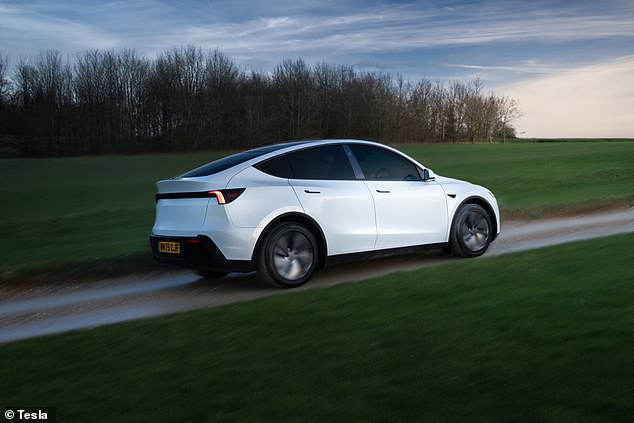
The Standard has a range of 314mph and is Tesla’s most efficient model yet managing 4.5 miles per kWh on paper
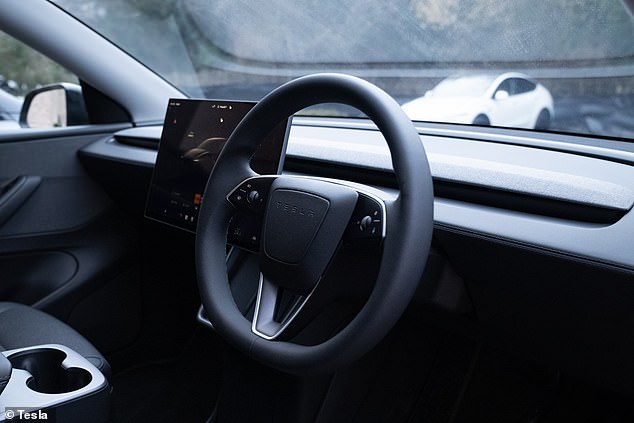
The Tesla steering wheel I find uncomfortable to grip due to its two-thirds design (the top third of the wheel is a lot shorter than the bottom third) which means your hand placement is very high up
The steering weight is very heavy – a bit like trying to turn a spoon through treacle.
I rather enjoy heavy steering but some people might not.
However, the Tesla steering wheel I find uncomfortable to grip due to its two-thirds design (the top third of the wheel is a lot shorter than the bottom third) which means your hand placement is very high up.
Seat comfort though is excellent, and noise cancelling is good – and the car glides down motorways.
The lack of panoramic roof however takes away the full enjoyment of the light, open, silent EV experience that Tesla first brought about. But savings had to be made somewhere.
It’s important to note that more controls than ever are now in the screen, even including the seat adjustments, which might drive some non-techy people mad.
The range is more than enough for motorists with a multitude of different lifestyles, and there’s that 4.5 miles per kWh to fall back on, as well as the Supercharger network which is on average still around 60 per cent cheaper than other ultra-rapid chargers and can add up to 162 miles in 15 minutes.
The Tesla navigation system has few, if any, faults and the rest of the infotainment screen is market-leading.
It also hardly bonged any warnings at me which was frankly a welcome change from the (unnamed) car I’d been driving before.
When does it go on sale?
Order books for the £41,990 Model Y Standard are open now, with first deliveries arriving in February.
So, if you want one, it’s yours to snap up now.
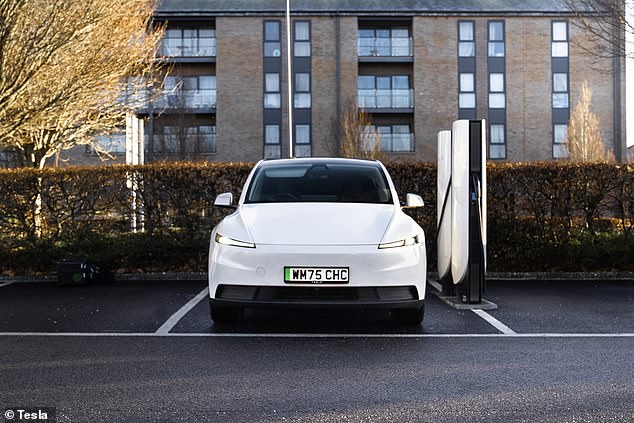
The Supercharger network is on average around 60% cheaper than other ultra-rapid chargers and can add up to 162 miles in 15 minutes to the Standard
Cars and Motoring Verdict: Is the Model Y Standard enough of a step in the right direction for Tesla?
Overall, I’m impressed with how Tesla have managed to keep the Y’s inherent ‘Y-ness’ in the Standard despite chopping £7,000 off the price.
And how Tesla has thought about the customer’s savings over their ownership lifetime with the car is something to be saluted.
It helps to make up for it not being around the ‘$25k’ price point – which would translate to £18,500 – Elon Musk promised his cheaper cars would come in at back in 2020.
Bigger picture, though: even if a lot of people notice there’s a cheaper, different looking Tesla Model Y on the roads, will enough realise that the savings to be made on the Standard aren’t just in upfront cash but continue as you owe the car?
Because that’s the biggest reason to buy this Tesla.
We will have to wait and see if the Model Y Standard tempts people to place orders.
But it’s definitely a well-thought out product offering an appealing entry-point into the Model Y range – and electric family SUV life too, for that matter.