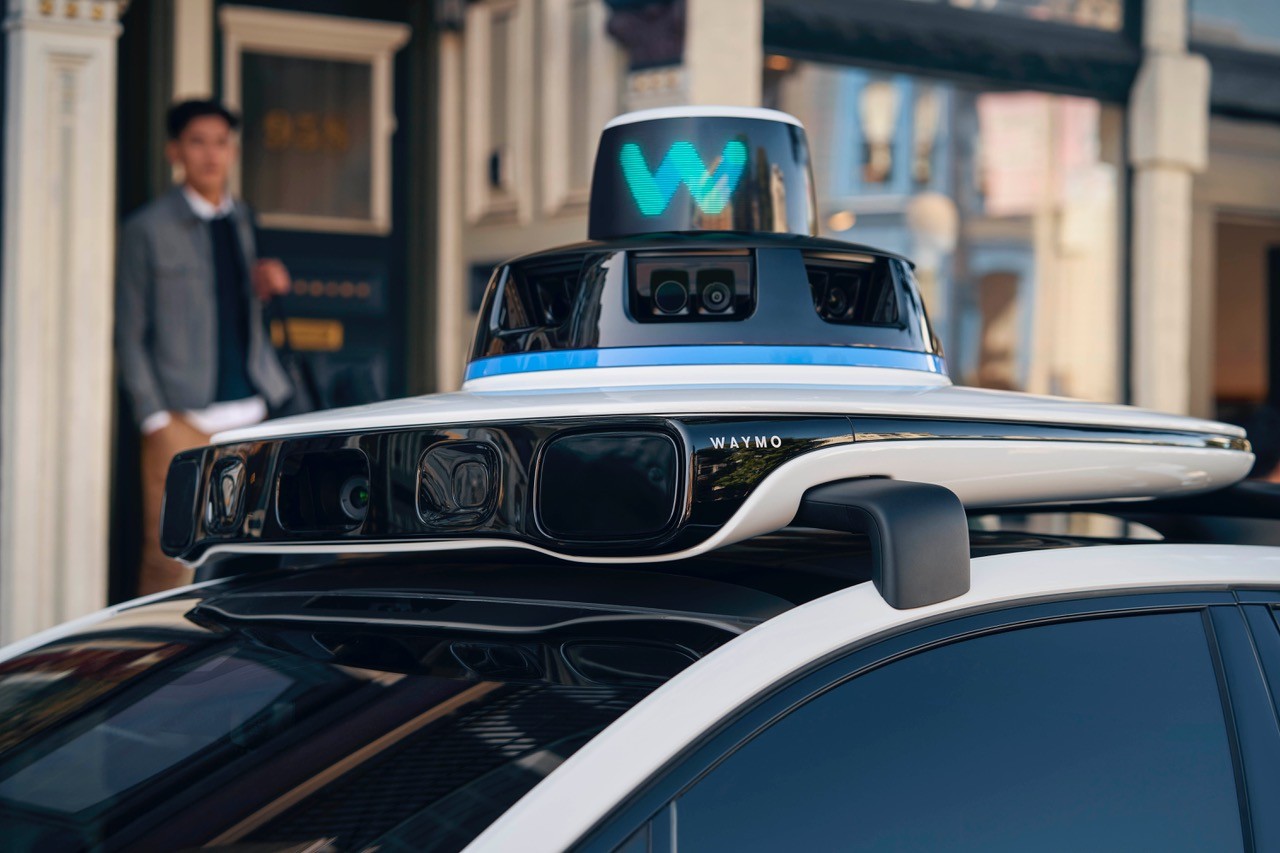
THIS is the moment a driverless taxi was spotted on London’s streets.
Members of the public have seen the Waymo AI cabs around the capital since its pilot scheme was launched earlier this year.
Waymo taxis are currently in a testing and mapping phase with human safety drivers present, and are not yet offering commercial, driverless rides.
The cabs are driving through London’s streets as part of a new government-backed scheme with the US company looking to speed up the deployment of driverless tech in Britain.
Using custom-fitted all-electric Jaguar I-PACE SUVs, the vehicles feature an array of 360-degree sensors to safely carry out journeys autonomously.
The trial aims to have fare-paying passengers in the driverless cabs by late 2026.

Waymo, which already operates driverless taxi services across six US states and has recently expanded into Japan, is one of the early participants.
The service – which is owned by Google parent Alphabet – has driven some 173million fully autonomous miles on public roads across the pond already.
Uber, perhaps a more household name in the UK, is expected to join the same scheme in spring, pairing up with mapping company Wayve for its own driverless fleet.
Under the scheme, both Waymo and Uber will be able to run this technology ahead of the point at which privately owned driverless cars are expected to become legal on UK roads.
In a clip shared to Twitter, a London resident gave his take on the self-driving taxis after following behind the vehicle.
He noticed that unlike human drivers who can be in a rush and sometimes go over the speed limit, the Waymo taxi never did.
He said: “I immediately noticed how many drivers are impatient and aggressive when sitting behind a vehicle that is programmed to abide by the speed limit.
“Imagine how safe all roads would be if all cars were fitted with speed limiters that recognise and adhere to the speed limit.”
But not everyone was as excited to see these cars cruising down the road.
One comment on the post read: “Thousands of low paid jobs at risk with these things. We don’t have the type of economy anymore to afford these.”