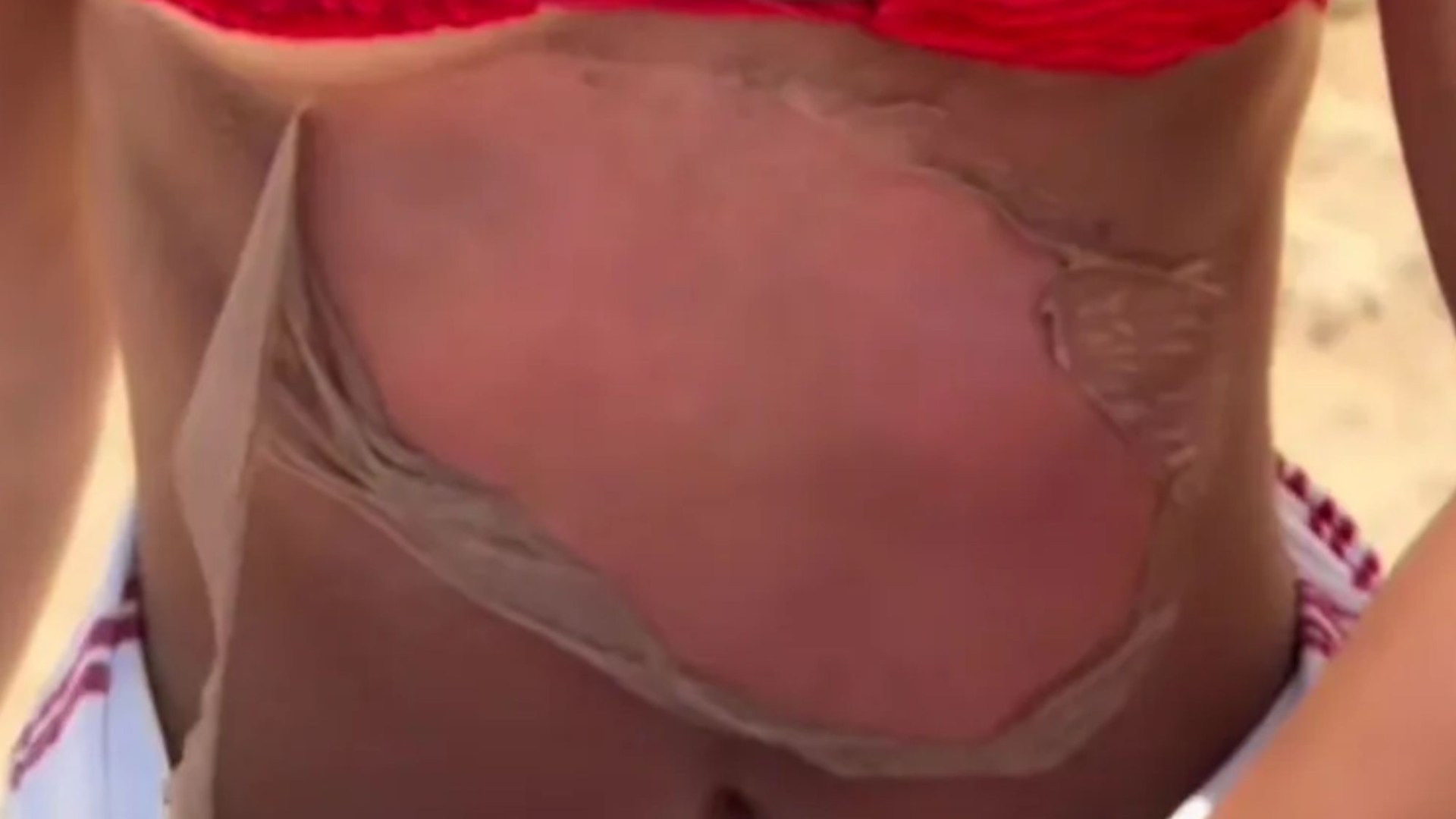
A YOUNG woman has left people horrified after sharing a gut-churning video of herself peeling off her sunburnt skin.
It’s something that’s happened to all of us at least once in our lifetime – you doze off on the beach and wake up looking like a lobster.
But while many of us have fall victim to a painful sunburn, it’s pretty safe to say it’s never been as bad as it was for Cameron Khadi.
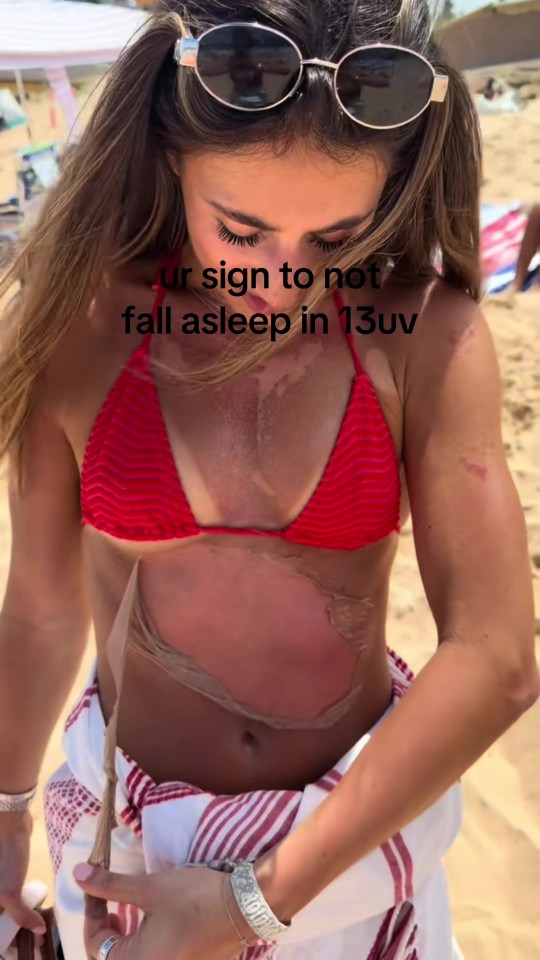
The aspiring law student recently went viral on social media after falling asleep in the Aussie sun and waking up to horrific aftermath on her stomach later.
According to Cameron, who has since warned others not to make the same crucial error, she wasn’t wearing SPF that day – and unfortunately, learnt her lesson the hard way.
As well as preventing premature ageing, sun cream is a critical tool for preventing sunburn, which directly contributes to the prevention of skin cancer – which is of the most common cancers in the UK.

Melanoma is the deadliest form of skin cancer and affects around 18,000 Brits per year, causing 2,300 deaths.
However, it is also one of the most preventable cancers, with 86 per cent of cases in the UK avoidable.
Celebs including Katherine Ryan, Khloe Kardashian, Gordon Ramsay and Danielle Lloyd have all had skin cancer.
The best way to protect yourself from melanoma is to stay sun safe – wear SPF every day, even on days it’s not sunny, wear a hat and sunnies and keep out of the sun in the hottest hours.
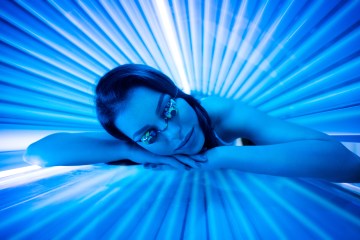
It is also strongly advised to avoid sunbeds which have already been banned across Australia and Brazil.
People who are fair-skinned, have blue or green eyes, blonde or red hair and a large number of freckles or moles are more likely to get skin cancer.
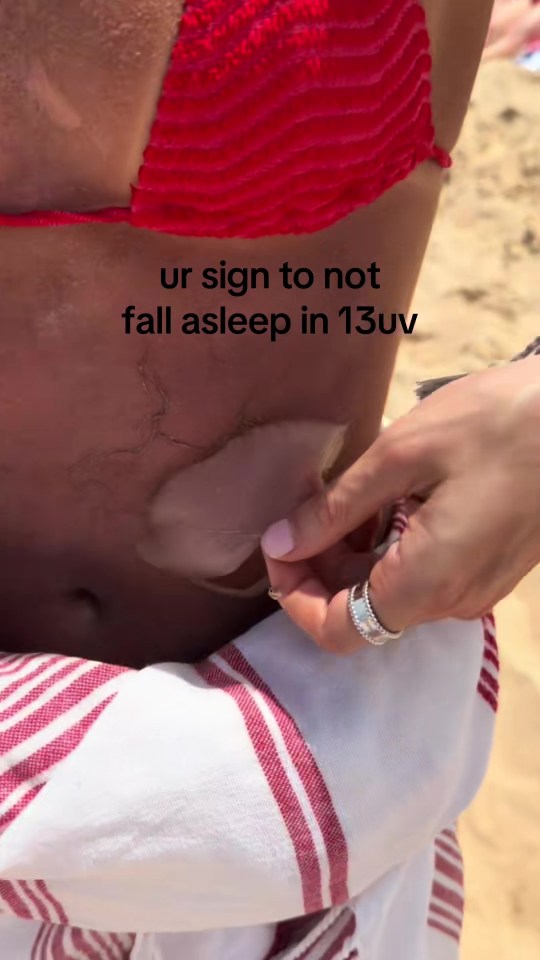
Uploading the nauseating footage on her page, Cameron said: ”Ur [your] sign to not fall asleep in 13 UV.
“Aussie sun is no joke… wear spf,” the beach lover continued in the caption.
The now-viral video, which has racked up more than an astronomical 35million views in just two days, sees Cameron slowly peeling a huge chunk of her burnt skin.
The fitness lover, who was sporting a red bikini, was so severely sunburnt, her skin was all patchy across her chest, as well as stomach area.
The damaged skin, which as as thin as paper, came off with ease – and shockingly, the process was pain-free.
“It did not hurt. Probably burnt off all my nerves though,” Cameron replied to a concerned viewer.
What is melanoma, what are the symptoms and how can you prevent it?
Melanoma is the most serious type of skin cancer that has a tendency to spread around the body.
It is diagnosed 16,000 times per year, and tragically takes the lives of 2,340 people per year.
The number of people being diagnosed with melanoma is increasing, and it is the 5th most common cancer in the UK.
But it is also one of the most preventable cancers, with 86 per cent of cases in the UK avoidable.
The best way to protect yourself from melanoma is to be sun safe – wear SPF every day, wear a hat and sunglasses and keep out of the sun in the hottest hours. It is also advised to avoid sunbeds.
People who are fair-skinned, have blue or green eyes, blonde or red hair and a large number of freckles or moles are more likely to get skin cancer.
Surgery is the main treatment for melanoma, particularly if it is found early. This will involve removing the affected tissue in the skin.
Radiotherapy, medicines and chemotherapy are also sometimes used to try and stop the cancer from growing. Treatment depends on the severity of the disease.
What are the symptoms?
The key thing to look out for are changes to an existing mole, or a new mole on your skin.
Most experts recommend using the simple “ABCDE” rule to look for symptoms of melanoma skin cancer, which can appear anywhere on the body.
There are five letters/words to remember:
- Asymmetrical – melanomas usually have two very different halves and are an irregular shape
- Border – melanomas usually have a notched or ragged border
- Colours – melanomas will usually be a mix of two or more colours
- Diameter – most melanomas are usually larger than 6mm in diameter
- Enlargement or elevation – a mole that changes size over time is more likely to be a melanoma
A mole that changes size, shape or colour may be a melanoma.
But other signs to look out for include moles that are:
- Swollen and sore
- Bleeding
- Itchy
- Crusty
How deadly is it?
Melanoma is a deadly form of skin cancer.
The outlook of a person’s disease depends on the stage of the cancer when it was diagnosed.
Survival is better for women than it is for men.
“We don’t know exactly why this is. It may be because women are more likely to see a doctor about their melanoma at an earlier stage,” says Cancer Research UK.
The charity says that generally, statistics show that in England, more than 85 out of every 100 people (more than 85 per cent) will survive their melanoma for 10 years or more after they are diagnosed.
- Around 100 per cent in England diagnosed with melanoma at stage 1 – when the cancer cells are only in the top layer of skin – will survive for five years or more after diagnosis.This drops to 80 per cent for stage 2.
- Some 70 per cent live for a further five years when they are diagnosed in stage 3, which is when the cancer has started to spread to nearby lymph nodes.
- At stage 4, when the melanoma has spread elsewhere in the body, almost 30 per cent survive their cancer for 5 years or more.
Cancer Research says the stage 4 data does not account for age differences. Age can affect outlook and younger people have a better prognosis than older people.
Age can affect outlook and younger people have a better prognosis than older people.
What is melanoma?
Melanocytes are cells in the skin that give us the colour of our skin because they produce a pigment, known as melanin.
When you sit in the sun, melanocytes produce more pigment (a sun tan), which spreads to other skin cells to protect them from the sun’s rays.
But melanocytes are also where cancer starts.
Too much UV causes sunburn, and this is a sign of damage to the skin’s DNA.
The UV triggers changes in the melanocytes, which makes the genetic material become faulty and cause abnormal cell growth.
People who burn easily are more at risk of skin cancer because their cells do not produce as much pigment to protect their skin.
Those with albinism are at the most risk because their skin produces no pigment at all.
When skin begins to peel, it is a sign the body is trying to rid itself of damaged cells. You can use many of the same techniques that apply to a non-peeling sunburn to get some relief, experts told Skin Cancer.
Dr. Curcio says that getting out of the sun and treating a sunburn as soon as you notice it is the first step for healing sun-burned skin.
“To relieve pain, you can take cold showers or baths and take ibuprofen or aspirin,” she advised.
“Also, the best thing to do is moisturise the area with an aloe-vera or soy-based product. Moisturising will help soothe sunburned skin, but be careful to avoid petroleum-based or other oil-based creams.
“These may trap heat and make your sunburn even worse. In addition, don’t forget to drink extra water to prevent dehydration.”
It may be tempting to try to exfoliate a peeling sunburn in an attempt to remove the dead skin, but the expert warned that this isn’t a good idea.
“Do not pull off your peeling skin, and avoid active exfoliation,” she urged.
“Instead, allow it to slough off your body on its own. Peeling usually stops when the burn has healed — about seven days for mild to moderate burns.”
Since being posted on the platform, the video has gone viral, with thousands of social media users flocking to comments in sheer horror.
“Please remember skin cancer exist and it’s very real,” said one person.
“Guys be careful, skin cancer does not play,, had to get multiple moles and such removed and checked, worst pain ever,” someone shared their experience.
“Make sure you get yearly skin cancer screenings. Especially if you’ve had multiple blistering sunburns. And please. Use sunscreen,” another wrote.