The words of a favorite children’s book come to mind as I look out the window. The line is uttered by a little mouse upon entering the winter cave of a hibernating bear: too damp, too dank, too dark.
Welcome to the doldrums of winter.
Yes, winter does bring some jubilant moments. There are the festivities of the holidays, celebrations, and delicious food. The season culminates with the masses bundling up and waiting for the ball to drop at midnight. A new year has come!
Why We Wrote This
The cold, the dark, the slush. We love to hate winter. But the season holds unique opportunities if we’re willing to look deeper: In our overbooked lives, it’s a welcome time to slow down, reflect, and rest.
And then … January. The grumbling commences: It’s cold, and many of us are greeted by darkness when we get up and darkness when we return home from work.
“We feel the effects of winter, right? We’re animals living on this planet, and we are affected by cycles of light and dark,” Kari Leibowitz says, chatting with me from her home in Amsterdam. “Light makes us feel alert, awake, and energized, and darkness makes us feel tired.”
Dr. Leibowitz is what you might call an expert on winter. In her book, “How To Winter: Harness Your Mindset To Thrive on Cold, Dark, or Difficult Days,” she traveled the world to see how different cultures approach the cold months. She grew up on the Jersey Shore, an area built to maximize the summer sunshine. To her, winter lacked any redeeming qualities.
When she landed a fellowship to study winter at the world’s northernmost university in Tromsø, Norway, she encountered a different mindset: Winter wasn’t something to be endured, but rather, enjoyed. There are bountiful opportunities to play in the snow. Cafés and restaurants embrace the ambience of candlelight and fireplaces. The wool sweaters are taken out of storage, with pleasure.
“We don’t allow space for healthy, adaptive, seasonal fluctuations,” Dr. Leibowitz says. In places like northern Norway, where part of the year is 24 hours of sunlight and another is 24 hours of darkness, it’s obvious to its inhabitants that your entire life would shift. “That’s going to affect us, but we have this view that … we should have the same schedule, productivity, behaviors, and habits year-round.” She adds, “Every single person is going to have periods of their life where they are forced to rest, whether they like it or not. I think winter is a bit of a friendlier time to practice [that].”
We love to hate winter, but it made me wonder whether winter isn’t the problem. Perhaps we find it insufferable because it infringes on our desire to keep doing things the way we want. Perhaps winter can – and should – be an opportunity for new rhythms.
“We have to look to the natural world for models,” says Bonnie Smith Whitehouse, an English professor at Belmont University in Nashville, Tennessee, and the author of “Seasons of Wonder: Making the Ordinary Sacred Through Projects, Prayers, Reflections, and Rituals.”
Dr. Whitehouse has made it her practice to align her life with the seasons. She sees spring and summer as outward-facing seasons, times of the year when it’s encouraged to be out and about. But in winter, she leans in to the idea of wintering: reflecting, pausing, and resting. To her, a flower is the perfect symbol of resting in winter so it can unfurl in all its glory come spring.
“It appears lifeless [in winter],” says Dr. Whitehouse, “but what’s happening is regeneration and renewal.”
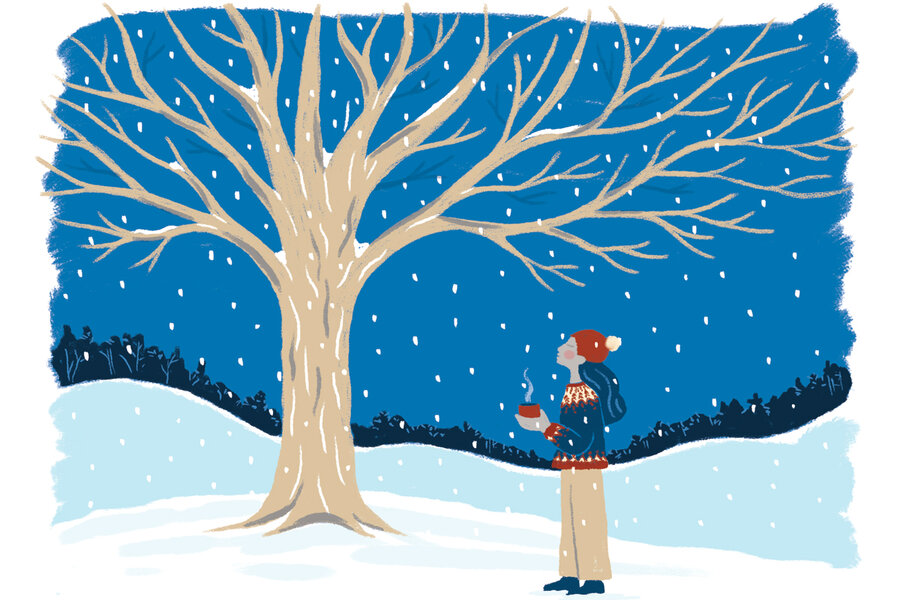
Just as Dr. Whitehouse is drawn to flowers, I’ve always been drawn to trees. Their skeletal winter branches, often stark against the backdrop of a gray sky, remind me that I need the stillness of winter to prepare for the outburst of spring. Wintering reminds us that, below the surface, things are happening, in nature and in us.

Katherine May, author of “Wintering: The Power of Rest and Retreat in Difficult Times,” has always loved the cold winter months but acknowledges that others struggle to do the same. In fact, if many people had their way, they’d just skip the season altogether.
“We can almost completely avoid it if we want to,” she says. We turn up the heat. We keep our lights bright. We avoid the outdoors. But turning away from the season is to our detriment, she continues. “We have this innate skill for winter that we are not so keen on exercising anymore.”
Ms. May echoes what many winter aficionados have long embraced: that slowing down and choosing to use winter as a time of reflection is crucial in our busy, overbooked lives.
Winter also offers the unique opportunity of venturing into the elements, feeling the brisk air on our faces, and letting the cold remind us of our vitality. One activity that Ms. May has embraced is cold-weather swimming; she and her friend head to the British seashore, don their bathing suits, and plunge into the frigid waters.
“I still have that fear when I’m standing at the edge of the water. There’s still that reticence,” she reflects. “But once I get in, there’s this immediate feeling of just pure, exuberant joy.”
Right now, I can’t think of anything less desirable than submerging myself in the winter waters of the New England coast, where I live. But lately, I’ve taken to biking to work. I layer myself with windproof gear, woolen thermals, and thick mittens. At the start of my journey, I question my choices. By the time I arrive, I’m grinning from ear to ear, sweaty and invigorated. It’s become one of my favorite parts of my workday, one I find oddly restful.
“I don’t think we should only see rest as sitting down,” Ms. May explains. “Rest is something that isn’t work. Rest is often very, very physical and very active.”
As I look through my long list of commitments and obligations, this idea of rest – both active and passive – resonates deeply with me.
This winter, I find myself trying to grow comfortable with the uncomfortable aspects of the season. I have an inkling that winter doesn’t have to be so bad, if I allow myself to welcome the wonders around me. Yes, I’ll give myself permission to rest: a cozy blanket here, a warm beverage there. But I’ll also push myself to grab my favorite hat and embrace the blustery outdoors, inhaling the brisk air, unafraid of the cold and open to the way it might restore me.
Winter will come regardless. So I may as well let it snow.