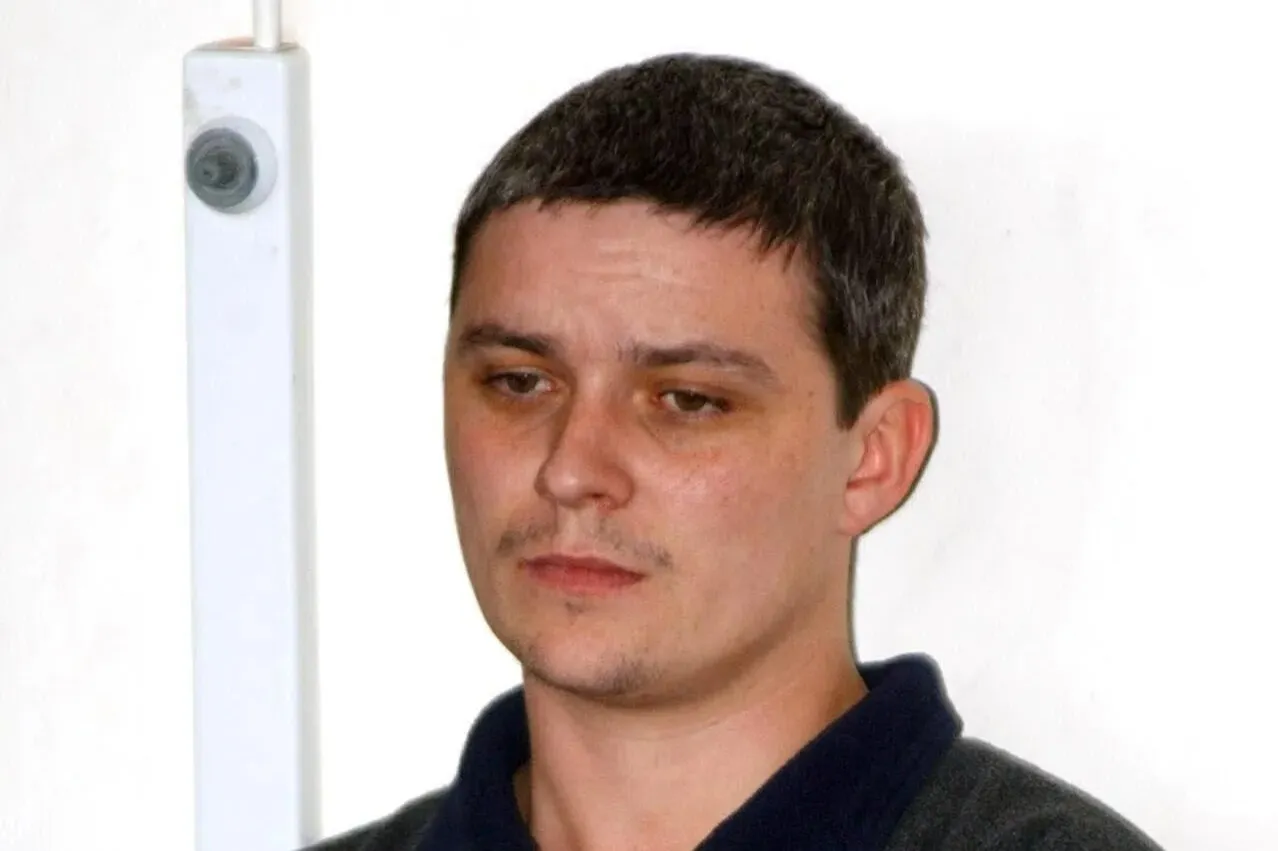
DRAWING his last breath in this world, child murderer Ian Huntley was heading for a special corner of hell in the next.
Prison yard justice had caught up with the sorry excuse for a human being who had snuffed out the young lives of Holly Wells and Jessica Chapman.
The Soham killer died in Newcastle Royal Victoria Infirmary this morning age 52.
The Ministry of Justice confirmed his death and said: “The murders of Holly Wells and Jessica Chapman remains one of the most shocking and devastating cases in our nation’s history, and our thoughts are with their families.”
Huntley was bludgeoned by a fellow inmate at HMP Frankland last week in a frenzied assault that left him in an induced coma.
Battered with a three-foot spiked metal pole, his smirking alleged killer was said to have yelled: “I’ve done it, I’ve done it. I’ve killed him, I’ve killed him.”
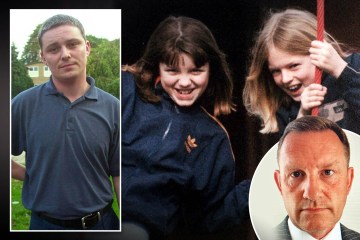
The lag was left lying in a pool of blood after the attack which split his head open and blinded him.
His mother Lynda Richards, 71, was understood to have been at his bedside when medics withdrew the ventilator keeping him alive as his pitiful life slipped away.
An act of brutal and lawless vengeance maybe, yet many will mark Huntley’s demise with a toast of “good riddance to bad rubbish”.
For Huntley’s crimes had not only traumatised two loving families but cast a dark shadow over the whole nation.
That last photo of smiling best friends Holly and Jessica in their red Manchester United strips with David Beckham’s name on the back remains etched into the public consciousness.
They’d be 34 now, perhaps married with children of their own, and likely forging successful careers that their warmth and intelligence deserved.
Instead, Huntley came for them.
And, astonishingly, the girls’ own teaching assistant, the killer’s girlfriend Maxine Carr, lied to police and gave him a false alibi.
Although Carr’s offending was hardly comparable, the pair have gone down in the grim annals of British criminal history alongside the likes of Ian Brady and Myra Hindley as well as Fred and Rose West.
Couples whose twisted notions of love or loyalty allowed them to perpetrate – or cover up – the most heinous of crimes.
Huntley and Carr’s calculated evil stained the good name of the Fenland town of Soham, left agonisingly searching for the cherished youngsters over 13 long summer days.
It was Sunday, August 4, 2002, when, despite the patchy weather, the Wells family had held a laughter-filled barbecue in their suburban garden in the Cambridgeshire town.
As it began to cloud over, Nicola Wells went inside to call Holly and Jessica who were playing music and videos upstairs.
The youngsters, both ten, were inseparable best friends.
That morning Jessica had given Holly a necklace engraved with the letter H that she had bought on a recent family holiday to Menorca.
Nicola shouted up the stairs to the pair: “Come and say goodbye.”
There was no answer. When she dashed up the stairs the room was empty. The youngster had ventured out into Soham to buy some sweets.
So began one of the nation’s largest ever missing persons search in a unfurling tragedy that gripped Britain.
As the days ticked by an unofficial spokesman for the little town of Soham – population 12,300 – was seen on our TV screens and in newspapers.
Ian Kevin Huntley, then 28, was the senior caretaker at the local secondary school. His girlfriend Maxine Carr was trusted by the two girls as she was a teaching assistant at their primary school.
Affecting a calm and caring manner, twisted Huntley used the media to insert himself into the investigation and moniter police progress.
The pair’s interviews were jaw-dropping in their callousness.
Carr giggled as she accidentally but repeatedly referred to Holly and Jessica in the past tense when speaking to BBC Look East.
When she was corrected, she cackled with laughter.
Before it was known the girls were dead, Huntley had asked a BBC journalist: “’Have they found the girls’ clothes?”
His ability to spin a web of deceit bore the hallmarks of a psychopathic killer without a conscience.
A day after the girls’ disappearance, he told police he’d had a brief conversation with them as he washed his dog on his doorstep.
Huntley said they were both “happy as Larry” and asked him whether Carr had been successful in her application for a full-time teaching assistant position at their school.
According to Huntley, he told them she’d failed to land the role and one of the girls had said, “Tell her we’re sorry”.
The caretaker then said the pair continued walking through the town.
LONG BEEN A LAGS’ TARGET
IAN Huntley has been a target for lags since he was first locked up.
In 2010 he had his throat slit by Damien Fowkes, who was given a life sentence with a minimum of 20 years for the attack.
Huntley had 21 stitches and was left with a scar from his jugular to the other side of his windpipe.
Justice Secretary Jack Straw refused his bid for £100,000 compo.
Then, in 2018, Huntley said a convict tried to slit his throat a second time with a razor blade attached to a toothbrush — but he overpowered him and called guards.
Huntley is believed to have tried to kill himself at least three times — before his 2003 trial he was reportedly left in a coma following an overdose.
Three years later, he was found unconscious in his cell at HMP Wakefield after another suspected overdose and was treated in nearby Pinderfields hospital.
And in 2012 he was hospitalised again by a third suicide bid.
In 2019, we reported that Huntley ended up in solitary confinement for lashing out at officers and telling them to “f*** off”.
Carr, 25 at the time, insisted she’d been in the bath upstairs when the girls spoke to Huntley on the doorstep of the home they shared. It threw police of the scent.
In fact she’d been out drinking in Grimsby with her mother, unaware of the girls’ disappearance.
A single police officer searched Huntley’s home house and found nothing immediately suspicious.
But the cop noticed clothing had been hung out on the washing line despite the rainy weather.
The officer also noticed the house had been cleaned, with Huntley explaining: “Excuse the dining room. We had a flood.”
On August 9, Huntley had driven the almost 250-mile round trip from Soham to Grimsby to pick up Carr.
When they returned to his home a witness called Marion Clift saw them gazing into the vehicle’s boot.
Clift said Carr was “pale, shaking” while standing beside him weeping with her head bowed.
In the early hours of August 17, Huntley and Carr were arrested as their lies and deceit unravelled.
Hours later, a gamekeeper discovered Holly and Jessica’s badly decomposed bodies lying side by side in a five-foot deep ditch near the perimeter fence of RAF Lakenheath in Suffolk, around ten miles east of Soham.
Their Beckham shirts had been cut off and the bodies burnt. A coroner revealed that the most likely cause of death of both girls was asphyxiation.
So who was Ian Huntley? And how did a man later described by a criminal psychologist as a “latent predatory paedophile” get a job as a school caretaker?
Born the son of a school caretaker in the port of Immingham just outside Grimsby on January 31, 1974, Huntley’s early life was apparently carefree in a loving household.
A keen plane spotter, his favourite haunt was RAF Lakenheath which would become the burial site for the bodies of Holly and Jessica.
Then, aged 13, he started being bullied at school. He was nicknamed The White Cliff of Dover and Spacehead because of his prominent forehead.
Later Huntley would become a bully himself.
Passing five GCSEs, he was bright enough to study A levels but left to flee his tormentors.
He drifted from one job to another, packing babies‘ nappies, working in a canning plant, assembling toilets and filleting fish.
And he began preying on schoolgirls, often bragging that he had been a pilot in the RAF.
There would be four allegations of underage sex with girls aged 13 and 15 and one indecent assault on an 11-year-old girl.
He was also accused of four suspected rapes.
Huntley would also father a daughter.
Katie Bryan, was just 15 when she met Huntley. They had a turbulent relationship and he was physically violent towards her.
They would have a daughter Sammie who only discovered the true identity of her depraved father when she was 14.
In 1999 Huntley met Carr in the now closed Hollywoods night club in Grimsby.
They “hit it off” straight away, Carr remembered, adding that it was “love at first sight”.
They soon moved in together and when Huntley was interviewed for the post of senior caretaker at Soham Village College he explained that he wanted to settle down with his fiancee Maxine.
Confident and well-dressed, he convinced the interviewers that he posed no threat to children.
However, by the time he arrived in Soham, Humberside police would confirm they’d had 10 “contacts” with him, and social services five.
But no firm action had been taken to stop him.
A public inquiry after Huntley’s conviction led to criminal checks on anyone working with children.
Not long before he and Carr arrived in Soham, Huntley was again suspected of a sex attack on a woman.
Carr provided an alibi – just as she did over Holly and Jessica’s disappearance – and no charges were brought.
On November 26 2001, Huntley took up his £16,000 post at the Soham Village College and moved to a house nearby with Carr.
It was never established whether Huntley sexually assaulted Holly and Jessica, their bodies were too decomposed for tests to be certain.
Yet one police officer said: “Why else does a grown man lure two 10-year-old girls into his house?”
At his Old Bailey trial Huntley concocted more lies and deceit.
Only once over the 30-day trial full of grim evidence his eyes well with apparent tears.
And that was when Carr had insisted she wanted nothing more to do with him.
Sentencing him for life for each murder Mr Justice Moses told him: “Your tears have never been for them, only for yourself.
“You showed no mercy and no regret.”
Carr was jailed for three and a half years for conspiring to pervert the course of justice.
Serving 21 months, she was then given a fresh identity by the High Court to protect her “life and limb”.
As a child killer, Huntley was a marked man behind bars. One lag scalded him with boiling water, twice his throat was slashed with blades but he cheated death.
Even his own mother Linda said: “I believe Ian should not live after what he’s done.”
The hell hounds pursuing Huntley finally cornered him in HMP Frankland.
Gasping for life, he would now taste the same hopeless terror he’d unleashed upon those poor, innocent girls.