Emergency services are overhauling how they investigate accidents involving hybrid cars after The Mail on Sunday revealed that motorists are three times more likely to die in hybrids than in petrol cars.
Experts believe the heightened death rate could be down to the combination of petrol engines, batteries and electric motors, which make them more prone to fires.
Some say that when it comes to safety ‘they are the worst of both worlds’.
Ministers last night confirmed that fire and rescue services will now track what causes the blazes.
First responders will report whether the source of ignition was a battery and whether that battery was on charge at the time of the incident.
A total of 122 people died in hybrid car crashes in 2024, compared with 777 in accidents involving petrol cars, according to Department for Transport figures analysed by the MoS.
But as hybrids are outnumbered by almost 20 to 1 on Britain’s roads by petrol models, that means hybrids are three times more likely to be involved in a fatal crash. Previously, the Government did not accept that there is a problem.
Transport ministers said: ‘Insurance industry analysis suggests that hybrid vehicles are less likely to catch fire than internal combustion engine vehicles.’
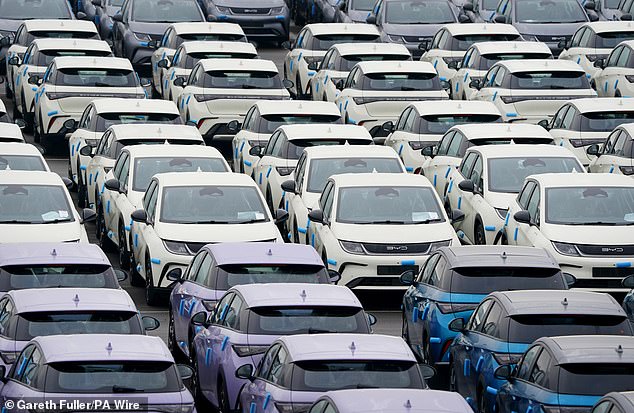
A total of 122 people died in hybrid car crashes in 2024, compared with 777 in accidents involving petrol cars, according to Department for Transport figures analysed by the MoS (stock image)
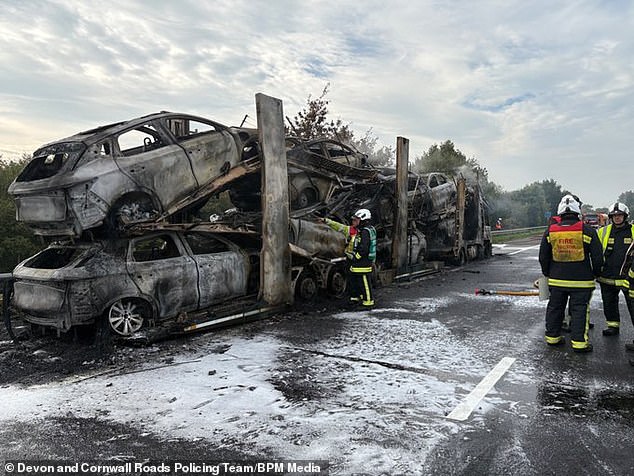
Fires involving electric or hybrid vehicles can be particularly dangerous, but experts say that they are not more likely to catch fire than fossil fuel vehicles. Pictured: The aftermath of a fire that consumed nine electric vehicles on the M5 in October
However, they refused to share their findings publicly.
Tusker, which insures 30,000 company cars, found that hybrids were more likely to catch fire.
Some believe the higher death rates could be explained by the increased mileage of hybrids, which are favoured by Uber drivers.
Shadow transport secretary Richard Holden said: ‘It’s quite clear that The Mail on Sunday’s reporting has moved the dial on this issue, causing the Government to think again and recognise the impact of the dangers of some hybrids.’