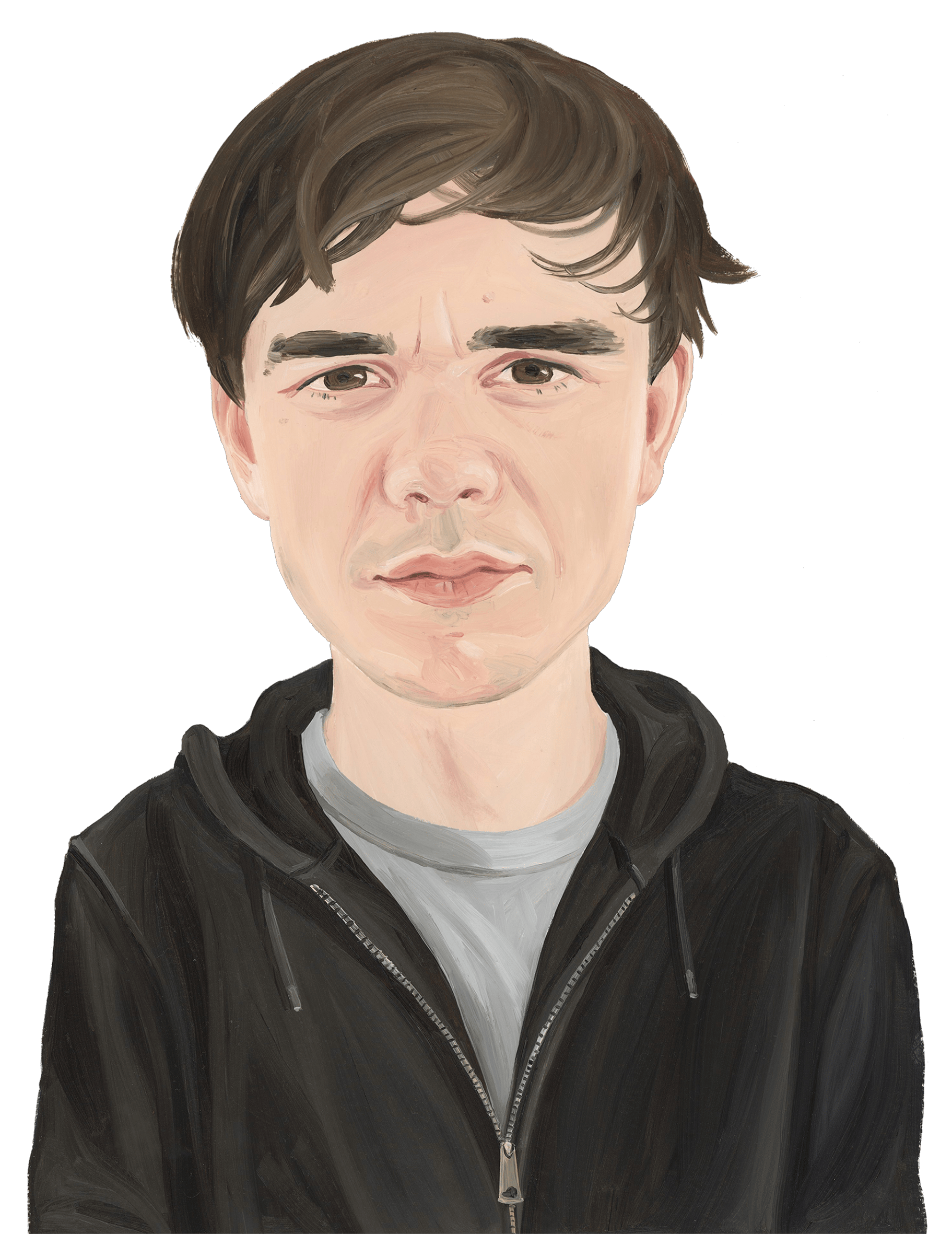
The opinion columnist should always question their desire to judge people for their mistakes. After all, opinion columnists — myself included — make lots of mistakes. Happily, for us, the impact of our mistakes — if it exists — is unquantifiable. So, we tend to ignore them — or to briefly acknowledge them and then move on.
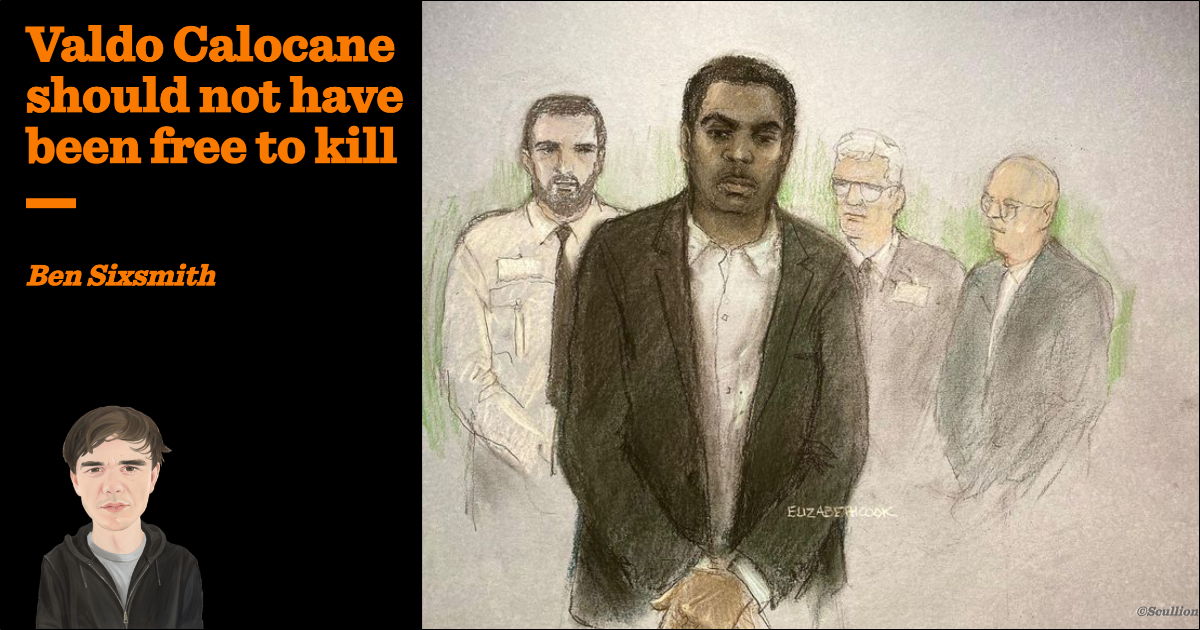
So, I don’t want to judge any one individual too harshly when considering the awful background to how the unhinged killer Valdo Calocane was free to kill Barnaby Webber, Grace O’Malley-Kumar, and Ian Coates in Nottingham in 2023.
Still, the case is an indictment of various trends of thought and behaviour within contemporary British institutions. For example, when deciding whether to detain Calocane after a violent episode in 2020, mental health professionals apparently consulted “research that addressed the over-representation of young black men in custody”. It is important to note that it is not clear that this was a deciding factor in their failure to detain Calocane. Yet the crimes that he went on to commit should lead progressives to reconsider their idle assumption that that which is “disproportionate” is necessarily unjust.
Time and time again, he was accommodated … and enabled in his endangering of people
In The Psychosis of Whiteness, the academic Kehinde Andrews argued that black people are the victims of the imposition of bogus mental health diagnoses (and that white people’s thought and behaviour more closely resembled “psychosis”). This sort of unevidenced ideological pablum should be viewed in the light of how it would have framed Valdo Calocane right up until he started stabbing people. The fact is that there is no reason to expect that people should suffer from mental health conditions at the same rates.
Calocane was a dangerously violent man long before his murder spree. Prior to that 2020 assessment, he had tried to batter down a neighbour’s door. Within an hour of being released, he broke into another neighbour’s flat and forced her to jump out of a window, breaking her back.
Time and time again, he was accommodated — because of soft touch treatment or outright incompetence — and enabled in his endangering of people. In hospital, he was allowed to refuse injectable antipsychotic medications because he did not like needles. (This was apparently despite his being uncomplainingly vaccinated against COVID-19.) Back in the community, he was known to have stopped taking his meds. (His reasoning was that he was not unwell — he was really hearing voices.)
Calocane was so obstructive when it came to mental health assessments that he assaulted a police officer who was taking him to hospital. This was a serious incident in which he punched and headbutted the officer several times, as well as attempting to use handcuffs as a weapon. In a devastating operational failure, the police issued a warrant for his arrest but never actually executed it.
Frankly, it is downright farcical how obvious Calocane made his condition. At one point, two years before his crimes, he arrived at MI5 headquarters and asked to be arrested. Still, he was allowed to continue with the voluntary treatment that he was known to have rejected. Even his own family thought that his treatment was blatantly inadequate. “There was no plan for how to effectively prevent him disengaging and stopping medication,” a statement issued on their behalf says unanswerably.
Again, one could be too sweeping where this subject is concerned. The consequences of not detaining someone who should have been detained can be very obvious indeed. The consequences of detaining someone who should not have been detained can be invisible.
Yet this is not about one bad decision. It is about bad decisions being made, and good decisions not being made, again, and again, and again. Anyone can make a mistake. The serial mistakes that are evident in cases such as Calocane’s are glaring proof of collective institutional disgrace.
In 2022, while in student accommodation, Calocane assaulted one of his flatmates and kept others hostage. This followed a pattern of bizarre behaviour in which he had been emitting screams in his room. It was determined that the other students, not Calocane, should vacate the premises.
To be fair to the authorities at the University of Nottingham, they were in the dark about a lot of things that Calocane had said and done. Still, the episode is suggestive of the overarching theme of the institutional approach to this deeply troubled, deeply dangerous man — to avoid taking decisive action to remove — and treat — him, everyone else was inconvenienced and endangered. The naivete and complacency that underpins such decision-making has to be resisted.