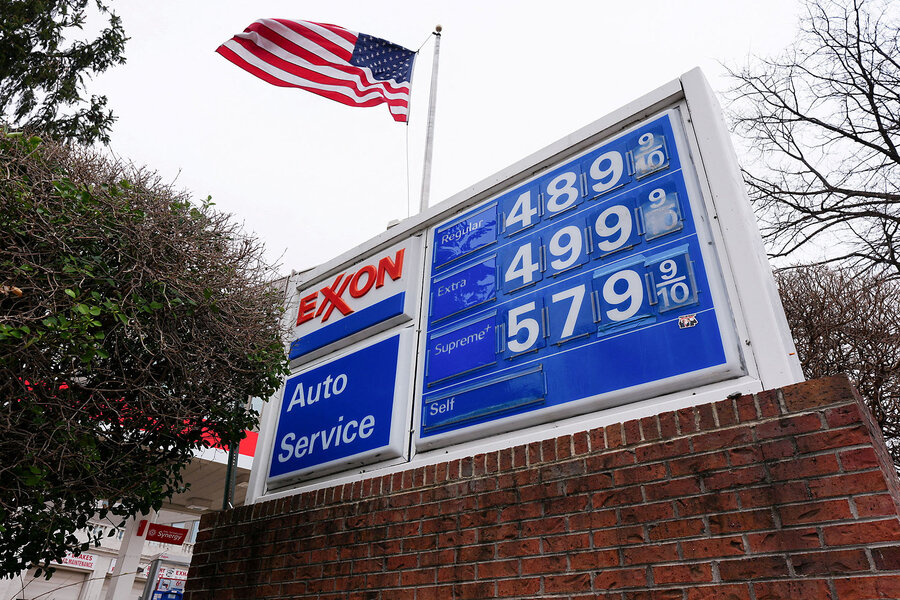
As President Donald Trump dangles the prospect of either escalating the war with Iran or negotiating a quick end to it, consumers globally are feeling the pinch directly in the pocketbook.
Oil prices have soared, and subsequently, so have the prices of everything from gasoline at the pump to cooking oil in developing nations to fertilizer for farmers around the world.
The result is resentment and anger, especially in Asia:
- In the Philippines, transport federation Manibela (Tagalog for “steering wheel”) on Monday called for a two-day nationwide strike later this week to protest rising fuel prices for jeepney drivers.
- India’s Prime Minister Narendra Modi warned on Monday of tough days ahead after protests broke out last week over shortages of cooking gas and fears there won’t be enough fertilizer, made primarily from natural gas by-products, for the planting season.
- Indonesia’s government is using gasoline subsidies to insulate consumers from oil prices that have soared this month. But analysts say such subsidies are not sustainable.
Why We Wrote This
While markets welcomed the possibility of talks to end the Iran war, Asian nations are set to bear the brunt of what might be the worst oil crisis in more than 50 years.
Worse than the 1973 oil embargo
Asian nations are bearing the brunt of what the International Energy Agency (IEA), a nongovernmental group that provides data and recommendations around reliable, affordable, and clean energy, is now calling an oil crisis that tops even the 1973 Arab oil embargo.
While Americans are hit with high gasoline prices like almost everyone else, the United States is cushioned from the risk of running out of oil because it produces enough energy to meet its own needs. Asia is not. In 2024, the U.S. Energy Information Administration estimated, Asia received more than 80% of the oil and liquefied natural gas shipped through the Strait of Hormuz.
With that strait now closed and prospects for a quick end to the war murky, consumers around the world are watching closely to see how long it is until the strait reopens.
“This is the big one,” Samantha Gross, director of Brookings’ Energy Security and Climate Initiative, said in a March 16 discussion with fellow experts at the Washington think tank. “This is the thing that energy security analysts looking not just at oil, but also at global natural gas markets, have been worried about forever.”
The strait carries not only one-fifth of the world’s oil, but also one-fifth of its liquefied natural gas (which heats homes and fires up stoves) and a third of its seaborne fertilizer exports. The strait’s closure squeezes global consumers, businesses, and farmers alike.

Uncertain moves
Mr. Trump’s most recent moves have added to the uncertainty of how long the conflict will continue.
On Friday, the president posted on his social media account that the U.S. was considering “winding down the war.” Then on Saturday, he posted a threat to “obliterate” Iran’s power plants if the strait was not reopened within 48 hours – a major escalation of the war. Iran responded by threatening to strike oil installations in the Gulf region. On Monday, Mr. Trump shifted again, posting that he was pausing the planned strikes for five days following what he described as “very good and productive conversations” with representatives of Iran.
This was his first mention since the start of the war, more than three weeks ago, that high-level talks with Iran were underway. Tehran denied that any such talks had occurred.
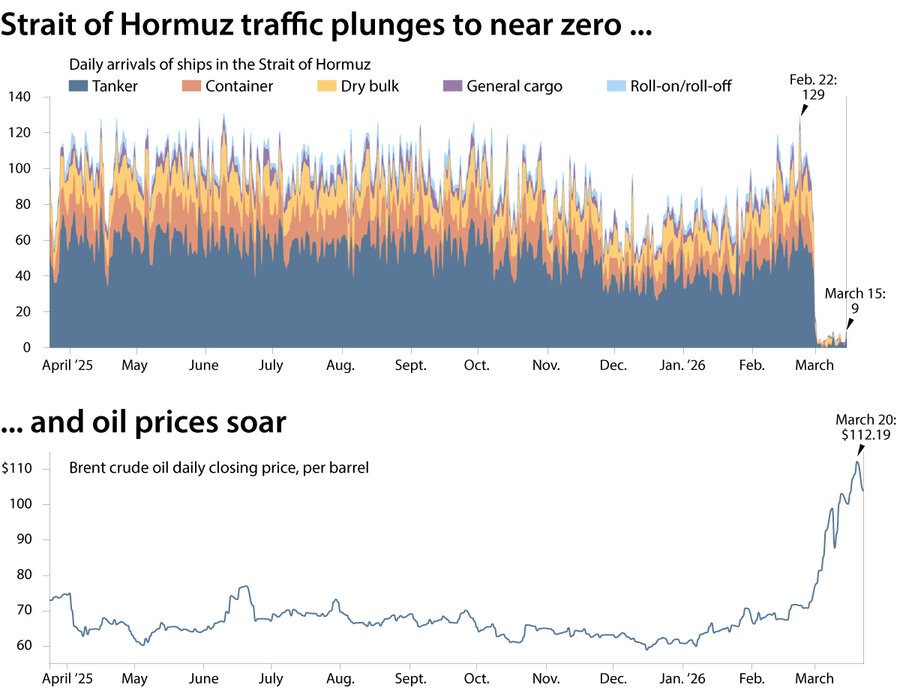
In the meantime, oil prices and global stocks rose and fell on these shifting statements. On Monday, benchmark Brent crude prices plunged nearly $10 a barrel and closed a little above the $100-a-barrel level, as investors took hope from Mr. Trump’s references to dialogue. The three leading U.S. stock indexes closed up more than 1%.
NY Mercantile, Yahoo Finance, IMF Portwatch
|
Jacob Turcotte/Staff
Even if the Strait of Hormuz – the crucial choke point through which some 20 million barrels of oil and petroleum products usually pass daily (and over 30,000 ships annually) – opened tomorrow, the economic impact would linger for weeks or months, experts say.
It will take some time for the oil fields, refineries, and pipelines to come back online, IEA Executive Director Fatih Birol said on Monday at Australia’s National Press Club in the capital, Canberra.
“Not only oil and gas, but some of the vital arteries of the global economy – such as petrochemicals, such as fertilizers, such as sulfur, such as helium – their trade is all interrupted, which will have serious consequences for the global economy,” he said, according to Bloomberg.
Gulf-nation energy facilities damaged
The IEA also said the war has damaged or severely damaged more than 40 energy assets in eight Gulf nations, plus Israel. Iranian drones have caused damage at refineries in Kuwait, Saudi Arabia, the United Arab Emirates, and Israel. Repairs to a production line at Qatar’s gas-to-liquids facility are expected to take one year. And Israel’s strike against Iran’s South Pars gas field caused fires, seriously damaging what is considered a lifeline for Iran’s economy that supplies 70% of the country’s gas consumption.
The potential for further damage in the Middle East has caused several Asian nations to cut back consumption and keep a lid on prices.
Thailand has introduced a fuel price cap, banned petroleum-product exports, and is requiring government employees to work from home. The Philippines has authorized the reduction or suspension of fuel taxes. India has sharply cut allocations of cooking gas to businesses to keep supplies flowing to consumers.
Other nations are insulating consumers by continuing to subsidize fuel, a cost that has rapidly ballooned.
If oil and gas prices don’t go down, those subsidies could cause long-term damage to the budgets of poorer, less developed nations.