LITTLE was known about Steven Avery outside of the US before 2015.
He had been sentenced for the murder of freelance photographer Teresa Halbach, 25, in 2007 after her charred remains were found in his car salvage yard.
She had been there to photograph a minivan for sale a week earlier.
It raised eyebrows that he’d already served 18 years in prison for a rape he didn’t commit, and was seeking large sums in compensation for the wrongful conviction.
But the case hadn’t gathered widespread, international attention.
That changed overnight on December 18, a decade ago, when the seismically popular documentary, Making a Murderer, was released on Netflix.
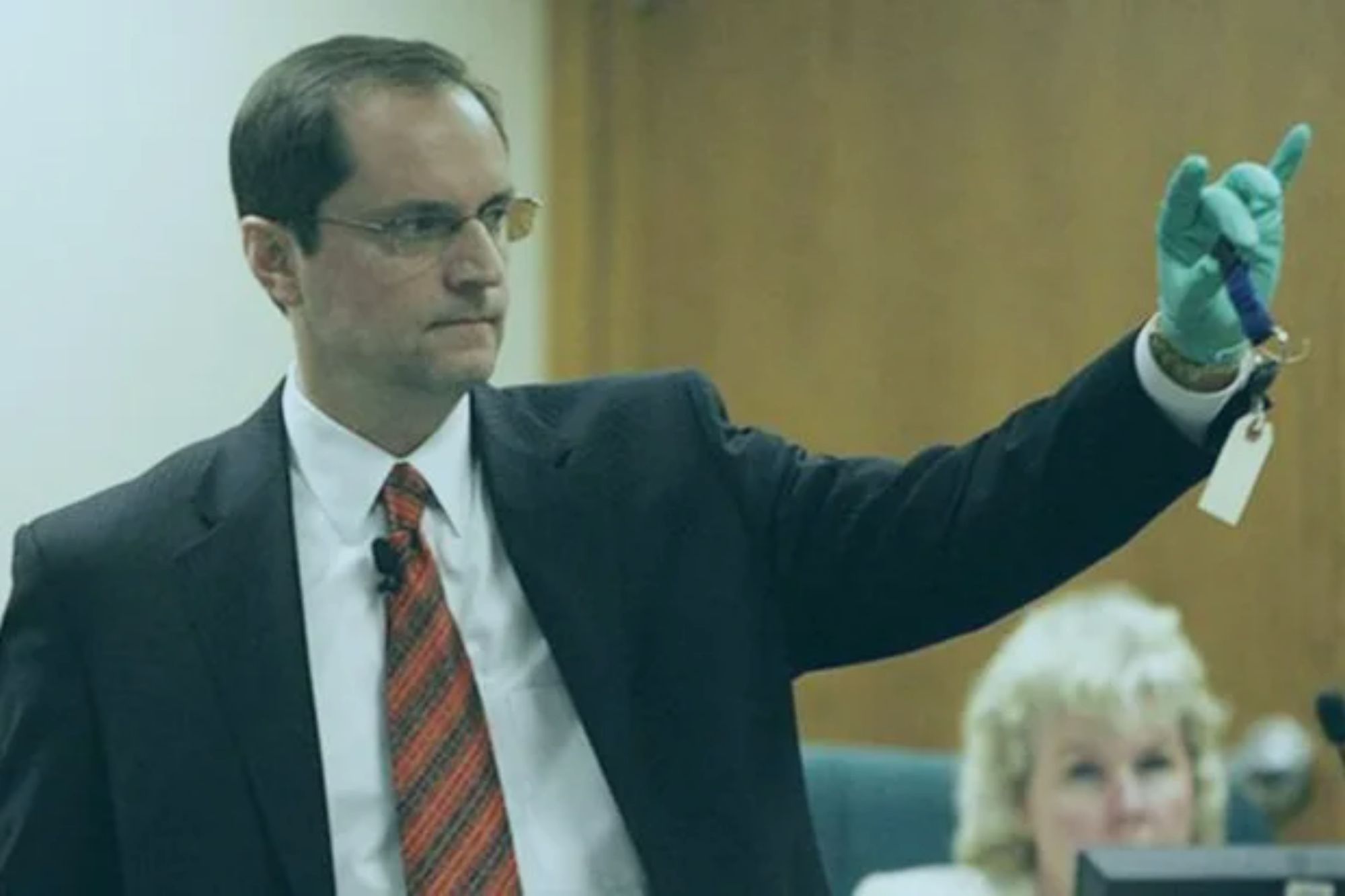
The explosive 10-part series detailed the claims of Avery’s defence lawyers, Jerry Buting, 69, and Dean Strang, 65, that police had framed Avery and forced his nephew, Brendan Dassey, then 16, into a false confession.
They believe evidence was “deliberately withheld” that could have changed the outcome, which left Avery and Dassey serving life sentences.
An astonishing 19.3million people had watched it within 35 days and it played a key role in the explosion of Netflix, which drew a whopping 5.59million subscribers in the three months leading up to that December.
Scores of imitators released true crime documentaries that mirrored its template in the years that followed.
But for Buting and Strang, it was only the tip of the iceberg of what was really going on inside courtrooms across the country.
Buting told The Sun: “At that time, the whole idea of streaming hours and hours of a recorded trial was unheard of.
“And the idea that there would even be a marketplace that would show enough interest in having filmmakers present a multi-episode coverage of the case was beyond what we could conceive.
“We thought that at most maybe there would be a documentary, an hour and a half. Maybe you could get it on DVD.
“Maybe it would be in art houses somewhere with a few people watching it, but certainly not that it would be a global phenomenon.”
He added: “It really illustrated a lot of the problems with our legal system in America and grabbed a lot of attention.
“I don’t know that it’s had the long-term effect that we and other people might have hoped for, but it certainly woke some people up about what’s happening in America’s criminal legal system.”
Strang added: “It illustrated the unpredictability and the fleeting nature of pop cultural phenomena.
“Because for a time, this was a pop cultural phenomenon. And like all of those, or most of them, you can’t predict.
“At least I couldn’t possibly predict why it would happen. But you can predict that it will be evanescent and fleeting.
“That’s why I would end with sharing Jerry’s disappointment that the overall impact on the criminal enforcement system in the United States, or awareness of the competing values at stake in criminal enforcement anywhere, didn’t last or didn’t become more persistent and effective than I think it did.”
The show enraged viewers with many supporting the theory Avery had been framed.
Strang said it came after two students needed to produce a 15-minute film for a project, and he initially assumed it may run in an art house.
Instead he and Buting would become unexpected sex symbols around the world.
Buting said: “At one point somebody, BuzzFeed or somebody, did a silly quiz. I think, Dean, you won two to one on that!”
He continued: “It really provoked us to come up with the idea of doing a talk about the documentary.
“Because when we saw things start to go viral and silly and shallow like that, when this documentary raised so many interesting, deep issues about our legal system, we thought it would be great if we could do a 90-minute Q&A.
“We wanted it to be publicly available, so people could ask questions about what happened in the documentary.
“So we made some contacts, we booked a theatre and it was a ticketed event so they could control the number of people.
“As soon as it went up online as a ticketed event, people from New York, Boston, London, and I think even Australia started contacting us saying they wanted this too, that they’d love to hear from us.
“It became obvious that there was widespread interest, not just in America but globally, which really surprised me.
“The global aspect of it surprised me until I did a little more research and realised that wrongful convictions happen everywhere.
“Every criminal legal system, every country, has experienced wrongful convictions and long-term imprisonments of many people, sadly.”
He added: “That grew out of the shallow coverage, the internet heartthrob juggernaut that happened. It was certainly nothing we would have expected.”
Strang said: “That was strange. That was very awkward, to be honest. We weren’t expecting any of that.”
He added: “When did I think this might begin to affect my life? It was the next Monday.
“The weekend went by and I got a number of emails from the US and Canada.
“On Monday morning, like many trial lawyers, I’m in court. I return to the office before lunch, and Tanya, our legal assistant, says, ‘Dean, check your voicemail, because some guy who said he was Alec Baldwin called and left a message’.
“Walking down the hall, I thought: which one of my screwy college friends is playing a prank on me?
“The voicemail turned out to be Alec Baldwin.”
It really illustrated a lot of the problems with our legal system in America and grabbed a lot of attention
Dean Strang
Avery, 63, won the right to appeal in 2019 and viewers were encouraged by the efforts of his new lawyer, Kathleen Zellner, as detailed in season two released a year earlier.
But Avery and Dassey, 36, remain in prison to this day with sparse reports detailing any hope through appeals.
Strang and Buting believe they were thwarted in their attempts to clear Avery because they believe key evidence was withheld.
Buting said previously he had wanted to name Avery’s nephew, Bobby Dassey, and brother-in-law, Scott Tadych, as alternative suspects in the 2007.
They deny any involvement and have never been treated as suspects.
It was then alleged in season two, by Zellner, that “images of Ms Halbach and violent pornography” had been found on Bobby’s computer.
But Strang and Buting said this was not known at the time and they were unable to suggest Bobby and Tadych were alternative suspects in front of jurors
Buting added: “I honestly don’t know at this point (who did it). I don’t know if any of us can answer that question with any kind of certainty.
“I believe there was clearly reasonable doubt, in our case, that Steven Avery or Brendan Dassey had anything whatsoever to do with it.
“There was some information withheld from us, evidence that was withheld from us deliberately, it appeared, by the prosecution, that made it difficult for us to point the finger at other suspects.
“And then the court prevented us and ordered us not to introduce evidence of other suspects at trial.
“So the jury was left with: if it wasn’t Steven Avery, who was it? Who else? And we couldn’t offer an answer to that question or even a possible answer to that question.
“That made it difficult. We had at least one hand tied behind our backs from the beginning once the court made that ruling.”
He added: “Some of Steven’s current attorneys’ motions have identified particular suspects.
“Dean and I had our suspicions and personal beliefs about various people back when we were trying the case.
“But as far as having certainty in my own mind, I don’t know. I’ve gone back and forth over the years between several different suspects, and I’ve never been satisfied that any one of them could be excluded as the possible perpetrators of this crime.”
I believe there was clearly reasonable doubt, in our case, that Steven Avery or Brendan Dassey had anything whatsoever to do with it
Jerry Buting
Strang added: “I’ll go a little further than Jerry. I still think Steven Avery is not guilty, did not do this, and I believe at least as strongly that Brendan Dassey is just innocent.
“I can’t be certain, like Jerry, but that’s my view now, 18 years plus after that trial. You have to adjust for my own cognitive biases that I can’t remove myself from entirely, but that is my view.
“And I guess I go a step further than Jerry too. At the time of trial, we had reasonably good evidence supporting an inference of possible guilt and therefore reasonable doubt about Steven Avery as to at least a couple of other possible suspects.”
He continued: “The state had a forensic examination of that hard drive, which belonged not to Steven Avery, it was in the Dassey home. It contained thousands of images of violent pornography, including murderous pornography, at times.
“The computer was located where Steven Avery couldn’t have been the one using it, and Brendan Dassey almost certainly wasn’t the person using it when the imagery was downloaded.
“We were actively deceived about the results of that forensic examination. The prosecutor wrote a letter, addressed to me or jointly to Jerry and me, saying there was nothing much of interest in that forensic examination.
“We didn’t have the expensive software needed to examine the hard drive ourselves. I regret taking Ken Kratz’s word for it and not asking for the report.
“It was a clearly deceptive letter, it said there was nothing of interest, aside from motive evidence regarding another perpetrator.”
Avery’s DNA was found in Halbach’s car, but the lawyers argued this had been planted.
Such claims were dismissed by prosecution lawyer, Kratz, who became something of a pantomime villain in the show.
On Kratz, Buting says: “To put it politely, if people read my book, they’ll see some of the conflict we had during the trial.
“Dean was sort of the mediator at times, which was important. No matter how difficult the working relationship is with the other side, you need some degree of it to handle a six-week trial.
“We never really got along, so it wasn’t like we’d be exchanging Christmas cards, and we certainly did not.”