Dermot Murnaghan has shared a message of hope to cancer sufferers after revealing his own devastating battle with the disease.
The broadcaster returned to BBC Breakfast on Tuesday where he opened up about the realities of living with stage four prostate cancer.
Speaking to presenters Sally Nugent and Jon Kay, the 67-year-old former BBC anchor gave an update on his diagnosis, after going public with it earlier this year.
He said: ‘Yeah, I’m doing good. I’m stage four, very clear about that. At this point it’s incurable, but it’s not untreatable and that’s the big point you’ve got to make to people.’
He continued: ‘There’s so, so many, millions of people, affected by stage four cancer of various kinds in the UK at the moment, listening to this. Their families I’m including as well.
‘It isn’t game over. It’s bad, but there are great treatments out there, there are great professionals out there looking after people.
‘And they’re looking after me. So, yeah, you can see I’m feeling good and doing good.’
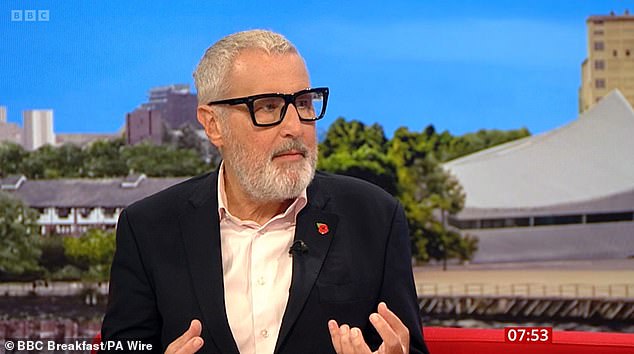
Dermot Murnaghan (pictured) returned to BBC Breakfast this morning alongside presenters Sally Nugent and Jon Kay where he told views he was at stage four and ‘very clear about that’

The 67-year-old served as the main anchor on the show from September 2002 to December 2007. He is pictured here in May 2006
Presenter Jon Kay had asked Mr Murnaghan how he was feeling, adding ‘lots of our viewers will be delighted to see you back and will have been worried about you for the last few months’.
Mr Murnaghan, who presented on BBC Breakfast from 2002 to 2007, said life during treatment had changed his ‘focus’.
He added: ‘Well, it changes your focus. Your focus, mentally first of all, your priorities, it’s very clear what your priorities are. Your own health, of course, and the effect for so many people who are in this position, your family.
‘It affects so many people who may or may not have anything wrong with them. But that’s who it affects. So, your focus changes and you get your priorities right, which are family first.’
Sharing the signs and symptoms of prostate cancer, Mr Murnaghan said men should look out for urinary problems like frequent urination or a weak stream, blood in urine, and pain in the back, hips or pelvis.
As well as his service on the flagship BBC show, Mr Murnaghan is also recognised for fronting Sky News, BBC News and the BBC quiz programme Eggheads.
He concluded: ‘My message here today is men, if you’re in a high-risk group, go and get yourself checked.’