LESS than a year after his ten day war with Iran last June — when he boasted he had “obliterated” Iran’s nuclear weapons programme — Donald Trump is on the attack again.
What’s changed? Last year, his attacks concentrated on destroying their nuclear threat.
Now the US President and Israel want to remove the Islamic Republic’s regime from power so it cannot plot to revive its Bomb projects — or carry on financing proxy terrorist groups around the Middle East, even here in Europe.
That’s why US and Israel chose to attack in broad daylight.
Usually, the cover of darkness is used to assist cruise missiles reach their targets undetected.
But yesterday the US and Israel wanted Iranians to see how defenceless their regime was.
READ MORE ON IRAN ATTACKS
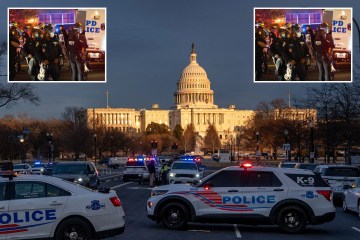
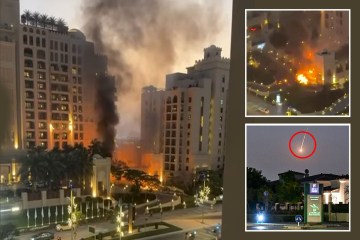
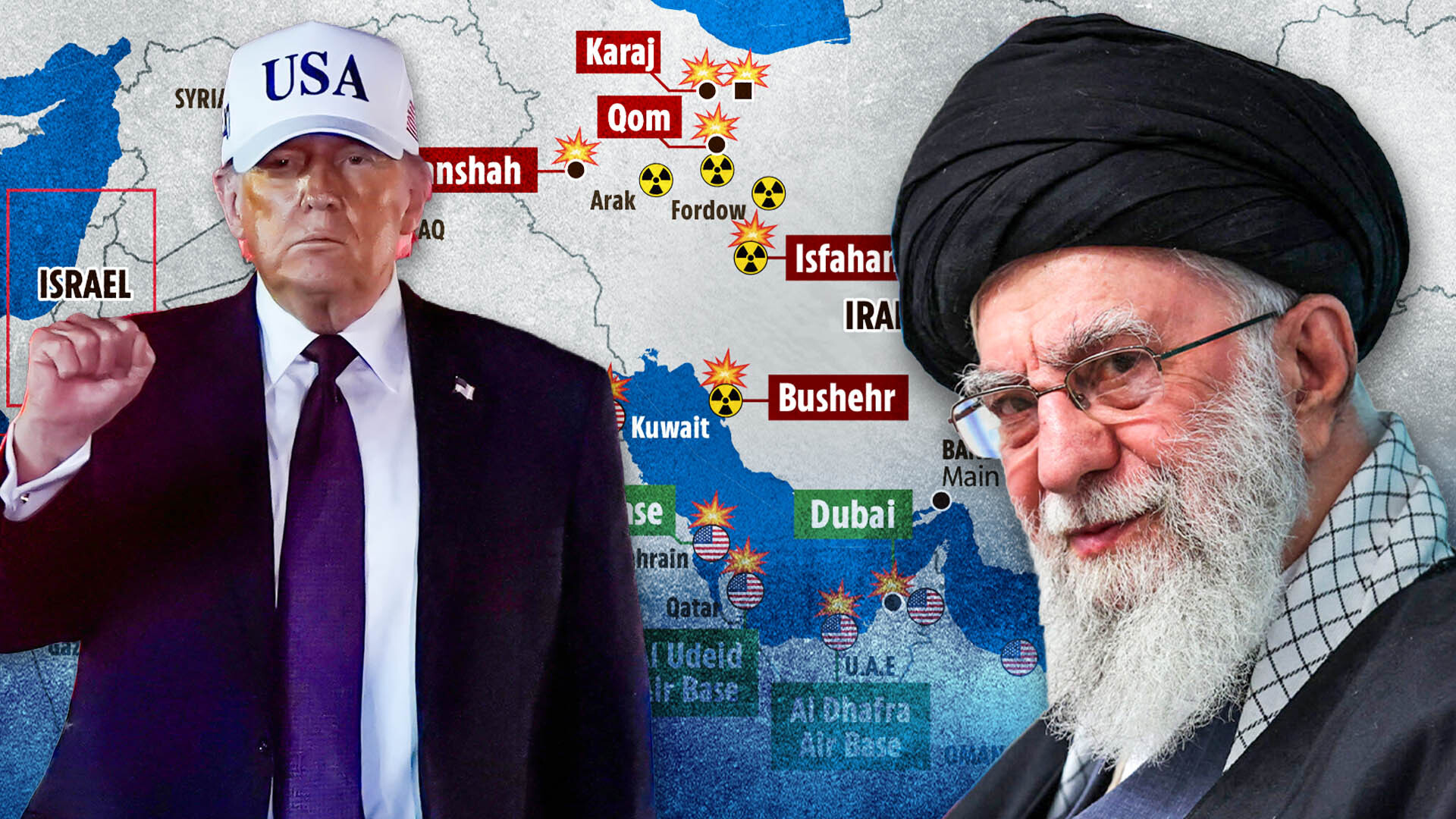
Precision weapons hit regime targets, from Ayatollah Ali Khamenei’s own residence and HQ to repressive police bases in cities around Iran.
The air strikes are hitting the regime’s bully-boys as well as its military targets because Trump is explicitly waging an air war to provoke an uprising on the ground by ordinary Iranians.
Already in January, millions of people protested against the hated Iranian dictatorship. Thousands were mown down in the street.
President Trump had called on Iranians to rise up against tyrant Khamenei, promising American support — but then did nothing.
Now Trump has sent the US Air Force into action over Iran and the President is calling people back on to the streets.
The stakes are high but so are the risks. Will Iranians go out and protest again?
Ordinary Iranians probably recall how in 1991 the first President Bush called on neighbouring Iraqis to rise up against Saddam Hussein’s dictatorship but then stopped the American army from helping them — and they were slaughtered.
President Trump’s message to Iranians is confusing.
In the same video address, he warned them, “Stay sheltered. Don’t leave your homes” but then urged them to rise up, “This is the moment for action. Don’t let it pass.”
Even with the US bombing key targets of the Islamic regime it is not clear the Ayatollah’s control on the ground will collapse.
Remember how in 1945, Hitler’s regime controlled the German people with growing brutality right up until he shot himself, with the Red Army only 300 yards from his bunker.
Most Iranians clearly hate their regime for making their lives a misery.
But, as in Nazi Germany in 1945, there are, sadly, still millions out of the 90 million Iranians who are ready to fight and die for a dictator — and to kill anyone urging surrender and peace.
It’s not clear the US can stop a slaughter of protesters from the sky.
The Islamic regime has prepared for this crisis.
Iran has hit back at US bases in the countries just across the Persian Gulf straight away, as well as at Israel.
They hope for a “lucky strike” causing a lot of American casualties that would provoke anti-war protests in America.
But the Ayatollah’s regime has recognised that it will be hit hard.
British forces on alert
By Jerome Starkey, Defence Editor
THE UK operates at least seven major bases between Cyprus and the Persian Gulf, which all support missions across the Middle East.
Between them they have 2,500 military personnel, but that number can surge during missions or when warships dock in ports.
Smaller numbers of UK troops, including Special Forces, also use allied bases in Iraq, Syria and Jordan.
There are also thousands of dependants and contractors at the permanent bases, most notably in Cyprus.
The RAF presence on the island has increased in recent months as tensions have spiralled with Iran.
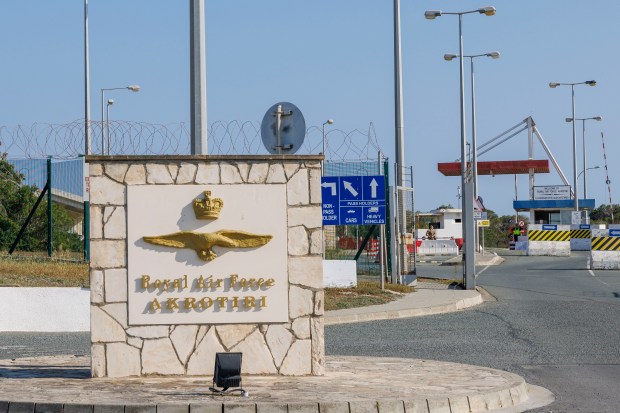
This month, the UK scrambled six F-35B Lightning jets to RAF Akrotiri on Cyprus.
The RAF also has Typhoon jets, Voyager refuelers and Shadow R1 spy planes at Akrotiri, often referred to as a “permanent aircraft carrier” in the eastern Med.
There are some 800 personnel at the site and around 1,200 soldiers — including Special Forces — are stationed at the nearby base of Dhekelia.
On January 22, a joint British and Qatari squadron of Eurofighter Typhoons was deployed to the Al Udeid Air Base in Qatar.
The Government said its mission was “to conduct joint training and enhance national and regional security”.
The RAF also has permanent personnel at the Al Minhad airbase in the UAE and the Al Musannah in Oman.
Meanwhile, the Royal Navy uses the UK Naval Support Facility in Bahrain as its main base in the Persian Gulf.
Until recently, it had four mine-counter measure vessels and one Type 23 frigate permanently based there.
There is also a permanent joint support facility in Duqm, Oman, with at least 70 personnel.
Opened in 2018, it provides a permanent maritime base outside the Persian Gulf and a maintenance facility.
The port also supports UK aircraft carriers when they are in the Indian Ocean.
It already announced that it has plans for his succession if he is killed — and for maintaining the continuity of the regime, even if today’s political and military leaders are knocked out.
For me, the most worrying scenario would not be if another religious fanatic becomes Ayatollah.
What will be really dangerous is if nationalist military hardliners take over.
They may decide that the Ayatollah’s big mistake was not to have built the Bomb before now!
If they can hold on to power they might rush to make it.
The Islamic Republic has mobilised the Shia cult of martyrdom to send suicide bombers against its foreign enemies.
But many hardliners in Iran have been turning to non-religious Iranian nationalism as a better way to mobilise ordinary people to back national defence.
Ironically, key figures in the repression of protests are also plotting their war of defence of the regime.
One of them is Ali Larijani, a veteran of nuclear negotiations but also the key coordinator of the brutal crackdown in January.
After that, Larijani went to Moscow to get Russian weapons but also intelligence on American deployments around Iran.
China, too, has been helping Iran with satellite photos of where US airships and planes are located, but it is Putin’s regime which stands to gain most from this war.
America will need all of its anti-missile systems to defend its forces so Ukraine will go without, helping Russia’s invasion there.
If oil prices soar because of a cut off of Gulf oil, the Kremlin will coin it as even those countries which have boycotted Russian oil rethink how to supply themselves.
Meanwhile, the Houthis — Iran’s Shia allies in Yemen — are resuming their attacks on Red Sea ships heading to and from the Suez Canal.
World trade, not just in oil, could be badly hit by that.
If Iran blocks oil exports from the Persian Gulf energy prices everywhere will rocket.
Hitting Americans in their pockets is how Iran hopes to undermine Trump’s position.
Of course, killing US troops or causing inflation could rally Americans around their president to destroy the Iranian threat once and for all.
- MARK Almond is the Director of the Crisis Research Institute, Oxford.
Impotence and toxicitywill pile on pain for PM
By Kate Ferguson, Political Editor, Sun on Sunday
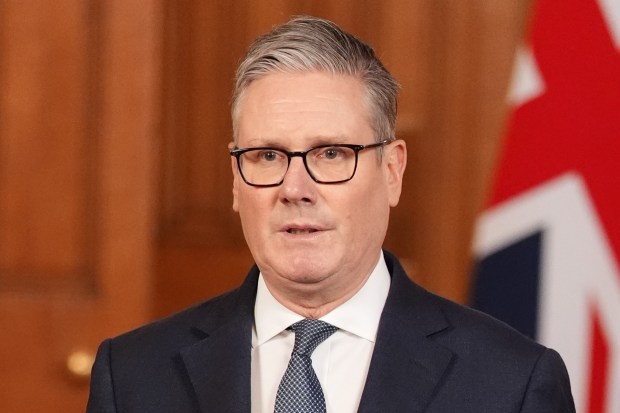
WAR in Iran is a political nightmare for Keir Starmer.
The Labour PM is already battling to cling to his job, and that fight is about to get a whole lot harder.
This war raises big questions about the UK’s military role and our Special Relationship with America.
Britain has been reduced to an impotent bystander as the US and Israel go against Iran’s Mad Mullahs.
We did not even give the US our bases to use, a decision condemned by Nigel Farage and Kemi Badenoch.
This war will also unleash a wave of toxic sectarianism in the UK.
This risks fuelling the hard-Left and Green Party and adding to Labour’s losses at the ballot box. If things are really bad, this could lead to Sir Keir facing a leadership challenge.
Even if that does not happen, war in the Middle East can quickly push up petrol prices and wreck efforts to slash living costs.
Sir Keir is walking a political tightrope, war could see him slip and fall.