A new front in the Ukraine war – diplomatic and geopolitical – opened up this week.
It’s essentially a battle between Russia on one side, with Ukraine and its Western European allies on the other, for the heart and mind of the critical player in any negotiated resolution: U.S. President Donald Trump.
And while a week of whipsaw Ukraine-policy shifts by the president ended with the dramatic announcement Wednesday of long-threatened economic sanctions against Russia, both rival suitors clearly remain convinced Mr. Trump’s position is far from settled.
Why We Wrote This
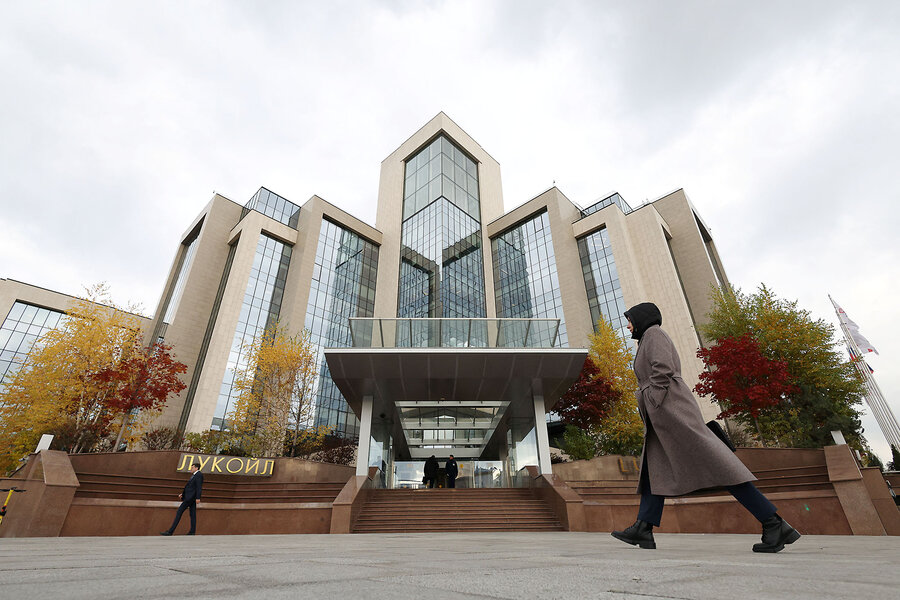
U.S. sanctions on Russia’s largest oil companies place new pressure on President Vladimir Putin. But, evidenced by President Donald Trump’s frequently shifting positions, it’s still unclear where he will land on how to end the war in Ukraine.
Russian President Vladimir Putin, whose invasion of Ukraine provoked the devastating war, still seems confident of swaying the president to the Kremlin’s narrative: that Russia is winning the war and that any settlement will require concessions to its territorial and political demands.
Indeed, just a few days before imposing the sanctions on Russia’s two largest oil companies, Mr. Trump seemed to be tilting in that direction, after a “very productive” phone call initiated by Mr. Putin.
After the call, Mr. Trump announced plans for a summit with the Russian leader.
He also pulled back from considering an agreement to provide Ukraine with long-range U.S. cruise missiles, and used a White House visit by Ukrainian President Volodymyr Zelenskyy to press him to accept a Russia-friendly diplomatic settlement.
Abandoning his recent suggestions that Ukraine could defeat Russia and reclaim all its land, he told Mr. Zelenskyy that if President Putin chose to do so, “he will destroy you.”
But in the days since those talks last Friday, Mr. Trump has moved back toward the position taken by Ukraine and its European allies.
In their view, Russia is not winning the war. Despite escalating Russian missile and drone attacks on towns and cities across Ukraine – and on its vulnerable energy infrastructure – Mr. Putin’s invasion force has made little significant headway in the past three years despite suffering tens of thousands of casualties.
When Mr. Zelenskyy balked at the president’s suggestion he accept Russia’s terms for a settlement, Mr. Trump returned to his longstanding position that an immediate ceasefire was necessary.

Both sides, he said in a social media post, “should stop where they are.”
Ukraine and its European allies promptly endorsed Mr. Trump’s call.
The Kremlin said no, holding to its demand that the “root causes” of its attack on Ukraine be addressed first – and the summit plans were put on ice.
The battle for Mr. Trump’s favor, however, is only going to intensify in the days ahead.
Kremlin officials are insisting the plans for a Putin-Trump summit remain very much alive.
Yet Kyiv and its European backers are redoubling efforts to persuade Mr. Trump he’s right to focus on a ceasefire – and, critically, that the sanctions are an important step toward achieving it.
Without sustained pressure on Mr. Putin, they’re telling him, Russia will simply keep bombarding Ukraine. After all, it was only because of the prospect of Ukraine getting America’s Tomahawk cruise missiles that Mr. Putin picked up the phone to the White House.
A key part of the Europeans’ approach is to appeal to Mr. Trump’s peacemaking ambitions.
Their message is simple: “You silenced the guns in Gaza. The Gaza approach can work in Ukraine.”
In concert with Mr. Zelenskyy, they’ve drawn up a negotiating blueprint explicitly modeled on Gaza.
Conveyed to Mr. Trump by NATO Secretary-General Mark Rutte – who was alongside the president after the sanctions were announced – it is built around the core of the Gaza approach: first, stop the fighting; then get to negotiations on the tougher long-term issues.

As a first stage – mirroring the release of Israeli hostages and Palestinian prisoners in Gaza – Ukraine and Russia would swap POWs. Russia would free children abducted in areas it has captured in Ukraine.
Again, as in Gaza, a “board of peace” chaired by Mr. Trump would oversee the process.
The problem is that, as things stand now, there is zero chance Mr. Putin will agree.
But the Europeans’ hope is to persuade Mr. Trump that continued pressure on Mr. Putin, along with the Russian forces’ inability to make major military breakthroughs, will pry open the door to a diplomatic settlement.
Their concern, however, is that in the wake of the diplomatic zig-zags since late last week, a renewed engagement with Russia, and a rescheduled summit, could yet come back onto Mr. Trump’s agenda.
Even after announcing the Russia sanctions, the president still seemed to be wavering on his view of the war.
Saying he was convinced Mr. Putin’s invasion had been aimed at taking the whole of Ukraine, Mr. Trump suggested a compromise deal under which the Russian president would step back “a little bit” from that goal. “We don’t want him to have the whole thing,” he said.
And he made clear he expected concessions from Ukraine as well.
Declaring that he hoped the sanctions would prod Mr. Putin to “become reasonable,” he added: “Hopefully Zelenskyy will be reasonable, too.
“You know, it takes two to tango.”