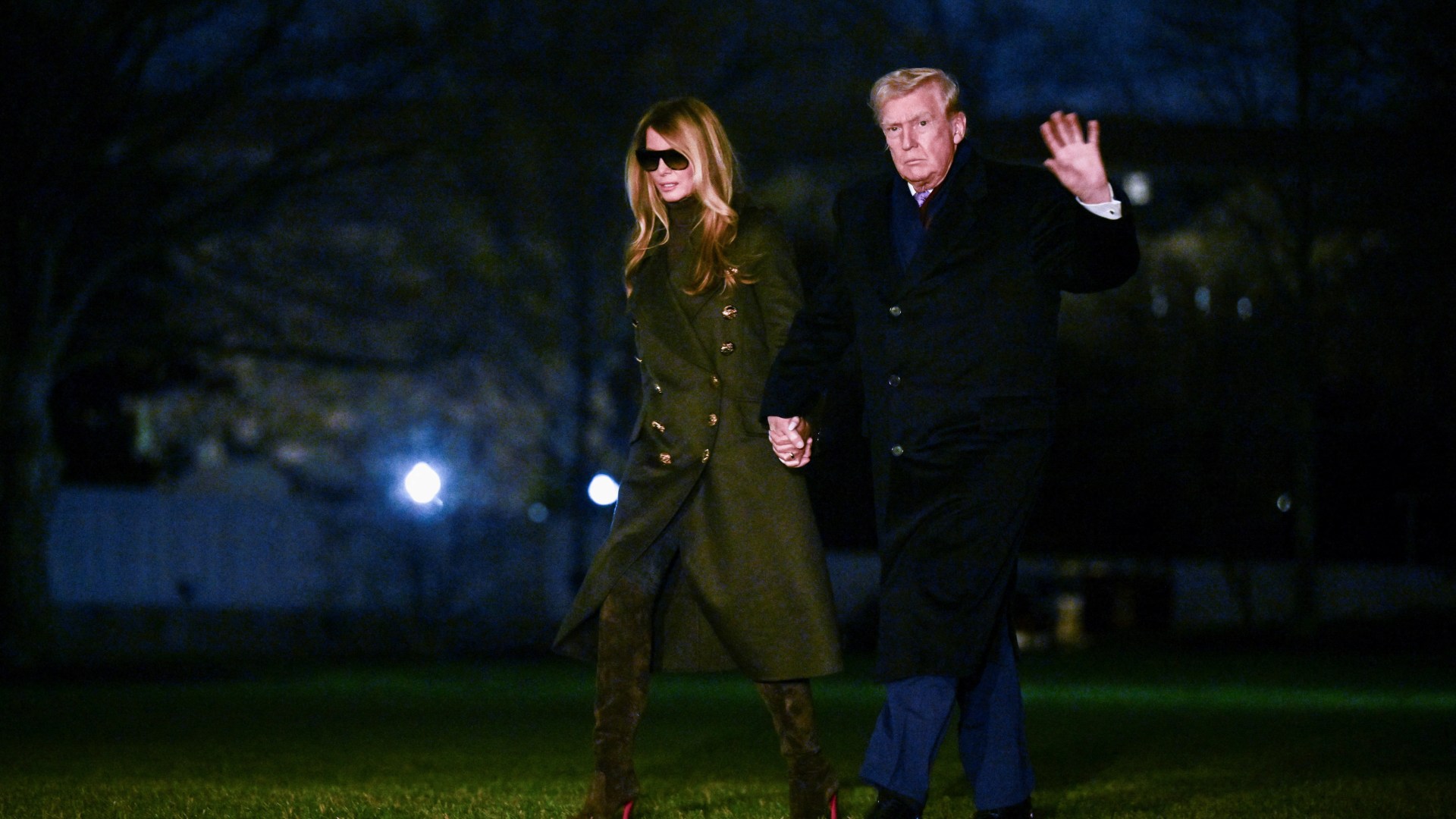
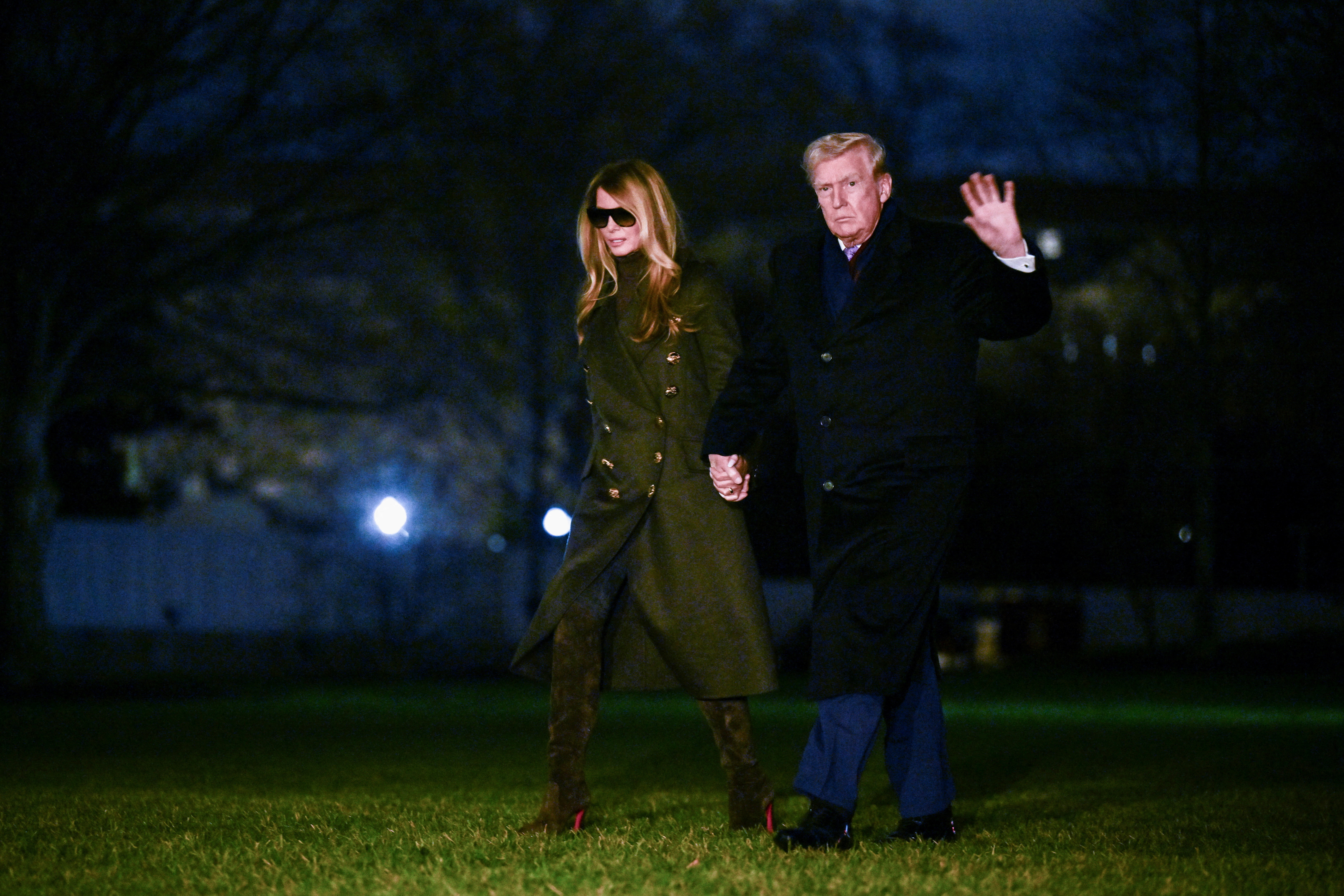
DONALD Trump confirmed he spoke to dictator Nicolás Maduro over a call before announcing the closure of Venezuela’s airspace.
While Trump revealed no details of the chat, he is said to have offered Maduro a chance to escape with his family amid fears of all-out war between Washington and Caracas.
During the call, Trump offered Maduro, his wife Cilia Flores and son a safe passage out of the country, the Miami Herald Reports.
In return, Washington demanded that Maduro resign right away and leave Venezuela immediately, along with his aides, to allow the restoration of democratic rule.
A source said that the call, first reported by the New York Times, was viewed as a last-ditch effort to avoid a confrontation.
But it is understood that both leaders failed to reach a detente after Caracas refused Washington’s ultimatum.
When asked if he had spoken with Maduro, Trump said: “I don’t want to comment on it. The answer is yes.”
Trump and “I wouldn’t say it went well or badly, it was a phone call,” Trump said regarding the conversation.
On Saturday, Trump said the airspace above and surrounding Venezuela should be considered “closed in its entirety,” but gave no further details.
The move – widely interpreted in Venezuela as a prelude to an imminent attack – stirred anxiety and sowed chaos in Caracas.
Soon reports emerged that a presidential jet flew from Caracas to the border with Brazil after the announcement.
According to the ADSB Exchange website, which monitors flight tracking data, the aircraft departed from Caracas and flew to the border with the Brazilian state of Roraima before returning to the Venezuelan capital.
The aircraft was an Airbus A-319 operated by Conviasa, a Venezuelan state-owned airline, CNN Brazil reported.
The plane landed at Santa Elena de Uairén Airport, about 250km from the border with Brazil, before returning to Caracas.
The plane is described by the website as a “VIP government aircraft” and has been used by dictator Nicolás Maduro on official trips.
It is not clear if Maduro was on that plane.
When asked whether his airspace comments meant strikes against Venezuela were imminent, Trump said: “Don’t read anything into it.”
The Trump administration has been weighing Venezuela-related options to combat what it has portrayed as Maduro’s role in supplying illegal drugs that have killed Americans.
The socialist Venezuelan president has denied having any links to the illegal drug trade.
Plans are reportedly being drawn up that could see bombings on military installations, cocaine labs – and even dictator Nicholás Maduro’s palace in Caracas – after the Department of War launched Operation Southern Spear.
Trump told military service members last week the US would “very soon” begin land operations to stop suspected Venezuelan drug traffickers.
It is the clearest signal yet that the US forces are now openly preparing for a military confrontation against Venezuela.
Carnage in Caracas
And the strikes could target everything from army bases to drug labs, drug trafficking installations, and Maduro’s fierce guerrilla camps.
Top of the list would be strategic military installations to ensure minimal resistance of force from Caracas.
This includes the La Orchila air and naval base – a strategic island used for large-scale naval and air drills.
The second key military installation could be the El Libertador Air Base, which serves as Venezuela’s main air base and logistics hub.
Fort Tiuna Main military complex in Caracas, which hosts the Defence Ministry headquarters, could also be bombed to wipe out the country’s top military leadership.
Apart from these, the US forces will seek to destroy every major narcotics hub across the country.
This includes cocaine production labs, logistical centres and transport facilities.
Trump’s options
Military experts argue that the easiest way for Trump to wipe out his targets inside Venezuela would be long-range bombings using US fighter jets and missile strikes.
Some 10,000 troops have gathered in the region, backed up by dozens of warships, submarines and fighter jets, armed with hundreds of long-range missiles.
The US military has sent the world’s biggest warship to join Trump’s drug-busting naval force in the Caribbean.
State-of-the-art Gerald R Ford Carrier Strike Group has joined the American ring of steel stationed near Venezuelan waters.
The deadly aircraft permanently assigned to the ship include the 18E Super Hornet, the 18G Growler, the 2D Advanced Hawkeye, and the 2A Greyhound, alongside Seahawks.
USS Gerald R Ford and its accompanying carrier strike group comes packed with 5,000 sailors and 75 attack-and-support aircraft, including F-18 fighter jets.
Meanewhile, stealth F-35s, Reaper drones, eight warships and even a nuclear-powered submarine are lurking off Maduro’s coast.
B2 and B1 bombers capable of carrying the 30,000lb “Massive Ordnance Penetrator” have flown sorties off the coast of Venezuela.
And there are enough warships and submarines in the area to carry almost 500 long-range Tomahawk precision cruise missiles.
Military helicopters and intelligence assets from the CIA are also keeping a close eye on Venezuela, with Pentagon planners reportedly preparing contingencies to seize ports and airfields if ordered.