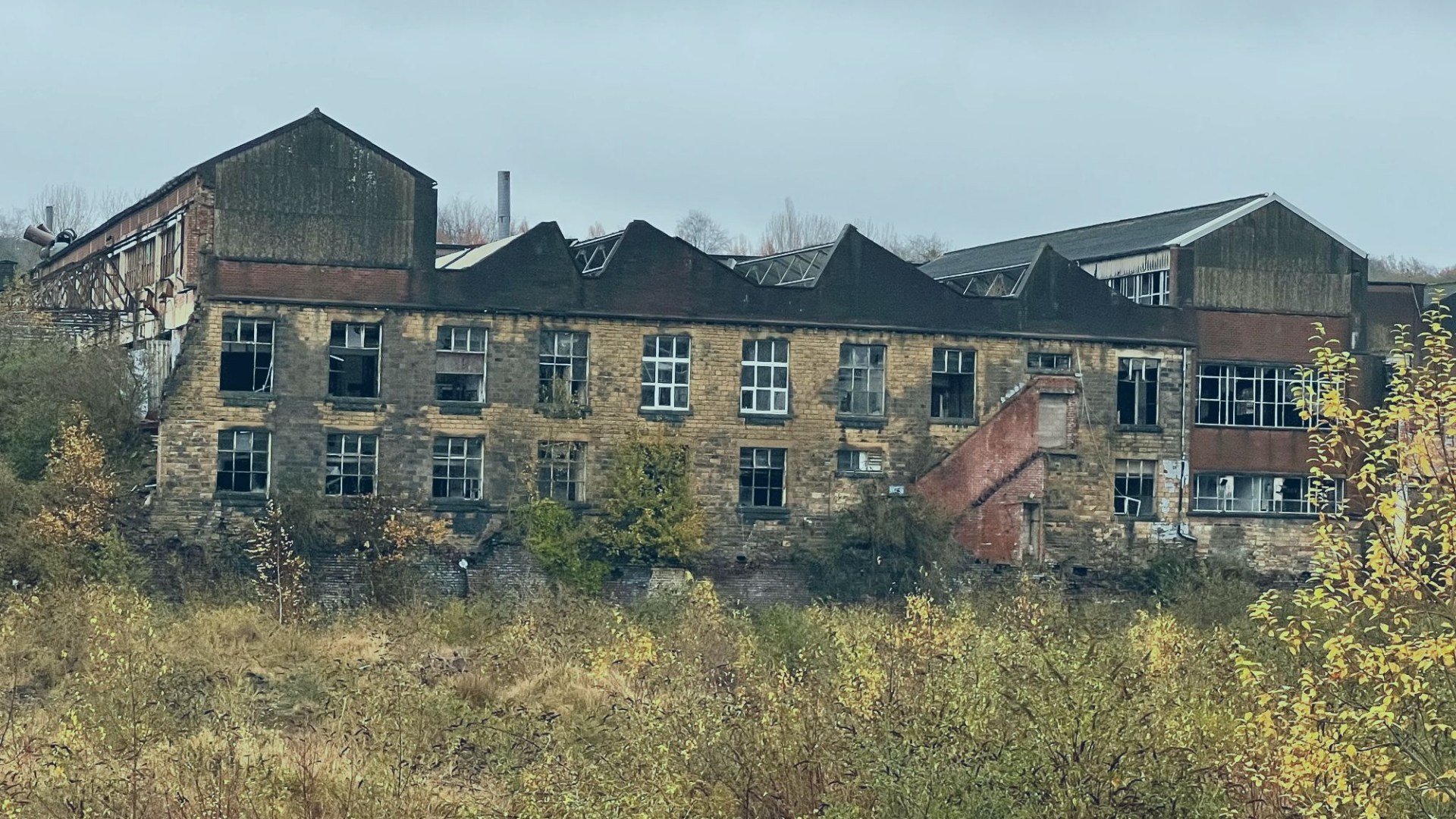
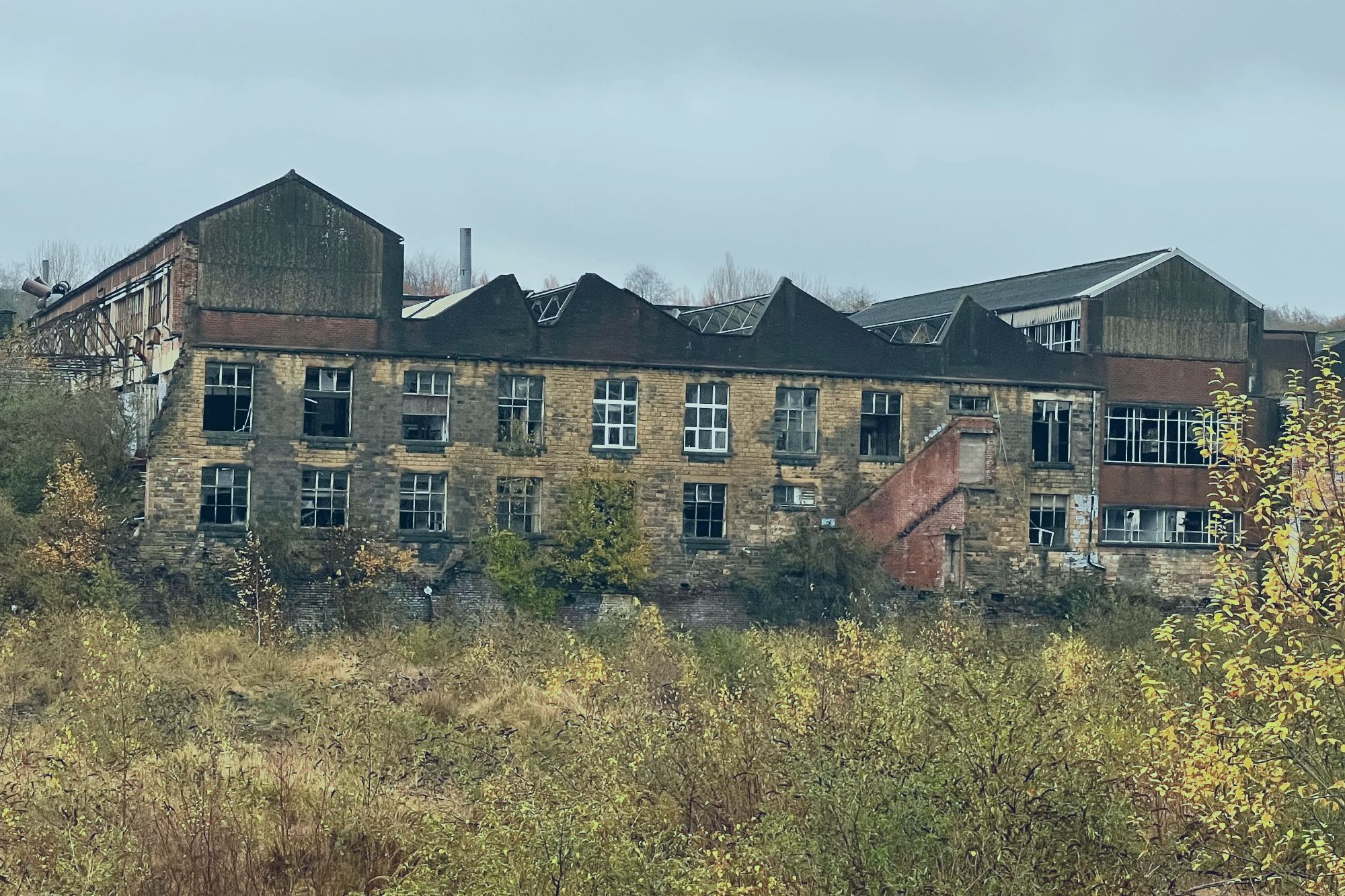
WITH its smashed windows, crumbling walls and graffiti, the creepy derelict building looks like the set of a horror movie.
But it was once a thriving factory in Rochdale – and the crumbling site hides a dark history of contamination and cover-up which puts it at the heart of a toxic town scandal.
It has been dubbed ‘Rochdale’s Chernobyl’ and a ‘ticking timebomb’ amid fears over contaminated land and the spread of dangerous dust.
Hundreds of one-time workers at the Turner Brothers factory were given pay-outs after developing cancer while working with dangerous asbestos.
The factory was shut down and sealed off in 2001 following a scandal but urban explorers, teenagers and other trespassers are putting themselves at risk by repeatedly breaking into the dilapidated building.
Undisturbed asbestos is low-risk but can become lethal when displaced because it releases microscopic fibres that cause lung cancers.
The River Spodden, which runs alongside the site, has previously turned BLUE after being contaminated.
Locals also live in fear that the factory – which once spewed out so much dust “it looked like snow” – poses a generational threat after many grew up in its shadow.
Malik Ditta, 65, who lives nearby, said: “The factory needs to be torn down because it’s dangerous to our health.
“I want to live until I’m 85 and I don’t want my grandchildren to be affected either.”
Resident Melissa Grimes, 27, whose parents still live close to the site, told how a fire at the factory in 2014 sent up clouds of white ash which scattered over nearby streets and homes.
Locals were warned to keep their doors and windows closed and the blaze – the second in a year at the factory – forced the temporary closure of a nearby high school amid safety concerns.
She said: “I was a teenager then and I remember seeing all this grey and white ash coming down outside as I watched from my bedroom window.
“My mum told us to stay inside and not touch any of it because she knew it probably contained asbestos.
“But my next door neighbour, who did stand outside, died from lung cancer a couple of years after the fire.
“She was a very active lady and would also take her dog for a walk along a path near the factory so I think it’s a strong possibility she was exposed to asbestos dust.
“I also worry about my mum and dad’s health because they’ve lived so close to the factory for decades.
“Something needs to be done. The factory has been a blight on the community for too long. I’ve got a three-year-old daughter and I don’t want her generation to be impacted too.”
Urban explorers who post YouTube videos showing paint-peeled walls, piles of rubble and hole-ridden roofs inside the factory and surrounding buildings have been warned by the owners that they could ‘disturb the material and put themselves at risk.’
Mother-of-three Tarryn Jones, 36, said: “I’ve been living here 18 years and I’m aware that all sorts of people have been able to get inside the factory who shouldn’t be in there.
“It needs to be pulled down and is definitely dangerous, without a doubt.
“I know there’s stuff buried underground and my friend, who works nearby, goes mad when he finds out kids have been in there because of the health risks.”
In its heyday the asbestos factory was the world’s largest, employing more than 4,000 people who weaved the toxic substance into heat resistant cloth used mainly for insulating pipes.
Its use was banned in 1999 because exposure can cause health problems and lung cancer.
SPY SCANDAL
The firm was later embroiled in a national scandal after it emerged company executives went to extraordinary lengths to discredit a 1980s TV documentary that exposed the problem.
They kept a list of people they considered to be ‘subversive’ and kept a secret dossier on researchers, local asbestos campaigners and solicitors – listing addresses, places they visited, alleged connections and supposed communist affiliations.
They also enlisted the help of ex-Rochdale MP Cyril Smith – later alleged to have abused children in the area – to give a speech to Parliament in support of Turner Brothers.
Today, hundreds of homes sit within just a few hundred metres of the site and older residents recall how the area sometimes resembled a “winter wonderland” because of the sheer amount of deadly white asbestos dust scattered around.
More homes have been muted on the site of the old factory – but were ruled out amid fears asbestos in the ground would be churned up.
Dog walker Freya Caldwell, 23, regularly uses the paths and green spaces around the site.
“I’m very concerned about what’s happening with the site,” she said.
“A lot of the factory is hidden behind trees and I didn’t even know it was here for a long time or how big it was. But it’s a huge health hazard.
Stephen Kane, 80, who owns nearby allotments, said: “The site gets broken into all the time,” he said.
“They used to have security but the portakabin got burned down.
“And I do worry about contaminated soil because we grow fruit and vegetables at the allotments and somebody also keep horses down there.”
The River Spodden has turned blue with pollution on several occasions and many believe toxins have leaked from the factory site – although there was no definitive proof.
Manuel Freicas, 30, whose home is only around 200 metres from the site, said he sought “assurances” from the estate agent before moving to the area.
“But I’ve still got some health worries, especially because I’ve got two young children, one six months old and the other three,” he said.
“All our water is filtered because we were so concerned about asbestos getting into the supply.”
A previous attempt in 2004 to redevelop the site into homes, a business park and a children’s day centre triggered local opposition amid concerns about the felling of hundreds of trees and asbestos being uncovered.
Other proposals have also been rejected by Rochdale Borough Council
It’s not known just how many lives the factory cost but many victims had to fight for compensation after Turner’s was bought out by American firm Federal-Mogul in 1998 with 263,000 claims for industrial injury outstanding.
Federal filed for bankruptcy in 2001 under the weight of the claims, leaving families to battle for what they were due.
Margaret Taylor’s mum Muriel died, aged 82, from a form of lung cancer in 2016 while she herself has lived in fear that she could be struck down by an asbestos-related illness.
Margaret, 70, said: “I remember my mum going to work at the factory as a child and she stayed there for more than 20 years.
“I started in the 70s after having my own kids and later worked on the factory floor as well.
“We were given warnings by management but never really told to any great extent how dangerous asbestos was.
“Other workers were told to take off their dust-covered overalls before moving through other parts of the factory but the cleaners were expected to go everywhere.
“I remember seeing piles of dust all over, even in the toilets, and we were never given face masks which seems unbelievable now.
“My mum later developed a bad cough and when she was referred to the hospital for tests they found she had cancer on her lungs.
“I felt like someone had smacked me in the face when she told me.
“A Macmillan nurse told me to make a claim but the factory owners initially said they had no record of her working there until we pointed out they’d been paying a pension to her.
“I think we received around £80,000 to £90,000 in compensation but it was never about the money.
“I know a lot of people who worked at the factory but when they died their families never got a penny of their pension and nothing in compensation either.”
Margaret, whose family home is just few hundred metres from the factory, recalls seeing so much dust scattered around the local area it resembled a “Christmas scene” – even in summer.
“Me and my friends used to think it was funny, but we didn’t know any different,” she says.
Shagufta Aslam’s father Khushi also worked as a cleaner at the factory for 20 years, doing morning and evening shifts..
Shagufta said: “My dad was a proud man: hardworking, reliable, and devoted to his family.
“He was at the factory from the moment he clocked in until the moment he clocked out.
“He believed he was ‘elite’ because he got paid more than his peers working at other local factories.”
Shagufta, 54, recalls how her dad would return home from work covered in white asbestos dust that clung to his clothes, skin and hair.
She said: “My mum Raman would shake out his work clothes in the backyard or kitchen before hand-washing them in the sink.
“I still remember the cloud of dust that would rise into the air. My little brother and I, just five years old at the time, would run through it, laughing—completely unaware of the danger we were breathing in.”
Factory’s uncertain future
The firm which owns the factory and land says the community is not at risk from asbestos – but warned trespassers they were dicing with danger.
Spodden Park, which took ownership three years ago, says it has taken action to secure the site and begin cleaning it up.
A spokesman said: “We regularly have to secure the site from trespassers who are damaging the fencing in place.
“As such the site is visited weekly, and repairs are made whilst to prevent illegal access and to keep people safe. We also have CCTV on site, which captures images of those illegally entering the site.
“We meet with the local authority on a regular basis to keep them informed of such incidents.
“During a recent community safety meeting with Rochdale Council, an agreement was made to share these images with the Council and the Police to aid in identifying who they are.
“We have conducted a number of surveys, which have provided us with a lot more information about the site.
“These surveys have shown that outside the buildings, asbestos is only present in trace amounts in some of the soil. It is not present in the air, which is where the material is a danger to people. Asbestos is present inside the buildings.
“As such, the site is not a danger to the wider community, except for those breaking into the site and its buildings. By doing so, these people can disturb the fibres, and can cause harm to themselves but also others that they come in contact with.”
The firm says it has treated and removed infamous Japanese Knotweed from the site and is working with Rochdale Council to find a long-term solution on transforming it.
They said: “We know that previous owners have acted unilaterally, and we do not want to follow in their footsteps.”
A spokesperson for Rochdale Borough Council, said: “We are not the owners of the site or responsible for its security, but we recently met with SPL, the owners of the site, to discuss the recent break ins and we will continue to offer them support to help tackle this issue.
“Asbestos is generally deemed safe when it’s not disturbed, but people need to be aware that they are putting themselves in potential danger if they illegally enter the site.”
Khushi died in 1980, aged just 46, because his lungs were “ravaged” by the dangers he’d been exposed to at work.
Then Raman passed away suddenly in 1989, aged 56, leaving Shagufta, then 15, and her younger brother orphans.
Shagufta, 54, says her mother’s death could also be connected to the amount of asbestos dust she inhaled, while she and her brother have suffered kidney issues.
She added sadly: “This isn’t just my family’s story—it’s a story shared by many in our community.
“Workers who gave their lives to industry, unknowingly exposed to deadly substances. Families who lived with the dust, the danger, and the aftermath.”