Alicia Kearns was working with her parliamentary researcher when the call came through from security demanding an immediate meeting.
Within minutes, police had dropped the extraordinary bombshell that they suspected the researcher, Chris Cash, had been passing secrets to Beijing for a year.
During a meeting which left the chairman of the foreign affairs committee – now shadow national security minister – feeling physically sick, counter-terrorism officers and MI5 said her trusted aide, who sat at the heart of key government policy decisions on China, was a suspected traitor.
In an extraordinary scandal which raises questions about the hostile state’s interference in our democracy, it was alleged that the 30-year-old – who had briefings from former MI6 spies, ambassadors, intelligence officials and MPs – had been passing on ‘information prejudicial to the safety or interests’ of Britain.
A shocked Ms Kearns burst into tears as her mind raced, trying to calculate the potential harm that could have been caused by someone who had worked with the top China experts in the country, including academics, industry leaders and think-tank staff.
As director of the China Research Group, Mr Cash played a key role in meetings with the Foreign Office, Home Office, Treasury and Department for Business and Trade.
The influential group was set up in 2020 by several Tory MPs, including Ms Kearns, to shape government policy on China amid growing concerns about Beijing’s attempts to extend its influence in Britain.
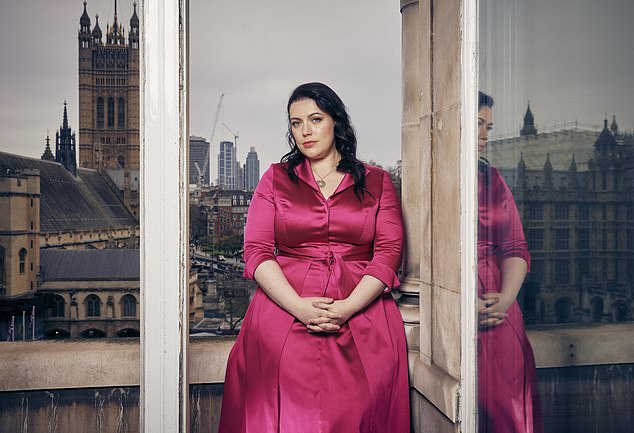
Alicia Kearns (pictured) was working with her parliamentary researcher when the call came through from security demanding an immediate meeting
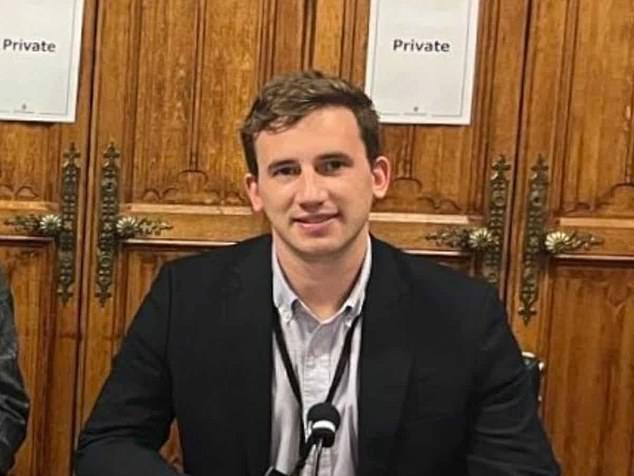
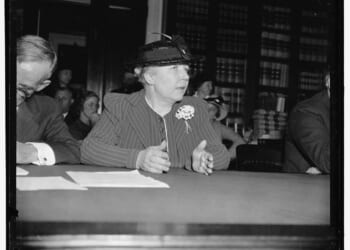
As director of the China Research Group, Mr Cash (pictured) played a key role in meetings with the Foreign Office, Home Office, Treasury and Department for Business and Trade
The important role saw Mr Cash meet Chinese dissidents, victims of ‘transnational repression’ (where a foreign state targets people overseas), and those who may have been intimidated in secret Chinese police stations in the UK.
She fears all of them could have been betrayed, putting their safety at risk. But there was worse to come.
When Ms Kearns, the Conservative MP for Rutland and Stamford, later sat down with detectives, they brought up one line of questioning that still leaves her lying awake at night.
An officer asked: ‘Can I just check that you went to Taiwan, and is this the name of the hotel you stayed at? Can you tell us why it would be of interest to somebody to know that you were in Taiwan in that hotel?’
She recalls the instant chill she felt: ‘They could have got in that room at any time. When I stay in a hotel, I always double check if it is a two-way mirror, I always try to do a rough check for anything I’m worried about.
‘But unless you have been specifically trained to do it, you can’t be sure that the room hasn’t got a bug or a camera somewhere. There could be photos of you walking around your hotel room naked.
‘On trips like Taiwan, you assume that you’re being listened to in meetings. But in a hotel room it’s not like you get changed under the covers. I worry what information they have about me or particularly my family – I would have rung my family in that room.’
In the run-up to the trip to Taiwan in December 2022, Chinese authorities had sent threatening letters warning Ms Kearns and her team not to attend.
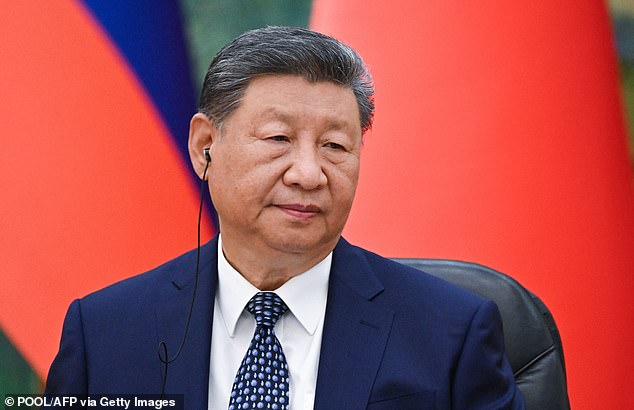
It was alleged in a pre-trial hearing that secrets were passed to an unnamed Chinese intelligence agent who then handed them over to Cai Qi, de facto chief of staff to President Xi Jinping (pictured)
‘The Chinese government outright threatened us that if we went there’d be repercussions,’ she said. ‘So finding out that potentially my hotel room information was passed on… they could have done anything.’
Mr Cash and his long-time British friend Chris Berry, 33, whom he met when they were teaching in Hangzhou, China, in 2017, were charged with spying for China.
But last month the Crown Prosecution Service (CPS) abruptly dropped the case without explanation just weeks before their trial was due to start.
Since then a bitter political row has raged about who was responsible for the collapse of the high-profile prosecution.
Ms Kearns has accused Labour of refusing to give the CPS crucial evidence that Beijing poses a national security threat to Britain to avoid harming trade – while Sir Keir Starmer has tried to blame the previous Tory government’s stance on China for the fiasco.
It was alleged in a pre-trial hearing that secrets were passed to an unnamed Chinese intelligence agent who then handed them over to a ‘senior member of the Chinese Communist Party and a Politburo member’, understood to be Cai Qi, de facto chief of staff to President Xi Jinping.
Prosecutors claimed that Mr Cash had passed politically sensitive information to Mr Berry.
The charges, strenuously denied by both, related to 34 reports that the Chinese intelligence agent commissioned from Mr Berry, based on information Mr Cash had provided between January 2022 and February 2023.
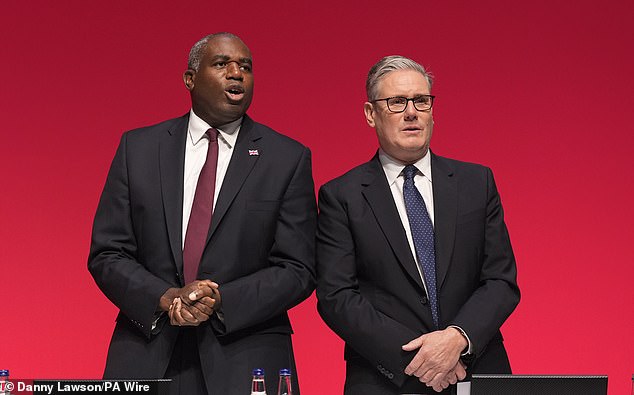
Ms Kearns has accused Labour of refusing to give the CPS crucial evidence that Beijing poses a national security threat to Britain in order to avoid harming trade. Sir Keir is pictured with Deputy Prime Minister David Lammy (file image)
Because the charges have been dropped by the CPS, both Mr Berry and Mr Cash are, in the eyes of the law, guilty of absolutely nothing.
It was said by prosecutors that ‘over time Chris Cash began to share unsolicited “off the record” information too’.
But if that was actually the case, then no one suspected a thing throughout this period.
Not the former MI6 spies Mr Cash spoke to as part of his work, nor the security team who cleared him to receive a parliamentary pass after he started work as an intern in 2021 before graduating to become a researcher.
When former security minister Tom Tugendhat promoted Mr Cash to director of the China Research Group, Ms Kearns was impressed: ‘My first impression, he was highly intelligent, highly capable, very detailed, focused, incredible knowledge of China and Mandarin. He seemed determined to protect the UK from hostile acts by the Chinese.
‘I knew him for about a year and a half. He passionately believed that the CCP [Chinese Communist Party] was harming China. He wanted to change policy to better protect the UK.’
She describes him as being at the ‘heart of government policy on China’, working on decisions such as the TikTok ban on government devices and exposing covert Chinese police stations in the UK.
He played a key role in the Government forcing a Chinese-owned firm to sell its 86 per cent stake in the Newport Wafer Fab semiconductor plant in South Wales and was an integral part of the China Research Group’s lobbying to insert national security provisions into a procurement Bill aimed at preventing Chinese companies from undercutting British rivals.

Mr Cash played a key role in the Government forcing a Chinese-owned firm to sell its 86 per cent stake in the Newport Wafer Fab semiconductor plant (pictured) in South Wales
Ms Kearns recalled: ‘He did all the research behind it to allow us to go and do that work and to make those arguments.
‘He was seemingly very supportive of UK national interest and hyper-critical of the Chinese government’s approach to dealing with Hong Kongers and Uighurs and anyone who has had to escape China essentially because of their oppressive actions.
‘I mean, he wasn’t necessarily a fully signed-up Conservative. But his job wasn’t to be that. He was exceptional at his job.’
Mr Cash made himself invaluable, she added.
‘He built up an extraordinary web of networks. He understood how the government and democratic process is undertaken and the processes involved to influence change in government policy.
‘He knew lots of journalists because people either needed to make comments which he would draft or help with, lots of think-tankers, academics. Essentially, the Westminster class. He knew them all.
‘His job was to do the hard work behind the scenes to help us achieve policy change… he was involved in everything. He was kind of the engine of the China Research Group.’
But no-one realised that the brilliant researcher at the heart of the group’s work might have been one of its biggest concerns.
Ms Kearns said: ‘It would be gold dust for China. They want to understand how the system functions, how Parliament works, how do you influence MPs, how does business get done in Parliament?
‘It’s all that personal stuff – what makes Tom Tugendhat tick now he is the security minister? Who are the people he listens to? How does he engage? How does he work?
‘It is absolutely priceless information and it’s absolutely fundamental if you’re trying to undermine a democracy or the individuals themselves.
‘China wants to understand how the China Research Group functioned, what we were doing, why we were doing it.
‘Chris was not going to ministerial meetings, but certainly he was well aware of the content likely to be discussed when those meetings were taking place.
‘He never had access to anything top secret. But he knew what government ministers were doing, what we were working on, what we were thinking.
‘This is what our intelligence services do – go out there and get the colour, the state of mind.’ While it is clear why China would want a spy in the heart of Parliament, Ms Kearns has never understood why anyone would agree to work for Beijing (if indeed they had done so).
‘Now she worries whether lives might have been put at risk.
‘The bit that worries me is that he had lots of meetings with people who were dissidents who had to flee China, Uighurs, Hong Kongers. That obviously is now concerning for them,’ she says.
The son of a GP, Mr Cash enjoyed a privileged upbringing, attending the £5,000-a-term George Watson’s College in Edinburgh before studying at St Andrews University.
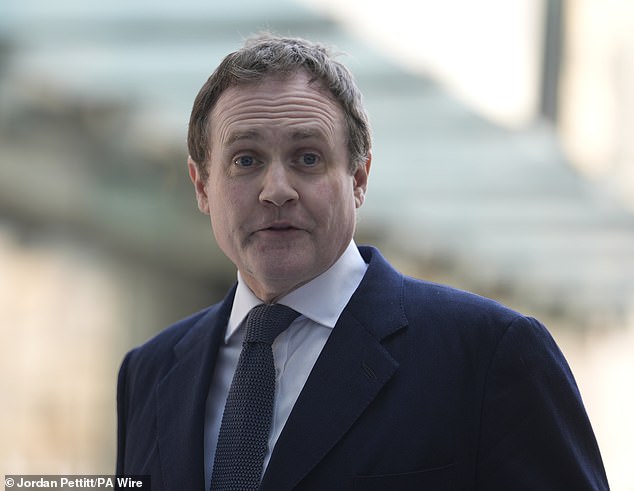
When former security minister Tom Tugendhat (pictured) promoted Mr Cash to director of the China Research Group, Ms Kearns was impressed
He taught English in China for two years then returned to the UK to study for an MSc in China and globalisation at King’s College London before securing a job in Parliament in 2021.
Following his arrest, Ms Kearns learnt that Mr Cash had boasted in the pub that he had once been arrested in China and had been held for a period at a local prison on a visa problem.
‘If I had known he’d been arrested in China, I would have had quite a lot of concerns and wanted to know a lot more about what happened,’ she said.
‘That is the perfect sort of opportunity which people in the Chinese government may take in order to have influence over somebody.’
Recalling the day when she learned of the Cash allegations, Ms Kearns said: ‘About a week before he was arrested in March 2023, I was sat in my parliamentary office with Chris and we were working on some stuff together and suddenly I got a phone call from parliamentary security saying, “Can you come for a quick chat now?”
‘I just thought it’d be about another threat against me from China, Serbia, Russia or somebody else. I wasn’t too worried.
‘I even joked to Chris, “Uh-oh, off I go to find out about another person who wants to kill me.” He laughed, but the thing is, he looked a bit nervous.’ Ms Kearns was asked to sign the Official Secrets Act before being told that Mr Cash would be arrested in the coming week.
‘I burst into floods of tears in the meeting. I was just so shocked and I felt so betrayed.’
She asked how she should behave around Mr Cash when she went back to her office, where he was waiting – and was told to ‘go back and act normal’.
‘The next thing I knew, I was getting phone calls from Chris’s mum to my office saying, “Alicia, what’s going on? Our home in Edinburgh is being raided. Chris has been arrested. Please call me”.’
When the scandal broke, Ms Kearns was the target of vile slurs as false rumours spread that she had a sexual relationship with Mr Cash. She recalled: ‘It was all made-up rubbish. I was breastfeeding at that point. The idea that any woman who is breastfeeding has an affair? It was extraordinary.
‘People were using it as a chance to do a political hit job – at a time when people should rally around colleagues and say, “isn’t it awful that we’ve got a hostile state trying to undermine our democracy”?’ One MP bluntly told her in the shadow of Big Ben: ‘That’s the end of your career, isn’t it?’
As the trial approached, police arranged for Ms Kearns, a key witness for the prosecution, to visit Woolwich Crown Court in south London as part of preparations.
She recalled that Mr Tugendhat had been assured it was a ‘slam dunk case’ – but it collapsed four days later, on September 15. Ms Kearns received no information from the Government about what had happened, but when she rang one minister, he coldly replied: ‘This is the Tory government’s fault. These charges should never have been brought.’
She believes Attorney General Lord Hermer should have intervened to ensure the case proceeded because it was a matter of national security.
‘The real victim of this is the British people. As a parliamentarian, the work that I’m trying to do is to make our country safer, but as a result of this I do not feel that this government has my back and that I can trust them.
‘It is inconceivable that the case could have collapsed without ministerial or executive involvement in some way. There are serious questions about constitutional propriety.’
She adds: ‘Everyone that I’ve spoken to within the intelligence service is furious about this.
‘All I was told was it’s come from the top. I think they cut the legs from under the CPS for some kind of grubby deal at the Treasury and No 10. It sends a really dangerous message that we will not defend our own democracy, we won’t defend our own people and the nation itself.’
Days after the case was dropped, Ms Kearns received a letter from the CPS formally acknowledging that she had been ‘targeted’ by China.
It said: ‘A research group chaired by you… was unfortunately targeted by China as a means of obtaining information from within Parliament on the then government’s policies and views in relation to China.’
Lawyers for Mr Cash and Mr Berry – who continue to deny any wrongdoing – have described the evidence against the pair as ‘threadbare’.
Henry Blaxland KC, defence counsel for Mr Cash, told the Daily Mail: ‘Mr Cash will not take part in a trial by media. He very much regrets that Ms Kearns, for whom he retains a very high regard, appears to have been poorly briefed by others as to the crucial facts in this case.
‘At no point did Mr Cash seek to assist Chinese intelligence. Had there been a trial he would have been vindicated.’
Ms Kearns says she feels no embarrassment over what happened, adding: ‘The reason we were targeted in the China Research Group is because we were so effective.
We changed lots of laws and policies. We made our country safer. I make no apologies for making myself a thorn in the side of the Chinese government.’