This article is taken from the November 2025 issue of The Critic. To get the full magazine why not subscribe? Get five issues for just £25.
Readers of the Bookseller, and indeed one or two broadsheet newspapers, will know Karen Napier well. As chief executive of the Reading Agency it is her job to dish out the increasingly gloomy statistics relating to the leisure pursuit this excellent charity exists to promote.
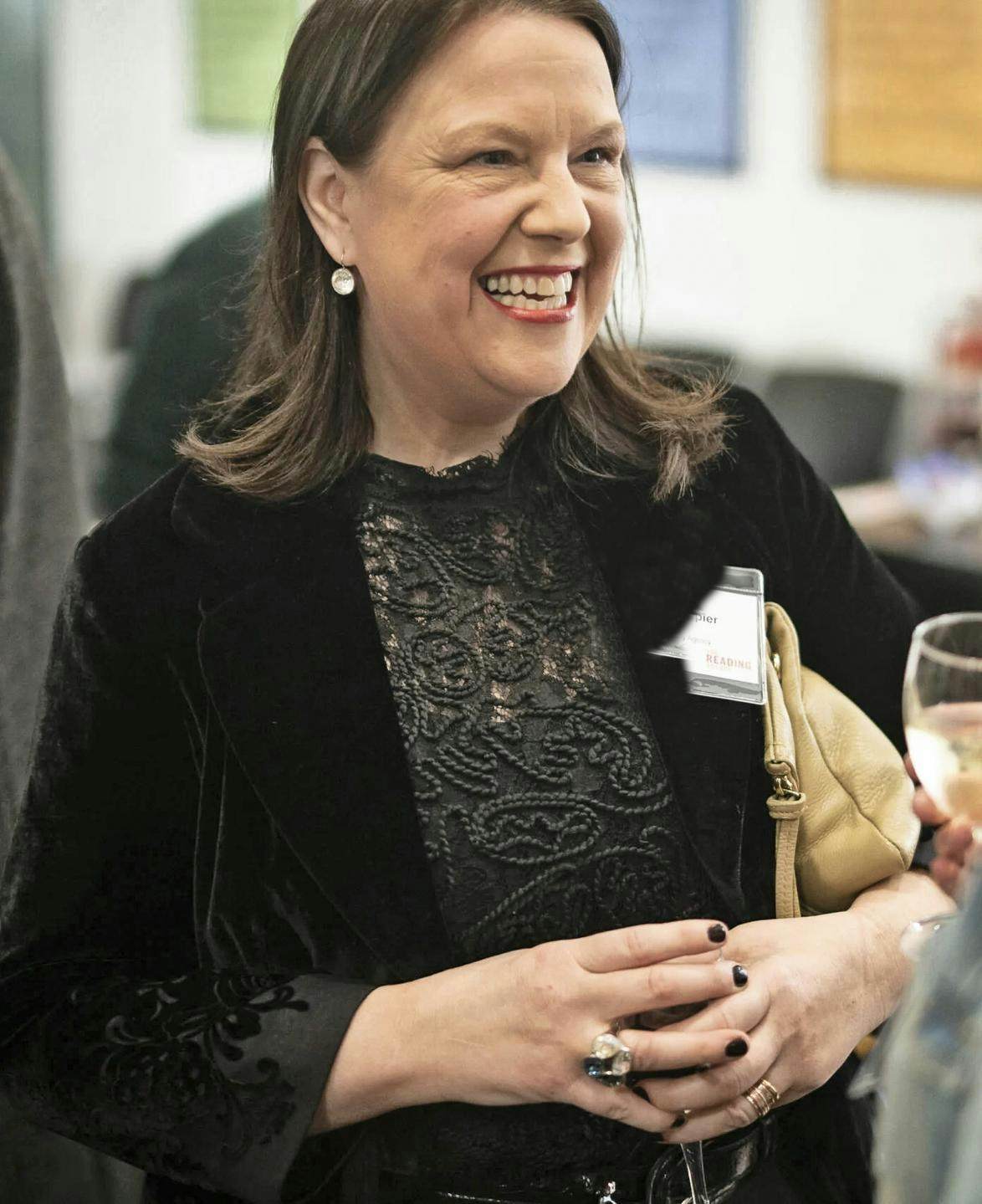
Last month’s were particularly awful. According to Ms Napier’s researchers, only 50 per cent of UK adults are regular readers — down from 58 per cent in the last survey — whilst 15 per cent never pick up a book at all.
The remaining 35 per cent admitted to being lapsed readers bludgeoned into an intellectual coma by the depredations of technology and mass entertainment. Down amongst the young people, 24 per cent of “Young Adults” — defined as those between the ages of 16 and 24 — were more or less detached from the world of books.
As to how we might explain this falling-off, Private Eye, gesturing at an equally calamitous survey of the nation’s schoolchildren, simply printed a photograph of a smartphone.
If people are reading less, then what are we supposed to do about it? All very well for the Reading Agency to trumpet the benefits of reading, and the knowledge, self-awareness and general enlightenment it imparts, but what can be done in practical terms?
One of Ms Napier’s suggestions, to no one’s very great surprise, was that we should “redefine” the idea of reading. There is no need to count whole books or short stories as a qualification. A “reader” could equally well be the casual browser of a fashion magazine or an occasional patron of audio books.
It is, of course, a salient feature of the modern world, and the constant lapse of its standards, that we should need to keep on redefining things. Kemi Badenoch was recently heard suggesting that if a quarter of the adult population could technically be classed as disabled, then we might need to redefine our definition of disability.
As increasing numbers of the nation’s children are reckoned clinically obese owing to their inability to stir from couch or games console, we are clearly going to have to redefine our definition of exercise to include walking from one end of a room to the other or picking up a knife and fork.
You can see Ms Napier’s point. A bad situation that seems to be getting worse needs compromise; any kind of reading is, presumably, better than none at all.
By chance, in the same week that the Reading Agency filed its research, several academics — amongst them the distinguished Shakespeare scholar Sir Jonathan Bate — could be found lamenting the fact that students of English Literature could no longer be induced to read “long” — i.e. Victorian — novels. There was no point in putting Bleak House or Our Mutual Friend on a course list, because no one would ever finish it.
Born into a different world, where one regarded one’s tutors with a feeling of uneasy respect, if not outright terror, the Secret Author smiled over this. After all, the solution to undergraduates who decline to read the books they are going to be examined on is surely either to get rid of them and install keener talents prepared to make the effort or ensure that they fail the examinations.
At the same time, it is possible to have a certain amount of sympathy with the teenager being crammed for an English Literature qualification, if only because so many of the set texts are tedious in the extreme.
Why, the Secret Author once enquired of his youngest son, didn’t he want to study English at A-Level? The answer seemed to be that the syllabus included Paradise Lost, and for once the fond parent sympathised.
Most books, you suspect, are not taught in schools as books. They are taught as a means of passing exams. This is not the fault of the schools themselves but of the Gradgrindian approach to education as a whole that has bedevilled the sector for the last three decades.
An educationalist who really wanted to encourage his or her charges to read would simply allocate one afternoon a week to “reading”, offering a wide selection of titles from every age and genre, and leave the children to get on with it, having first placed them in a technology-free environment.
The wider implications of the 50 per cent of adults who don’t read regularly and the children who regard books as implements of torture devised by the examination boards are, of course, disastrous.
From an early stage in Silicon Valley’s march across human consciousness, we all knew that its effect would be to make us more stupid. Now one of the great democratising tools of the modern age is going to be rendered more exclusive.
Readers will become more exalted, by dint of their superior agency, and non-readers further ground down by its absence. If Bridget Phillipson has a list of priorities on her desk at the Ministry of Education, then this ought to come right at the top.