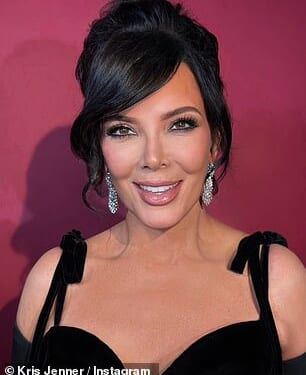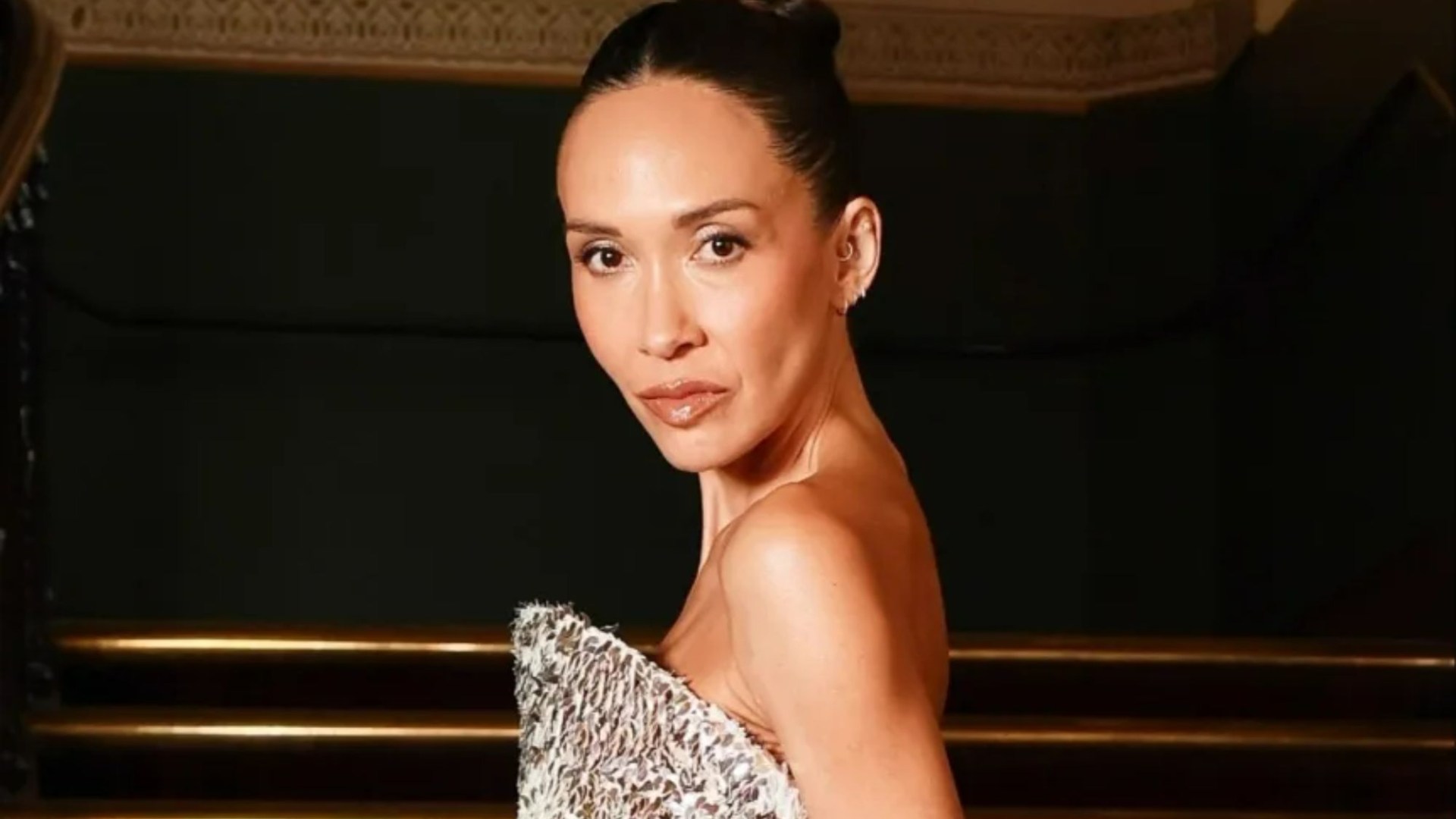
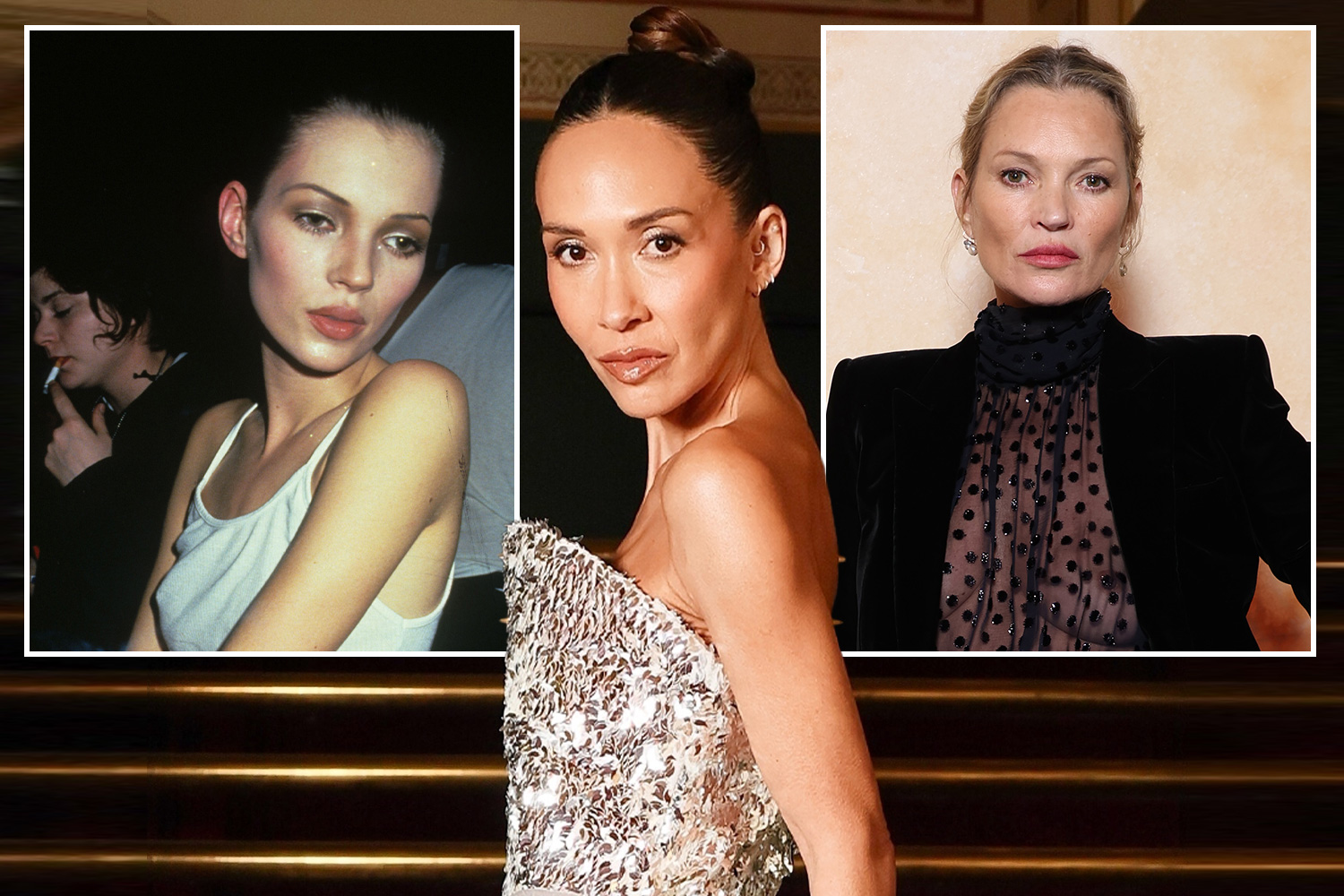
YOU’D be hard pushed to find a picture of Kate Moss from the 90s where she wasn’t sporting a taut, scraped back hairdo.
The supermodel was a big fan of the so-called ‘Croydon facelift’, which sees the hair pulled back so tightly that it smooths out the skin and gets rid of wrinkles in the process.
And despite the fact that numerous hair experts have warned against the ‘do – as it can lead to hair breakage and loss – it seems to have made a comeback recently.
‘Bringing sexy back’
Myleene Klass is among the famous faces revisiting the trend, and recently told fans on Instagram she was wearing the ‘Croydon facelift’ as she hosted a 25th anniversary celebration of radio station Classic FM.
“Croydon facelift, I’m bringing sexy back,” the 47-year-old wrote over the top of a clip on her Instagram Stories, tagging hair stylist Joe Pickering-Taylor in the process.
Anne Hathaway is among the U.S. stars who has sported the look in recent months, while Jennifer Lopez, Kim Kardashian and Nicole Kidman are also fans.
While on this side of the pond, Love Islander Liberty Poole and comedian and podcast host GK Barry donned the ‘do for the recent Pride of Britain awards.
And one reason the style is so popular among famous faces is undoubtedly due to its anti-ageing effects, as International Session Stylist Ella Fisher said it can shave off up to a DECADE from someone’s appearance.
She also said she’s seen the look making a “spectacular return” at fashion shows all around the world.
“This look hasn’t been seen for over a decade but during my work at London, Milan and Paris fashion weeks, it’s been really popular in the shows there,” Ella explained.
“The results of this can take up to a decade off of people’s age!”
The OG
Kate is known as the OG when it comes to the popularity of the Croydon facelift.
Speaking to Vogue about her love of the style, she said: “A great trick they do on photoshoots is doing these little braids underneath your hair to pull your skin up, like a little lift.”
The results of this can take up to a decade off of people’s age
International Session Stylist Ella Fisher
She called it an “old Hollywood trick”, adding: “I think they had to know all that stuff before there was retouching, they had to do it all by hand.
“It’s amazing!”
However, the Croydon facelift can actually be dated back to 1944, when actress Marlene Dietrich used it while filming Kismet.
According to reports, the screen star instructed hair stylists to twist small sections of her hair around hairpins, which they then pulled back tightly and pinned to her head.
She’s also said to have used surgical tape to pull back her face and get rid of wrinkles – then using a wig or her natural hairline to hide it.
However it’s Kate’s love of the style – and her Croydon roots – which led to it taking on the nickname by which it’s known today.
Everything you need to know about hair loss and thinning
Anabel Kingsley, Brand President and Lead Trichologist at Phillip Kingsley, spoke to Fabulous exclusively.
How many people experience it?
Hair thinning (aka female/male pattern hair loss) and hair shedding (aka telogen effluvium) are incredibly common. Telogen Effluvium probably impacts everyone at some point in their lifetime, while it’s estimated pattern hair loss affects 50% of men by age 50, and 40% of women by aged 50. However, everyone’s hair changes and loses some diameter with age.
Why does it happen?
Female and male pattern hair loss are largely genetic. It occurs when hair follicles on the scalp slowly miniaturize and start to progressively produce shorter and then finer hairs. In men, it is caused by a sensitivity of hair follicles to testosterone/ dihydrotesterone (DHT). This can also be the case with women but isn’t always.
TE occurs in response of some sort of underlying imbalance or metabolic shift. As hair is non-essential tissue, your hair follicles are very sensitive to general health as your body gives hair last priority. When something is imbalanced, or you are unwell, more hairs than usual exit the growth (anagen) phase of the hair growth cycle, rest for 3 months (called telogen) and then shed.
Common triggers are rapid weight loss, low calorie diets, thyroid disorders, iron and ferritin (a protein that stores iron) deficiency, lack of Vitamin B12 and Vitamin D, certain medications, intense stress, stopping or starting an oral contraceptive pill and high fevers. Due to the length of telogen, telogen effluvium doesn’t occur right after the causative event – it happens anywhere from 2-4 months later.
How much hair can someone be expected to lose?
With TE, you can lose up to 3x your ‘normal’ amount each day. It’s normal to lose up to 150 hairs per day, and with TE you may see between 300-400. Up to 50% of hair can be lost with shedding, but the good news is that it’s temporary and hairs should grow back as before once the underlying cause is addressed. With pattern hair, it depends.
Men can go almost completely bald, whereas women usually experience a more spread-out loss of hair over the top of their scalp. As pattern hair loss is progressive, early treatment is so important as this allows you to maintain as much hair density as possible.
Word of warning
As with any scraped back look, there have been warnings about hair damage.
A study in America saw researchers discover the link between the Croydon facelift and hair loss, with Dr Josephine Quintanilla–Dieck, who led the research, saying: “Pulling hair into tight ponytails or braids, using hot rollers, curling irons, or straightening irons and applying chemical relaxers can all lead to structural damage of the hair shaft as well as thermal and chemical damage to the skin of the scalp.
“Regular and sometimes even occasional use of these hair techniques may lead to hair breakage and hair loss from the root.
“Although usually reversible, hair loss occasionally can be permanent with long–standing or severe cases.”


While Ella advised women to take regular “hair holidays” from the style to allow their locks to recover.
“This style should only be worn for short periods of time to ensure healthy hair and prevent conditions such as traction alopecia through damage of the hair roots,” she said.