
THOUSANDS more men will get a life-saving prostate cancer drug on the NHS in a win for The Sun after we revealed the deadly postcode lottery.
NHS England said an extra 7,000 blokes per year will now be eligible for abiraterone before their cancer has spread.

Prostate Cancer UK said the move will save 560 lives per year, and 3,000 by 2030.
The drug was previously only given after a tumour had progressed to other parts of the body, when survival chances are lower – but it was the first-line treatment in Scotland and Wales.
Studies suggest an extra one in 10 men survive six years with the drug compared to standard treatment – a boost from 77 to 86 per cent.
It also halves the risk of cancer coming back for high-risk men.
Read more on prostate cancer


Thousands of men’s lives will be saved
Amy Rylance,
Amy Rylance, from Prostate Cancer UK, said: “This decision is a momentous victory for the thousands of men whose lives will be saved.
“Until now men in England were told they had a cancer that was likely to spread but that they couldn’t access the treatment proven to be their best chance at surviving.
“We refused to accept this and I’m proud to have stood alongside the men who fought tenaciously to get the treatment they need, as well as supporters like The Sun which kept the spotlight on this issue.”
Prostate cancer is the most common form of the disease in the UK with about 56,000 new cases and 12,000 deaths every year.
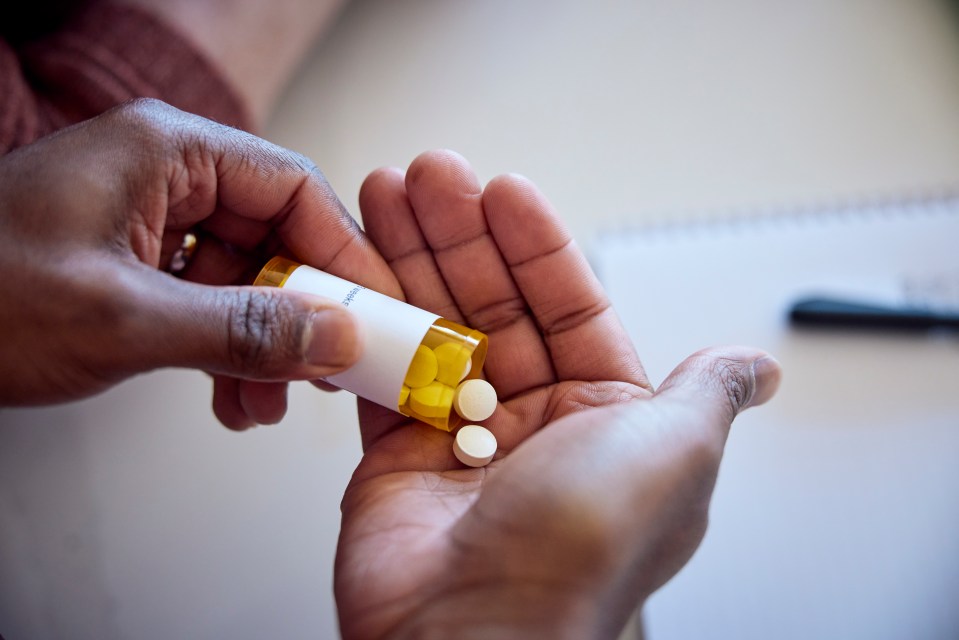
Abiraterone works by starving a tumour of testosterone so it is less able to grow and spread.
It is given as a once daily pill and costs the NHS about £2.37 per patient per day.
Patient Keith ter Braak, 82, has been paying for his own private supply since 2023.
He said: “When I started on abiraterone three years ago, I was paying £2,750 a month.
“It is magnificent that it’s going to be available on the NHS and therefore free – and not just for me.
“There will have been a lot of guys who would have had to opt for something less effective or just given up.
“It’s wonderful news and long overdue.”
By 2030 8,000 men will avoid their cancer coming back
Cancer chief at NHS England, Professor Peter Johnson, added: “For thousands of men this option could be life-changing by helping keep their cancer at bay for several years.
“The NHS will continue to work hard to offer people the most effective and evidence-based treatments.”
Professor Nick James, from The Institute of Cancer Research in London, added: “This is really good news for men in England.
“Our data from the Stampede trial shows that two years of abiraterone halves the risk of prostate cancer coming back and reduces risk of death by 40 per cent.
“In the next 5 years, almost 8,000 men will avoid the devastating news that their cancer has come back.
“Even for men whose cancer does recur, this treatment gives them more healthy years.
“Very importantly, our research also shows that the reduction in relapses will also save the NHS money in the long run.”
What is prostate cancer?
Prostate cancer affects a small, walnut shaped gland that sits underneath the bladder and surrounds the urethra – the tube carrying pee outside the body.
It usually grows bigger as you get older.
The prostate’s main job is to help make semen – the fluid that carries sperm.
Most men with early prostate cancer don’t have any signs or symptoms – that’s why it’s important to know about your risk.
Possible symptoms include:
- Difficulty starting to urinate or emptying your bladder
- A weak flow when you urinate
- A feeling that your bladder hasn’t emptied properly
- Dribbling urine after you finish urinating
- Needing to urinate more often than usual, especially at night
- A sudden need to urinate – you may sometimes leak urine before you get to the toilet
If you do notice changes in the way you urinate, this is more likely to be a sign of an enlarged prostate, which is very common and non-cancerous.
But it’s still a good idea to get it checked out.
In the UK, about one in eight men will be diagnosed with prostate cancer in their lifetime.
Some factors may mean you’re more likely to get it.
This includes:
- Getting older – it mainly affects men aged 50 or over
- Having a family history of prostate cancer
- Being Black
If you have any of these risk factors or if you have any symptoms, speak to your GP.
They can talk to you about your risk, and about the tests that are used to diagnose prostate cancer.
Source: Prostate Cancer UK