It’s one of the world’s oldest sports, believed to date back almost 5,000 years, and said to have been played by the Buddha as a boy centuries before the modern calendar existed.
But Kabaddi – a contact sport that is particularly popular among the British Sikh community – has lately been blighted by gang violence and brawls of the kind more commonly associated with the worst days of football hooliganism.
The most notorious manifestation of this came at a tournament in Alvaston, Derbyshire, in 2023 which saw rival gangs firing guns and hacking at each other with machetes, axes and bats.
It culminated in the ‘cartel-style’ revenge execution of Aurman Singh, 23, a DPD driver as he went about his daily rounds.
But today a Daily Mail investigation reveals that, while the sport is mostly played all over the country peacefully, the Alvaston carnage was far from an isolated incident and more and more meetings around the sport are now affected by violence and intimidation.
The sport sees two teams of seven set against each other in a circular playing area, with a single player from one team attempting to ‘raid’ into the opposition’s half of a circle to touch an opposing player and then return to their own side of the playing circle without getting caught – all while chanting ‘kabaddi, kabaddi, kabaddi’.
The game is enormously popular among British Asians, particularly the Sikh diaspora, with around a dozen teams from across the country participating in an annual season that runs from April to July.
All are from towns and cities in the UK where there is a significant British Sikh community, the majority of whom originate from the north Indian state of Punjab – but this set-up has increasingly led to bitter rivalries, feuds and explosions of violence.
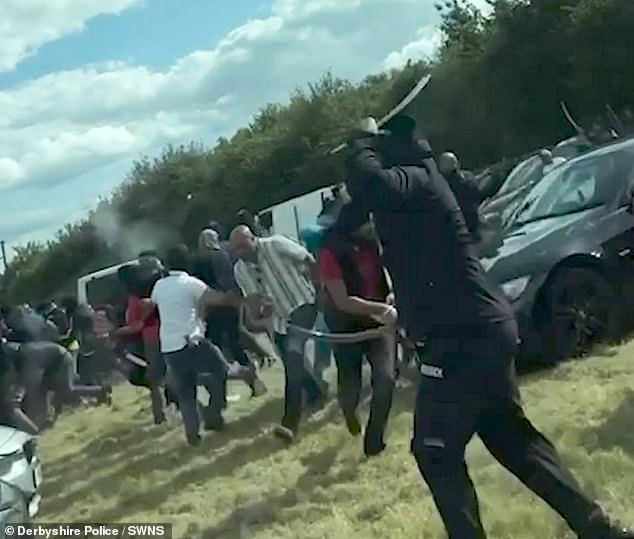
A kabaddi tournament in Alvaston, Derbyshire in 2023 saw rival gangs firing guns and hacking at each other with machetes, axes and bats
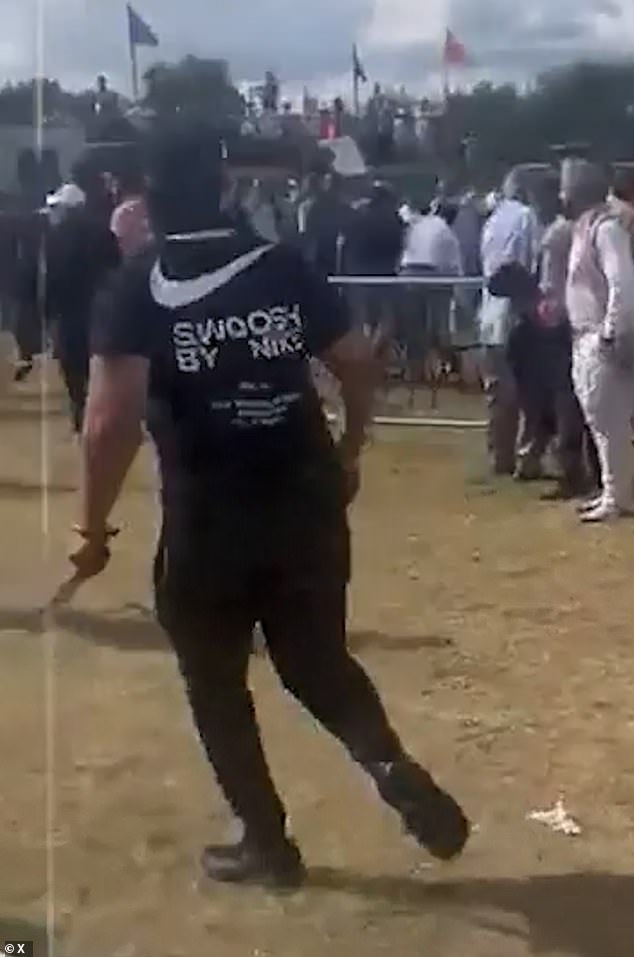
The sickening scenes of violence at Alvaston culminated in the ‘cartel style’ revenge execution of Aurman Singh, a DPD driver as he went about his daily rounds
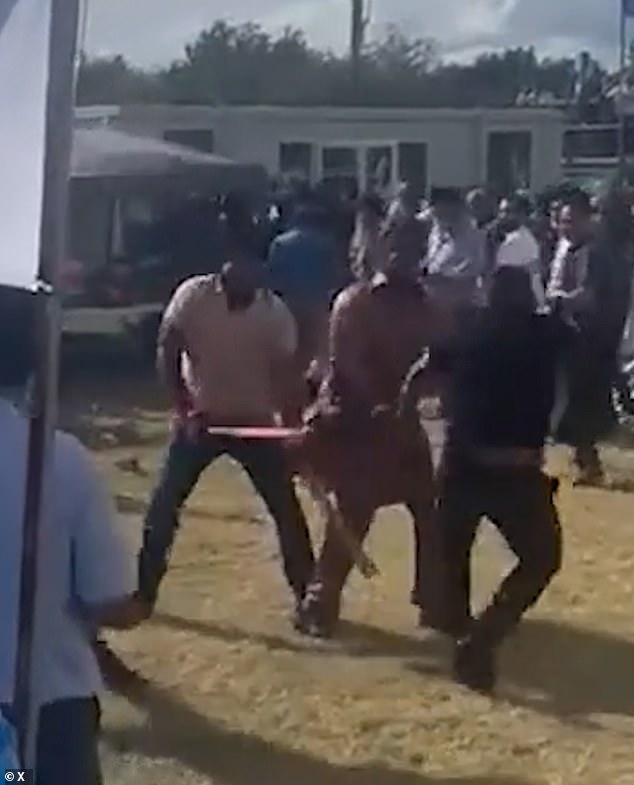
Increasingly the bloody scenes in Derbyshire are being replicated at kabaddi tournaments around the country as simmering rivalries in British Sikh communities bubble to the surface
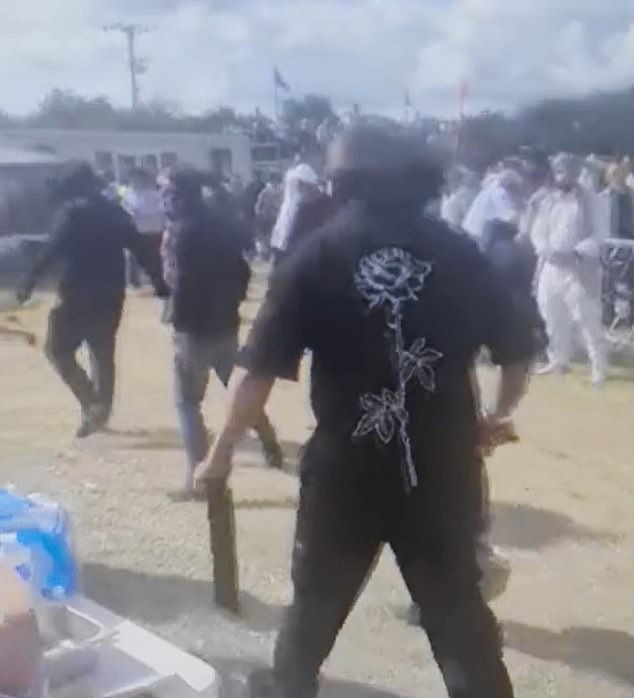
Scores are settled in the kabaddi arena, which is seen as a great source of pride and honour. Following the Derbyshire violence, a tournament in Sandwell was cancelled – and weeks later more violence flared between rival groups in Hayes, west London
In the last three years alone there have been outbreaks of violence at a series of kabaddi tournaments. Most of it is not on the level of what occurred in Derbyshire and often goes unreported to the authorities.
Weeks after the Derbyshire incident, violence flared between rival groups at a tournament in Hayes, west London, resulting in officials being attacked.
Following the Derbyshire violence, a kabaddi tournament due to be held in Sandwell, West Midlands, was cancelled by the council on the grounds of ‘public safety’.
In the summer of 2022, two groups of men clashed hours before a kabaddi tournament was due to start in Southall, west London, following weeks of simmering tension.
A year before, violence marred a tournament in Birmingham but was quelled before police needed to be called, with incidents also reported at Woolwich, south London.
And some of the violence goes back to even before that. In 2007 Jaswinder Singh Sahota, from West Bromwich, was jailed for 18 months for severing the fingers of a security guard with a sword as violence broke out during a tournament in Gravesend, Kent.
Eyewitnesses revealed that tensions had been simmering throughout the day, with Sahota leaving the tournament and returning in the evening armed with a sword.
As he attempted to enter the venue with it, he was confronted by security guard Roy Connolly who grabbed the weapon as it was being waved around in the air.
Maidstone Crown Court heard that he required specialist surgery and ended up with 68 stiches and the mobility in his hand restricted.
The exact reasons for the violence have never been established but sources told The Daily Mail that there had been long-standing tensions between rival groups and that Sahota was also irritated at the standard of refereeing at the tournament.
Balraj Purewal, a former kabaddi coach and community activist in Southall, which has one of the country’s oldest kabaddi teams, said: ‘There’s a lot of drinking and violence that goes on at kabaddi tournaments and a lot of it isn’t reported. Most of it isn’t like what happened in Derby but sadly, it’s become part of the game.
‘I wouldn’t call any of the groups that fight at tournaments gangs or criminal organisations. They are more like clans linked by caste, villages that they might originate from in Punjab, or family ties.’
He added: ‘Increasingly, you also have a lot of rivalries based on where these groups are from in the UK. So, you could have people from London clashing with those from Birmingham, just like you have in football. So, it’s become a mixture of new and old rivalries that can lead to trouble.’
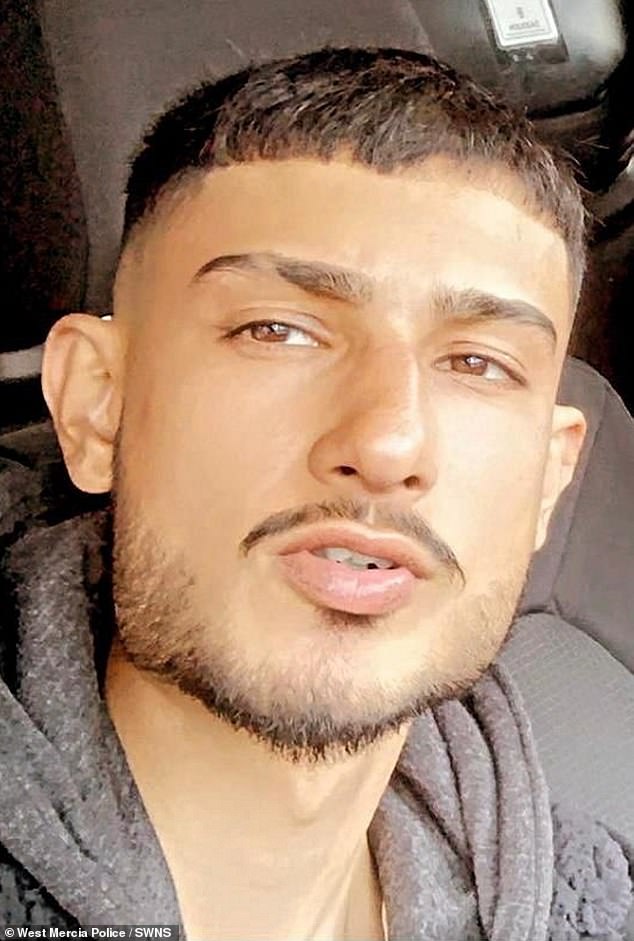
The murder of Mr Singh came after a series of escalating violent incidents, which began with a slap across the face, The Daily Mail has learned
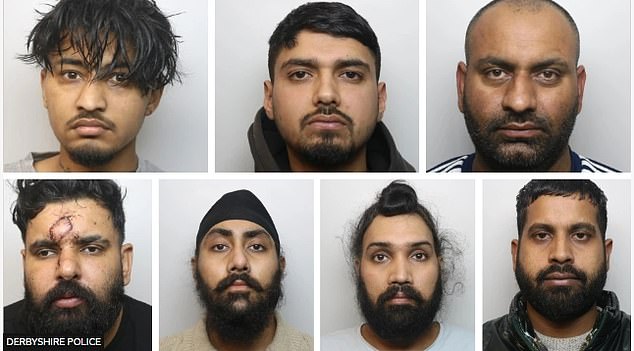
Following the violence at the Kabaddi tournament, seven men were convicted. Clockwise from top left: Malkeet Singh, Parminder Singh, Karamjit Singh, Doodhnath Tripathi, Baljit Singh, Jagjit Singh, Hardev Uppal
Those from the kabaddi fraternity claim many disputes stems from the issue of ‘izzat’ or honour and not for control of territory, drugs or money, as with conventional criminal gangs.
Prabhjit Singh, a kabaddi player, said: ‘A lot of the disputes are over what to outsiders would be minor things. Somebody might say something about someone’s sister or look at one of their female relatives in a particular way.
‘If somebody feels that they or their family have been dishonoured then it’s going to lead to big trouble. They get their group together and nobody asks, ‘what’s this all about?’ They just think that disrespect has been shown and they have to deal with it.’
The judge in the trial of Aurman Singh’s murder said there had been a ‘conspiracy of silence’ over the cause of the violence, although he read a statement from one of the men involved which stated: ‘All I know is that it involved honour from one of the parties, I did not question it, it was justified.’
Prabjhit Singh, who attended the Derby tournament added: ‘All it takes is a small comment or a look. The Derby violence started because members of one group said something disrespectful about the mother of one of the other group a few weeks earlier.
‘Things got more and more heated in the days leading up to the tournament. The majority of those in both groups were from the same caste but it all came down to a question of honour. That is very important to Sikhs.’
Many UK kabaddi teams are sponsored by gurdwaras (Sikh temples) and businesses, which Mr Purewal says can also lead to problems.
He explained: ‘There’s a lot of prestige involved with kabaddi and disputes can often arise between groups over political issues both in the UK and in India. It remains a genuine grassroots sport and is deeply connected to the UK Sikh community and what is happening in Punjab.’
To underline this, in March 2022 Sandeep Singh Sandhu, 38, who was one of Britain’s best known kabaddi players was killed while participating in a tournament in Punjab.
The north Indian state is the epicentre of kabaddi in India, where it is affectionately referred to as ‘Punjab’s mother game.’
Sandhu, also known as Sandeep Nangal Ambian, was shot between eight and ten times in the village of Mallian Khurd, just outside the city of Jalandhar in northern India, at the end of a match.
He was known as the ‘David Beckham’ of the sport and after moving to the UK from India in around 2007, lived with his wife and two sons in West Bromwich.
Police claimed at the time that he was killed over political rivalries between high-ranking kabaddi officials. At least 12 people have been arrested for his murder, including some of the country’s most notorious gangsters.
Rival federations have emerged to run tournaments in the sport, in the way golf has become split between the PGA and LIV.
But unlike in golf, kabaddi players are paying a high price for becoming involved with competing organising bodies, many of which are said to be involved in organised crime, match fixing and politics.
In the past few years, at least ten kabaddi players have been killed in Punjab – leading to fears that the sport has been turned into a blood battleground.
Preparations are being made for the start of this year’s season in the UK, with officials promising to ramp up security at tournaments following the events at Derby.
This includes hiring more private security guards, considering a ban on the drinking of alcohol and liaising more closely with police when there are fears of trouble.
But they insist that the groups indulging in violence are not directly linked to the sport or affiliated to any clubs.
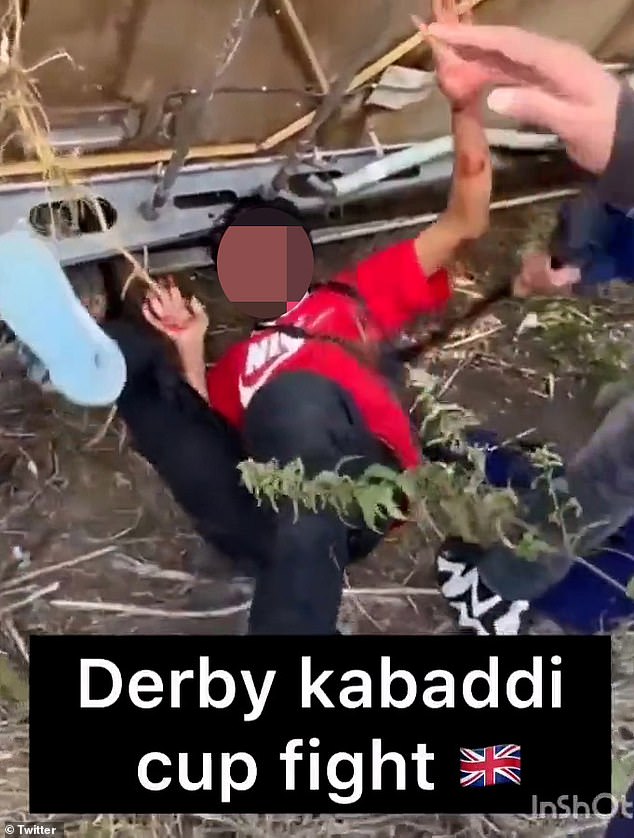
Those taking part in kabaddi tournaments take to social media to expose the violence – here a gang member is seen attacking his bleeding victim with a machete
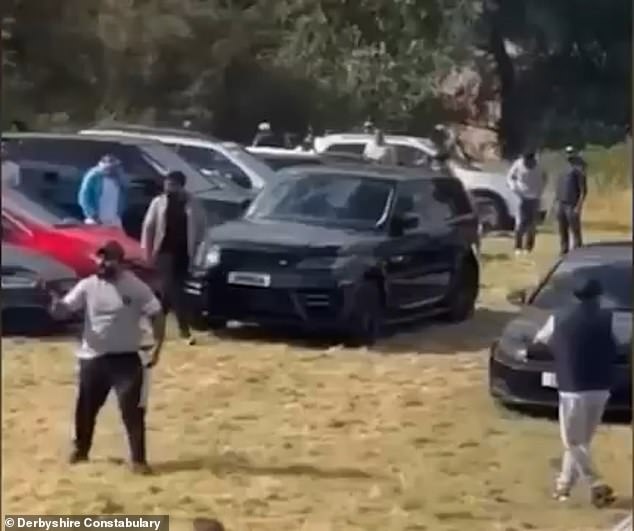
An insider has told the Mail how violence at kabaddi meets is increasing as community scores are settled with machetes, axes and other weapons
One official said: ‘Fortunately, most of the time the trouble isn’t as serious as it was in Derby, but it is still a problem for the sport and something that we need to address. But we want to reiterate that this violence is not about kabaddi.
‘Our problems aren’t with gangs but with distinct groups whose links to each other run very deep. But they are not associated with the clubs and use kabaddi tournaments to settle their differences.’
Following the Derbyshire violence global top player Manga Mithapuria Powar posted: ‘Once again another Kabaddi Tournament in Derby has been ruined!
‘This appalling behaviour is not acceptable, the tournament was full of families and children which were also at risk today with what has happened!
‘If this kind of behaviour continues then our mother game is over. No one will be bringing kids here because of the fear of shots being fired again.’