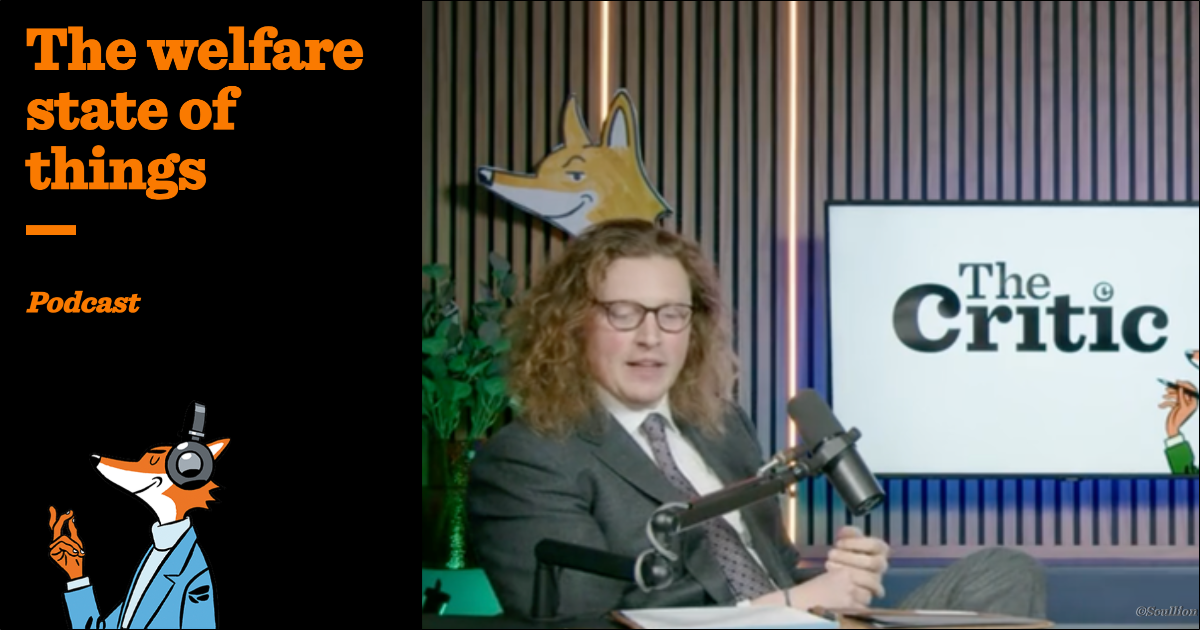

Tom Jones and Chris Bayliss discuss the numbers behind Britain’s welfare state. Around 53 per cent of adults are net recipients of the state, yet most people who fall into that category would never describe themselves as being on benefits. Universal Credit, tax credits, disability payments, housing support, the money adds up, yet who’s actually on benefits, and how much it all costs, is rather difficult to say.
Without its people explicitly voting for it, Britain has drifted into a high-tax, high-transfer system, with little to show in terms of infrastructure or service quality. Once a “temporary” tax is introduced, it is rarely retired.
As Tom points out, a welfare system designed around personal benefit and vote-winning is politically unsustainable. Chris traces the rot to the managerial politics of the mid-1990s, where presentation overtook reform. As the state dominates ever more in the lives of its subjects, personal responsibility becomes an ever more alien idea. The statistics may be imperfect, but the trend is worrying. Britain needs serious structural reform.