
You might think that rural life has taken enough of a beating of late. Rachel Reeves clamped down on tax relief for farmers. Pubs are disappearing across the countryside. Trail hunting is on the brink of being banned.
Still, the UK’s metropolitan know-it-alls have another problem with Britain’s green and pleasant lands: they are too damn white. As a useful round-up in The Telegraph makes clear, officials across the UK are pushing for the diversification of rural life.
Let us pause to acknowledge that concern about areas not reflecting nationwide demographics only occurs when they are disproportionately white. No officials fret about making Newham or Tower Hamlets more accessible for white people.
That the countryside is insufficiently reflective of Britain’s multiculturalism, though, weighs on the minds of the UK’s egalitarian eggheads. Various reports have been commissioned to investigate why people from minority backgrounds might be less inclined to escape the country.
At the more extreme ideological end is the “Rural Racism Project: Towards an Inclusive Countryside” — a project of the “Centre for Hate Studies” at the University of Leicester. This attempt to problematise rural England as “a site of deep racial exclusion” is an activistic farce. For example, we learn that people from ethnic minorities can face “microaggressions” like “being questioned about [their] origins”. One only hopes that people can survive the trauma of such experiences. The self-entitlement of left-wing academics also rises to the surface when the authors complain about British law upholding the “logic of exclusion” by “criminalising trespass”. How dare we exclude people from land that isn’t theirs!
Even less blatantly ideological projects are subtly so. For example, the Department for Environment, Food and Rural Affairs commissioned the report “Improving the Ethnic Diversity of Visitors to England’s Protected Landscapes”.
Here, it should be acknowledged, are some valid points. I’m sure it is the case, for example, that public transport between cities and the countryside is inadequate. But some of the reasons given for not feeling welcome in rural areas are less than compelling. For example, “protected landscapes”:
… were closely associated with ‘traditional’ pubs, which have limited food options and cater to people who have a drinking culture. Accordingly, Muslims from the Pakistani and Bangladeshi group said this contributed to a feeling of being unwelcome.
With all due respect to the people being surveyed, this is a “you” problem. I’m all too aware of how difficult it can be to visit a place that does not accommodate your dietary needs. As a vegetarian visiting the Polish mountains, I once ate cheese and potato pierogi seven days in a row. But no one has a duty to accommodate you. I don’t have the right to visit a hostel in the Beskids and expect a tofu scramble.
While such pubs might indeed “cater to people who have a drinking culture”, meanwhile, I suspect that most of them do in fact serve coffee, tea, juice, cola et cetera. The problem is not that the people being surveyed must consume alcohol, it is that they feel uncomfortable being around people who are drinking alcohol. That is their right, of course, but it doesn’t mean that other people must change their ways to suit them. This is not a case of “exclusion”, it is a case of self-exclusion.
According to a report from Chilterns National Landscapes, meanwhile, “some people had a fear of unleashed dogs”, which means that there is a requirement for “specific areas for dog walking”. Now, if there has been a spate of dog attacks, I see the point. Otherwise, it seems fair to ask if people should at least attempt to get over that fear of dogs. Among Muslims, after all, it can be deeply linked to the idea that dogs are impure (don’t believe me — believe Islam Q&A). I’m not sure what to call this, but it isn’t a dog problem.
To make everybody welcome, no one can feel at home
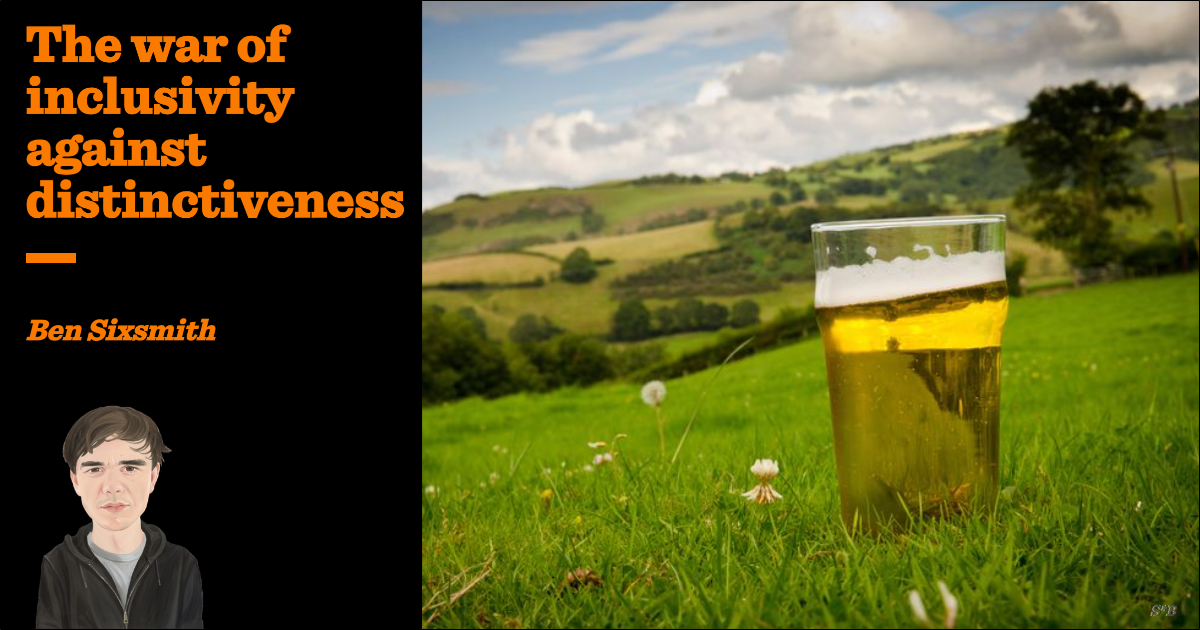
Allowing your canine pal to run across the fields — unless there are farm animals, of course, who have perfectly valid reasons for fearing dogs — is an important aspect of British rural culture, like having a pint of beer at the pub. What the people who write these reports are objecting to is the very existence of a specific culture. The presence of distinct local characteristics is framed as “exclusionary” by their very nature. To make everybody welcome, no one can feel at home.
In a thoughtful recent essay for The Critic, Paul Heron wrote about the lost mid-20th century dream of “assimilation” — the idea of “immigrants changing to fit into British society, without reciprocal change on the part of native Britons”. What the UK often seems to have is the opposite — British society being expected to change to fit new cultural requirements without reciprocal change.