This article is taken from the November 2025 issue of The Critic. To get the full magazine why not subscribe? Get five issues for just £25.
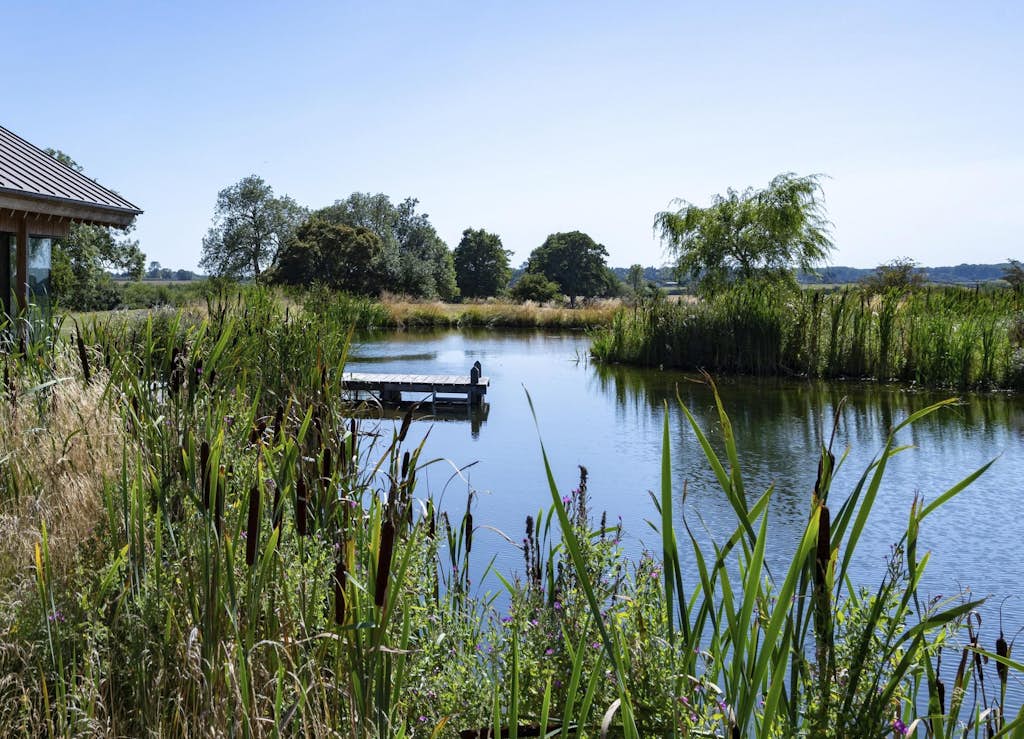
Critic readers on the cusp of commissioning a new lake for their country home should press on, notwithstanding the recent contretemps involving Blackstone CEO Stephen Schwarzman at his Conholt Park estate.
His workers’ enthusiastic deployment of water tankers to accelerate the filling of his new lake was stopped, yet his intention stands in a laudable English landscape tradition in need of revival.
Indeed, in the times of Capability Brown and Humphry Repton it was almost embarrassing not to have one’s own serpentine lake. Imagine Petworth, Stourhead, West Wycombe or Woburn Abbey without water.
Capability Brown was famous for his fees, and planning for projects such as Conholt Park still requires both patience and huge investment — in design, engineering, archaeology and ecology reports, long term management plans and BNG calculations before any ground is broken, boreholes dug, or liners laid for leaky soils.
Masters in a more natural universe, modern day titans turned terraformers like Mr Schwarzman are not merely creating beauty and investing in the local economy: a lake dug into low-grade farmland transforms the local ecology, serving as reservoir, habitat, temperature regulator, fire protection and civic amenity; plus a potential energy supply through water-source heat pumps.
Lake building is, of course, only part of a portfolio. Aspiring waterscapers can emulate the National Trust’s Holnicote Estate on Exmoor, where rivers have been “rewiggled” and floodplains restored, slowing water flow and enticing back water voles and wading birds.

Indeed, why pay for lake builders when one can commission nature’s own professionals? Landowners in Devon and Somerset have led the way in reintroducing beavers, whose engineering ingenuity is already creating farm-enhancing wetlands teeming with wildlife unseen in decades.
The controversy over Conholt is less about the lake itself than about the optics: the demand of private water visibly touching a public supply at breaking point, owing to our national failure to hold water. Despite a winter of floods, a very dry spring and summer has left reservoirs at historic lows, even with extended hosepipe bans.
Ironically it is decades of intense farming and drainage “improvements” — land drains, ditches, pipes, sluices — that have sped rainfall briskly seaward, rather than replenishing aquifers.
The politics of water is multi-faceted: sewage is an investment and enforcement issue, scarcity is a storage, transfer and demand issue, and both rely on our ecology, driven by climate, hydrology and land management.
Whilst our countryside is benefitting in places from landscape recovery projects and private investors, our cities are still fed by a Victorian infrastructure in need of renewal. For decades we have added people, houses, industry and now data centres, without adding enough storage or interconnection. Water has been a secondary concern and we are paying the price for that short-sightedness.
After 30 years of infrastructural inaction, Whitehall is now however rediscovering the reservoir. Thirty major projects have been approved across the UK, including the Thames Tideway Tunnel (London’s new super sewer) and nine new reservoirs promised by mid-century.
Cambridgeshire and Lincolnshire will host the first. Together with Anglian Water’s ambitious plan to shunt water across counties in pipelines, these projects promise a serious boost to water quantity.
Water quality needs treatment with equal vigour. Campaigners such as Surfers Against Sewage have turned wild swimming from pleasure into protest, exposing locations where untreated effluent is dumped into rivers by water companies.
Pollution also comes from livestock grazing too close to banks, slurry spreading, industrial run-off and phosphates in fertilisers. One amorous campaigner, Mrs Avon, has even married her local river, highlighting a conviction that rivers deserve rights of their own.
Until then a pragmatic approach might include clear abstraction limits, leakage targets on a timetable, enforcement with real penalties, and permitted private storage that aligns with common goals.
Water, after all, is more than a utility, it connects us all. Humans are 70 per cent water. Every drop we drink has passed through countless others before us — friends, strangers, trees, perhaps even dinosaurs.
Science is now proving what Alexander von Humboldt observed in the Orinoco Basin two centuries ago: woodlands make rain. Tree canopies transpire moisture into the air, roots draw up groundwater, healthy soils hold it in reserve, and together they form “biotic pumps”.
In times of drought and flood we need both an efficient infrastructure to manage water, and foresighted landowners who dig lakes, plant trees, care for soil and create waterscapes.