As Hercule Poirot once observed: ‘To every problem there is a most simple solution.’
A straightforward enough suggestion – but one that Scotland Yard’s finest appear to have singularly ignored when attempting to unravel the mysterious death of MI6 analyst Gareth Williams.
Searching through a diary belonging to the 31-year-old maths prodigy and codebreaker whose decomposing body had been found padlocked inside a holdall, detectives came across a mysterious phrase written in his handwriting.
Convinced the seemingly indecipherable clue could be the key to understanding what had happened to him they presented their discovery to the dead man’s close friends in the hope that they might be able to shed some light on its meaning.
They could. But, unfortunately, the solution could hardly have been more simple.
Because the ‘code’ the Metropolitan Police were desperately trying to crack was in fact nothing more than a note Gareth had written in his native Welsh referring to a Welsh mountain that he planned to hike up.
According to a source close to the Williams family, it was just one of a number of embarrassing failures in the police investigation into the so-called Spy In The Bag case.
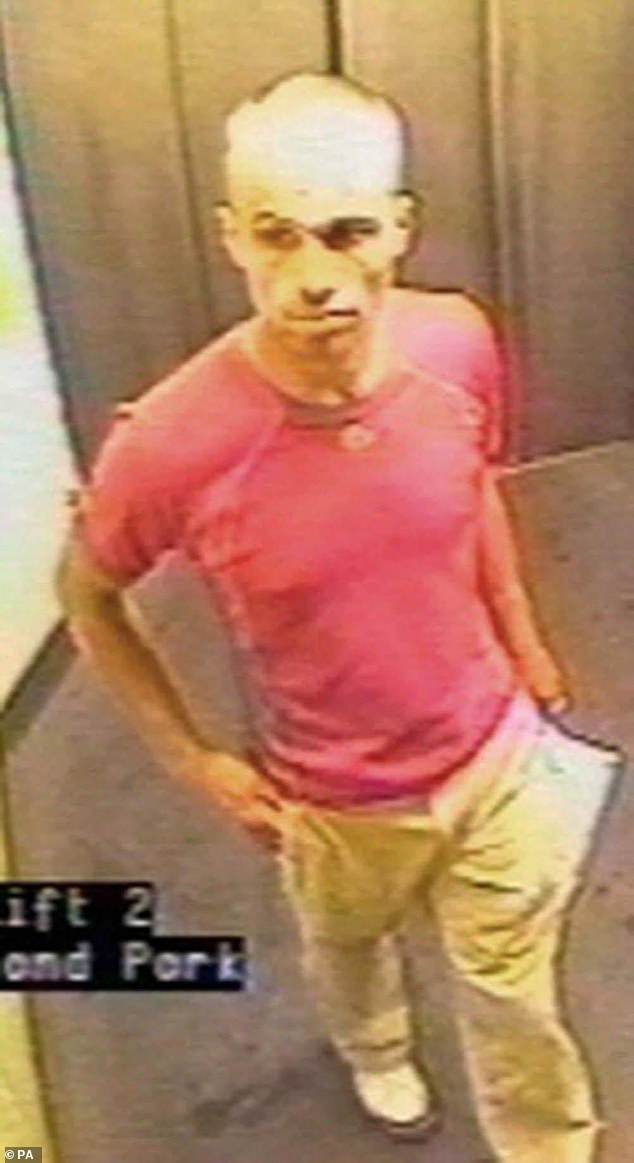
CCTV showed Gareth had been on the Tube in the hours before his death
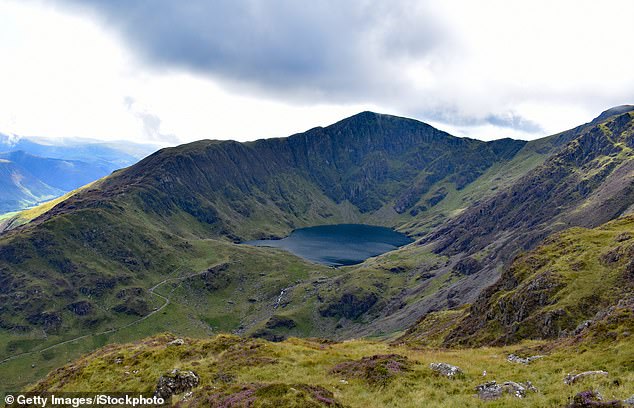
A friend has told the Daily Mail of how Met officers mistook a note in Gareth’s diary of Welsh mountain Cadair Idris for being an ‘unbreakable code’
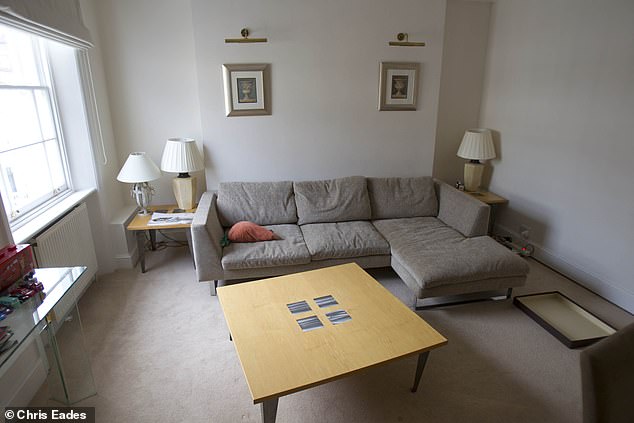
Mr Williams’s naked body was found inside a holdall – which was padlocked from the outside – in the bath of his flat (above) in Pimlico, central London, in August 2010
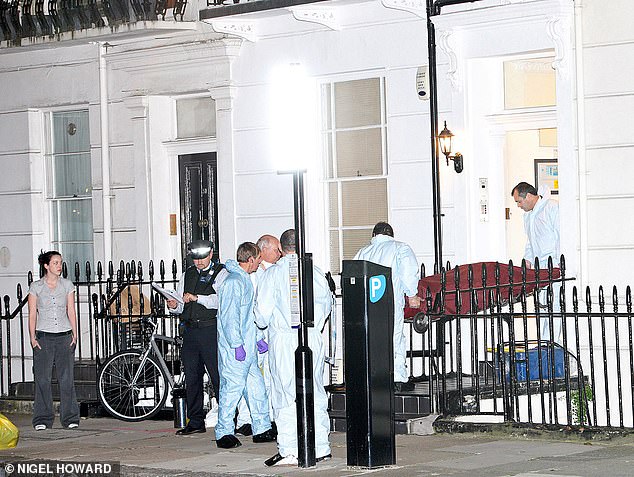
A forensic review by Scotland Yard found that ‘no new DNA’ was found, therefore it was more likely that Williams was alone when he died
‘When the Met were going through his diary, one of them said ‘there is something in here we’ll never be able to read, it’s written in code’,’ the family friend recalled, speaking anonymously to the Daily Mail’s Crime Desk this week.
They added: ‘It was the name of a Welsh mountain called Cadair Idris, which is a walkable mountain between GCHQ and Anglesey.
‘At the time he was training for the Snowdon marathon so my interpretation was that he was stopping to run up and down there to train.
‘The way it had been written in his diary was a jumble of letters in scrawly, unclear writing.
‘That’s why they thought it was coded.
I’m Sam Greenhill, Chief Reporter, and nearly 25 years ago I had an encounter with killer Ian Huntley that still sends shivers down my spine.
Huntley is one Britain¿s most notorious child murderers. But when I was invited into his home for tea and biscuits days before he was arrested for the Soham Murders, this was the last thing on my mind. I’ve written about it in The Crime Desk newsletter – sign up to read it for free.
‘I then gave it some thought and realised it’s just the name of the mountain in Welsh.
‘That just shows you how useless they were’.
Mr Williams’s naked body was found inside a red North Face holdall in the bath of his flat in central London, in August 2010. The keys to the padlock on the outside were found inside the bag with him.
It was a warm summer’s day outside – yet the heating was on full blast. The bathroom door was shut, the lights were off and Gareth had no signs of injury.
At the inquest into his death in 2012, coroner Fiona Wilcox concluded that he had probably been ‘unlawfully killed’.
She said that she was satisfied that a third party moved the bag into the bath with him inside and that his death was ‘likely to have been criminally mediated’.
But the following year, Scotland Yard announced that their investigation had come to a very different conclusion – namely that Gareth had died alone as a result of somehow accidentally locking himself inside the bag.
The police case was reopened in 2021 for new forensic investigations but closed three years later having apparently found no evidence to disprove their main theory that he was alone.
Meanwhile in 2015, an ex-KGB major Boris Karpichkov told the Daily Mail that Gareth’s mystery death was linked to Russian agents.
He claimed that Russian security services had attempted to recruit Williams after being tipped off by a mole working within GCHQ that he was a ripe target.
However, when it turned out Williams had caught on to the Russian double agent at GCHQ, who was supposedly codenamed ‘Orion’, a plan was allegedly hatched for hitmen to kill Williams – though this theory has never been proven.
While Gareth’s parents Ian and Ellen have never given an interview as they continue to grieve their beloved son, they are convinced that a third party was present at their son’s death.
As their lawyer told a pre-inquest hearing: ‘The impression of the family is that the unknown third party was a member of some agency specialising in the dark arts of the secret services – or evidence has been removed post-mortem by experts in the dark arts.’
It is a theory shared by the family source, who told the Daily Mail that they remain convinced that Gareth was murdered and that his employer MI6, who owned the apartment he was living in, then covered it up.
The cover up, the source claims, was facilitated by the police – not because they were in cahoots with them, but because their investigation had so many shortcomings.
‘It was an MI6 apartment, the door was locked, he was in a bag,’ the source said, adding that police efforts to demonstrate how Gareth could have physically locked himself within the bag completely failed. ‘They tried to say he did it, but an escapologist tried 300 times and couldn’t do it.’
The source added that MI6 and the Government had repeatedly played down Gareth’s importance, briefing police and the press that he was a very junior member of staff.
Join the debate
Do you think Gareth Williams was failed by the police or betrayed by the intelligence services?
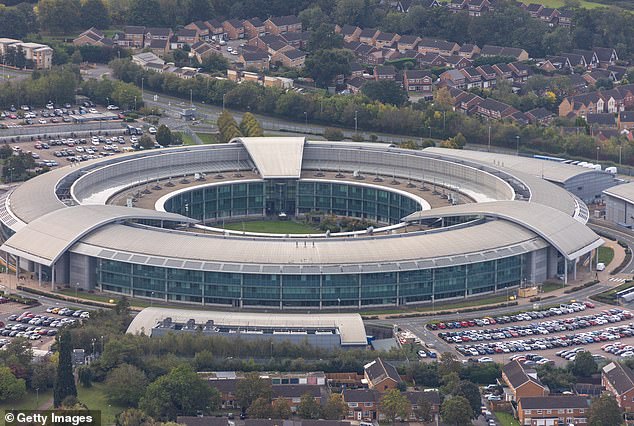
An aerial view of GCHQ in Cheltenham, where Gareth had been working before being sent on a secondment to the MI6 office in Vauxhall, London
‘He was very high up,’ claimed the source. ‘He was more than a code breaker operative like they made out, he was clearly more senior.’
Indeed, Gareth had confided in loved-ones that he had security clearance that allowed him to ‘walk straight through immigration in the US’ and had undergone high-level training.
The source added: ‘Gareth told me how MI6 would pick him up and bundle him into the back of a car or a van and take him some place and interrogate him, to train him for if he was interrogated by others’.
As for the theory that Gareth had died as a result of a sex game that went wrong – a theory fuelled by disclosures that an orange wig and £20,000 of unworn women’s designer clothing had been found in the apartment – the source describes them as a ‘red herring’ designed to sew confusion.
They revealed that all the clothes were too small to fit Gareth, explaining that he used to buy clothes as gifts for his sister and a female friend.
‘It was complete lies, what they said about him,’ the family friend said, adding: ‘If MI6 cannot find out how their own spy died, they may as well lock the door and go home.’
That Gareth’s death was extraordinary is beyond dispute. But his all-too-brief life had also been exceptional.
Born and brought up in a small Welsh-speaking community in Anglesey, North Wales he was a child prodigy.
Gareth sat his maths GCSE while still at primary school, completed his A-level by the age of 13 and graduated from Bangor University at 17.
Four years later, with a PhD under his belt, and while conducting postgraduate research at Cambridge University he was approached by scouts from GCHQ and offered a role working as an analyst at its secretive Cheltenham headquarters.
In 2008 he was seconded to the Secret Intelligence Service, or MI6, based at Vauxhall in London, where he successfully completed training for operational deployment.
Yet Gareth failed to settle in the capital and asked for a transfer back to GCHQ. But a week before he was due to move back to Cheltenham, he disappeared.
Gareth was last seen alive on Sunday August 15 2010, buying cakes in Harrods and peppered grilled steaks in Waitrose.
The next day he had been expected to chair a MI6 meeting having just returned from a hacking conference in Las Vegas.
Despite this, MI6 only investigated his absence more than a week later, on August 23, after a call from his sister.
Arriving at his top-floor flat in Pimlico to carry out a welfare check, officers opening the door were hit with a blast of heat.
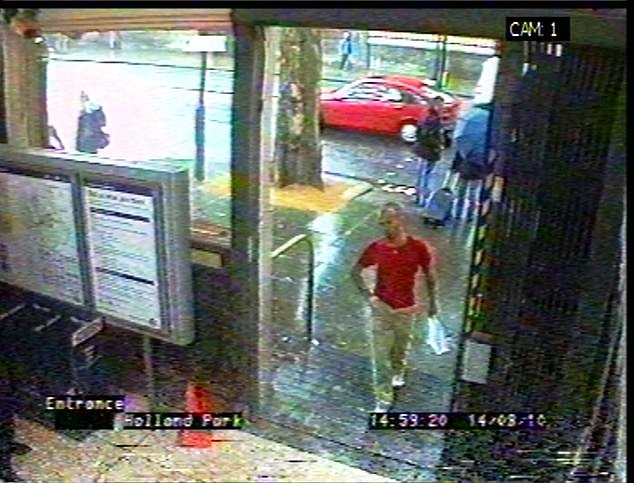
Gareth Williams was caught on CCTV at Holland Park Underground station on 14/8/2010 in one of the final images of the MI6 maths genius. He died the following day and was discovered at his Pimlico flat on 23/8/2010
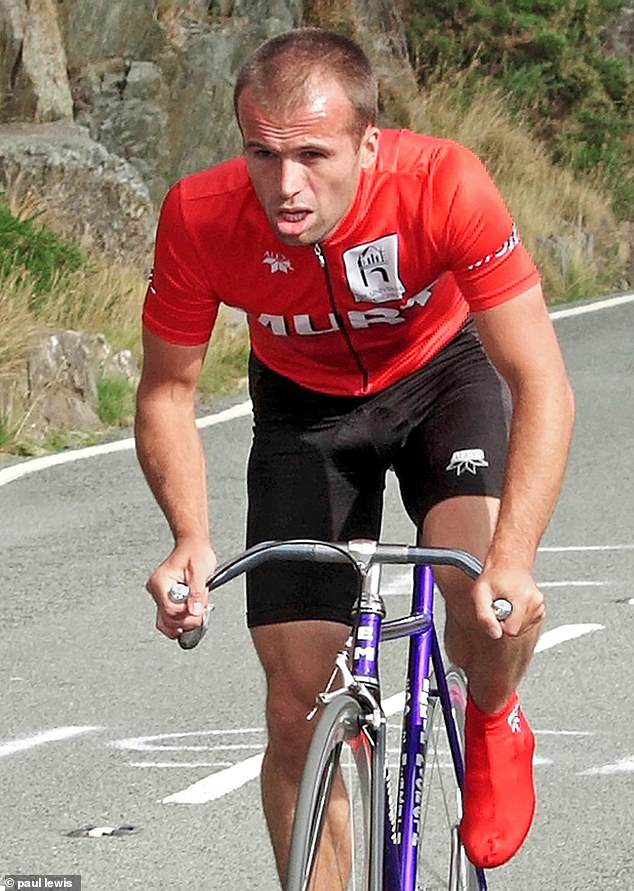
MI6 spy and maths genius Gareth Williams was 31 when he was found dead in a bag in his flat in Pimlico, central London in 2010. Police claim he acted alone and it was probably a tragic accident
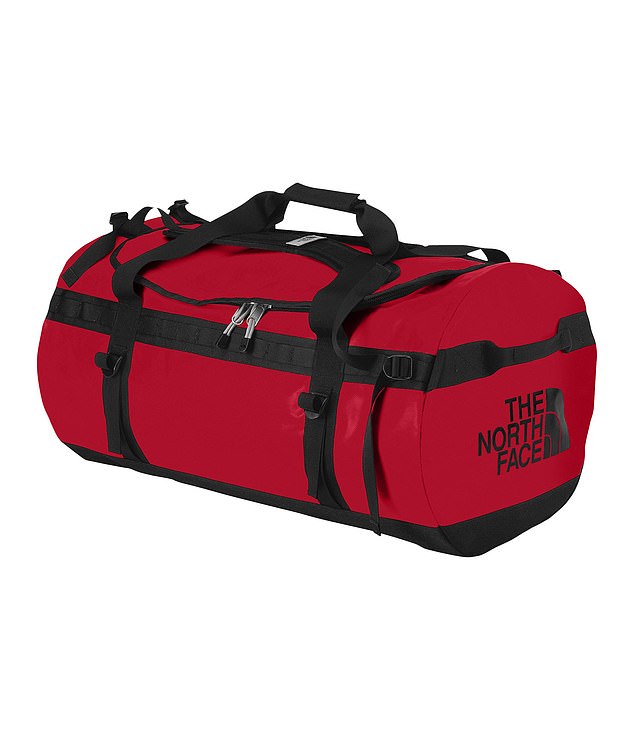
Williams was found in north face holdall, padlocked together. There were no fingerprints found on the bag, padlock or bath and the key to the padlock was found inside the bag, underneath Williams body
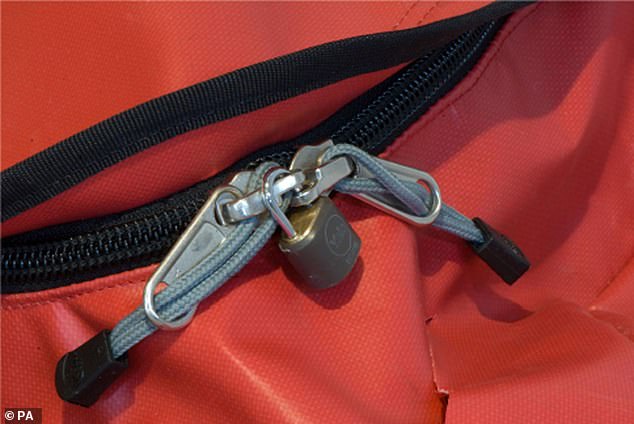
A police image of a representation of the lock on the red sports bag that Gareth Williams body was discovered in at his flat. Police claimed he locked it from the inside and the key was under his body
It was the height of summer and yet someone had turned the central heating on full.
Moments later, officers discovered a padlocked red North Face holdall in the bathtub with putrefying red liquid seeping from it.
The bag, which measured 81cm by 48cm, had been fastened with a padlock from the outside. Gareth’s naked body was inside, the key for the lock beneath him.
Tests showed he had not been drinking or taking drugs. And there were no injuries to his body.
As for his private life, Gareth was not believed to be in a relationship at the time of his death.
But details about the discovery of the women’s clothing and that he had searched bondage and fetish websites and visited drag clubs sparked speculation that he could have died as a result of a sex game gone wrong.
Other theories included that Gareth, an expert on mobile phones, may have been murdered by a foreign state or even Russian Mafia because of his work investigating money-laundering networks.
The women’s clothes, they suggested, were a classic attempt at smearing a victim and were placed there to lay a false trail for investigators.
Others thought it was an inside job by British or US spies after Gareth had stumbled on some state secret and was about to turn whistleblower.
Matthew Dunn, a former MI6 agent turned author, told the Mail that serving GCHQ officers have contacted him in recent years about the case.
‘Gareth’s death still lingers’, one spook told him.
While Mr Dunn insists that he does not believe that MI6 were involved in his death, he is absolutely clear that Gareth was failed by their personnel procedures in many ways.
He said: ‘Gareth was highly intelligent in the academic sense, but perhaps not in others, leaving him vulnerable. There was a lack of duty of care. It remains very surprising nothing happened for a full week.
‘Alarm bells should have been ringing to the extent that, on day one of him not turning up, calls should have been made.
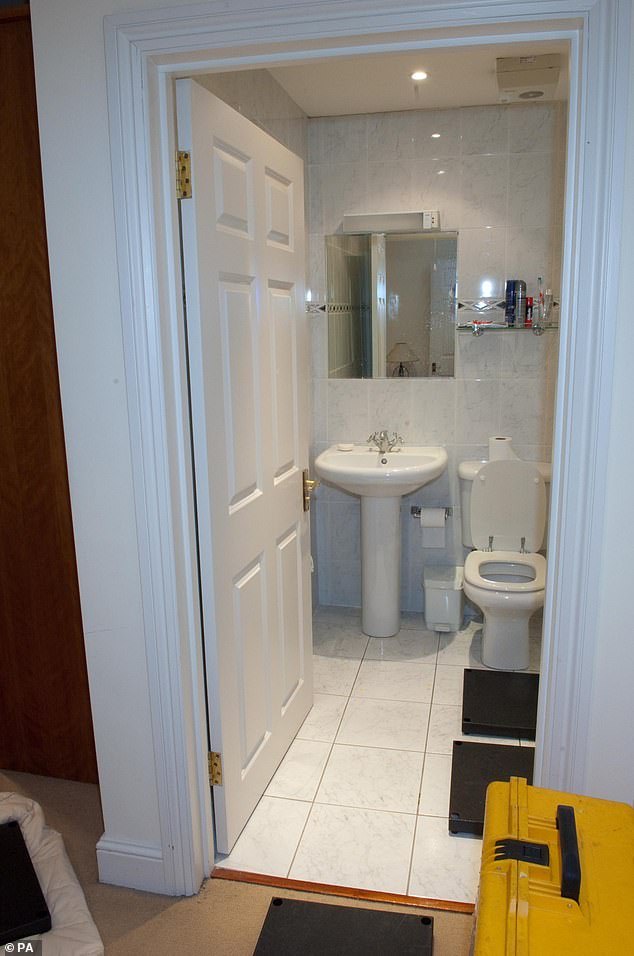
A Metropolitan Police handout photo of the interior of Gareth Williams’ flat after his death. The heating was on full blast – despite being the height of summer – the bathroom door was shut, the shower screen closed and the lights switched off.
‘There is a series of protocols to follow through in that instance. GCHQ was a safe place for him. But he was transferred from leafy Cheltenham to the hustle of London and MI6’s Vauxhall HQ.
‘For someone like Gareth, it was probably a very lonely place. His secondment should never have happened’.
When asked if MI6 may have killed Gareth, he added: ‘It is not in the culture of MI6. And Gareth was too junior. If it was a secret services and police cover-up then someone would have talked – they always do. It cannot be controlled.’
But he does believe it was possible Gareth was murdered by a professional killer.
He said: ‘The person who entered Gareth’s flat came in knowing what was going to happen.
‘It is not just cleaning up after a death, the killer will have entered his home knowing that he would have to avoid spreading any DNA beforehand. From clothes and skin’.
He added: ‘If you asked the average MI6 officer, ‘could you sanitise this room’ – the majority would not know where to start. It would be impossible. It would require a professional. Only a very small group of people would have the expertise.
‘A hired professional with a secret services or special forces background would be required. It would be impossible otherwise.’
Mr Dunn said the key question would be why Gareth?
He speculates that a ‘hostile foreign actor’ or a ‘powerful private UK citizen’, potentially ex-secret service or Government, could have ordered his death.
He said: ‘Someone with fingers in lots pies whose business interests may have been disrupted by Gareth, or more likely something sensational he discovered.’
One of the major questions about Gareth’s death remains how – if his death was a tragic accident with no-one else involved – he managed to get himself into a bag and lock it from the inside.
Peter Faulding, a world-leading confined space rescue and forensic search specialist, helped police with their original inquiry.
He tried 300 times to get in the same sized bag without leaving prints on the bath and locking a padlock on the holdall from the inside.
‘My belief is that the bag was placed in the bath with Gareth dead already,’ Mr Faulding previously told the Daily Mail. ‘Even if he could get in the bag, and even if he then padlocked it from the inside, there would be footprints and fingerprints all over the bath and the bag.
‘There would also be DNA on the zip and bag. But the bathtub and bag was clean.
‘The flat was clean, I went in there. It’s a physical impossibility. Readers need to know that. No one in their right mind believes he was on his own.’
A very different conclusion, of course, than that reached by the police.
And one that means the question as to what happened to the Spy In The Bag remains as much as a mystery today as it ever did.
A Met spokesperson said: ‘Our thoughts remain with Gareth’s family who continue to grieve his loss.
‘Since 2010, we have carried out extensive inquiries into Gareth’s death which has seen officers collect and review a significant amount of material and statements.
‘As part of our investigation, officers also conducted a three-year forensic review. This was a thorough and in-depth process, which concluded in 2024 and identified no further lines of inquiry.
‘As with all unexplained deaths, any new information or evidence will be reviewed by specialist detectives should it come to light.’