Residents of Britain’s ‘Big Brother town’ are divided over Labour’s new facial recognition cameras installed to catch criminals on their high street.
Some locals in Croydon, South London, said they feel safer doing their shopping since the cameras were installed – while others complained the ‘dystopian’ plan feels ‘invasive’ and is a violation of privacy.
The technology was fixed to lampposts at the entrance and exit to the town centre by Scotland Yard in October after the area was designated a ‘crime hotspot’.
It came weeks after the Government announced controversial plans to introduce permanent facial recognition cameras in towns, cities and villages across the country, with Croydon the first to receive them.
Dubbed Britain’s ‘Big Brother town’ as a result, some Croydon locals said the cameras have been ‘great’ for catching thieves and violent offenders – while others fear it won’t make a difference in the long run.
On average, one suspect has been arrested every 34 minutes while the equipment is switched on, the Met Police said.
Local shopper John, 81, who comes to Croydon town centre to browse the shops, told the Daily Mail: ‘I think it’s an excellent idea.
‘If you haven’t been involved in any crime, why should you worry about it?’
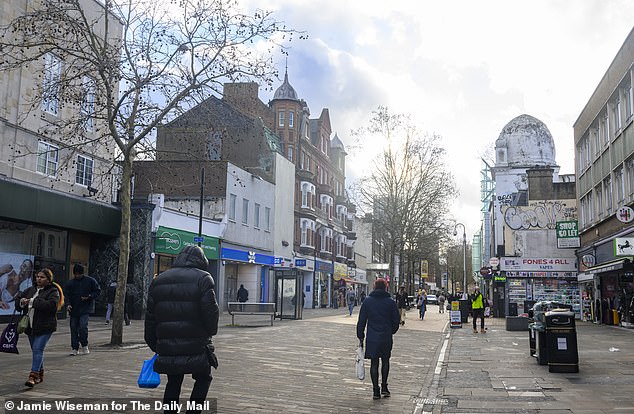
Facial recognition cameras were installed on lampposts at the entrance and exit to Croydon high street after it was designated a ‘crime hotspot’
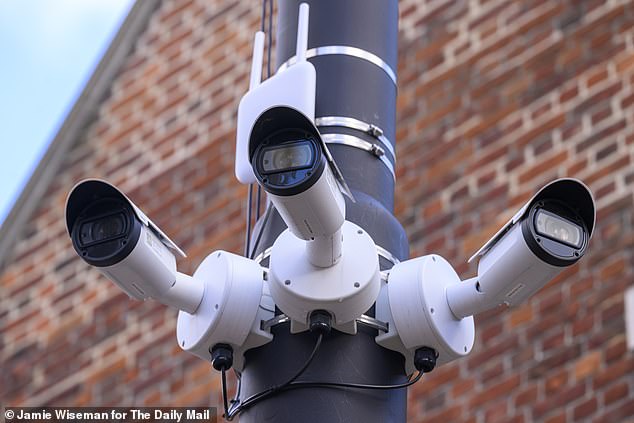
The cameras are switched on periodically and hunt for criminals by scanning faces
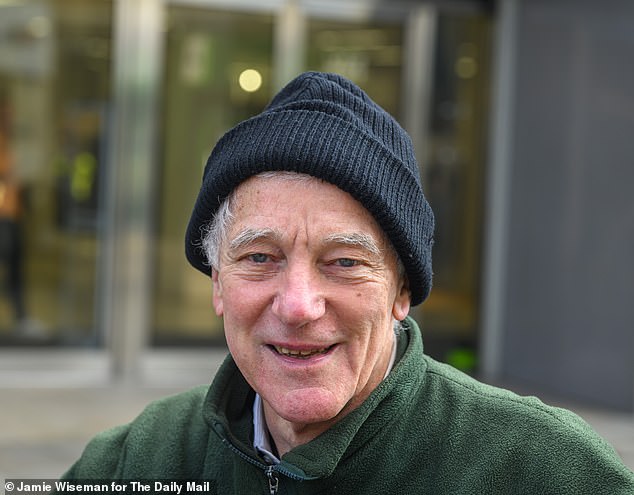
John, 81, comes to Croydon town centre for the shopping and said the cameras are an ‘excellent idea’
John, who described crime on the high street as ‘rife’ before the cameras arrived, said he feels safer since then.
‘Particularly with all the scooters that go up and down here, it’s the easiest thing in the world to just snatch something and be away,’ he said.
‘I’ve seen people have things snatched, so it’s an excellent idea.’
Jean Baxter, 80, visits the high street to shop in Marks & Spencer, and is glad the cameras were installed.
‘I’m quite happy with them, it’s good. It’s got to be a good thing,’ she said.
‘I’ve got nothing to hide. If you’re not guilty then it doesn’t matter.’
But stay-at-home mother Amy, 33, who has lived in Croydon her whole life, said that while the cameras might make crime move off the high street, it will just land elsewhere in the borough.
‘Now people know exactly where it’s all set up and where police are going to be waiting,’ she said.
Pointing to her toddler, the mother added: ‘He’s two, and when it comes to high school I’ll be moving out of the area, because I think that’s where issues start to happen during the teenage years.’
And long-term Croydon resident David McDonald said that although the cameras are ‘better than nothing’, he fears they won’t be enough to deter some criminals.
‘It doesn’t stop them. They don’t care if they’ve got them, they’ll just come out and carry on doing the same thing,’ he said.
‘People steal […], I’ve seen police running, security guards running after them all the time.’
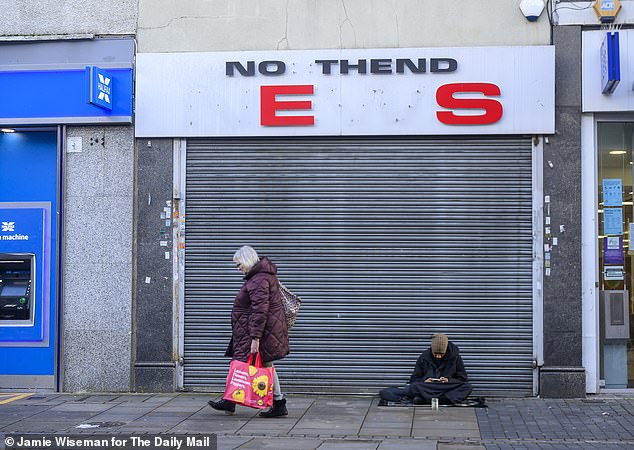
Some shops are boarded up in the area, while homeless people sit on the streets
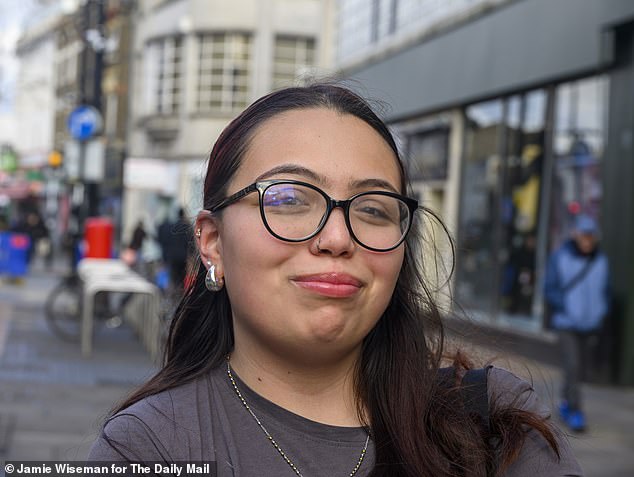
University student Paulina Gomez, 20, said she does not feel safe in the area despite the cameras
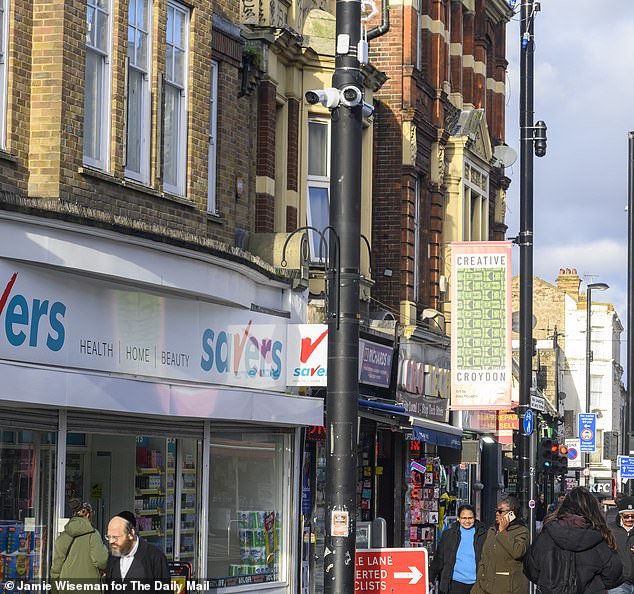
The cameras are seen high up on a lamppost at the edge of Croydon high street
University student Maria, 20, also had mixed feelings on the cameras, admitting she finds them ‘invasive’ and ‘like you are being watched’.
She praised the government’s intention to catch criminals, but said she would like to have been told about the cameras, noting a lack of signposting in the area.
‘I just feel to some extent people should have been notified. But then again maybe the whole point of it was to be secret so they can catch criminals,’ she said.
‘I can see the intent, but I do feel like, to some extent, we should have known that it would be a possibility.’
The Met Police noted that before the cameras are switched on, it publicises details of the date, time and location.
Maria’s friend Paulina Gomez, who is from Croydon, also gave mixed reviews of the cameras.
The 20-year-old said: ‘Statistically speaking, it’s a bit more of a reassurance, but in terms of actually feeling safe walking here, no. I just feel like Croydon is always going to be Croydon.
‘I think especially as a girl, we’re automatically just more targeted anyway, so I think it’s just common knowledge that you can’t be walking down here alone.’
Ms Gomez added: ‘I understand it’s a stepping stone.’
Rose Jane Bowdry, 77, who comes to the town centre for shopping, said: ‘I think they’re good. If you’ve done nothing wrong, why should it bother you?’
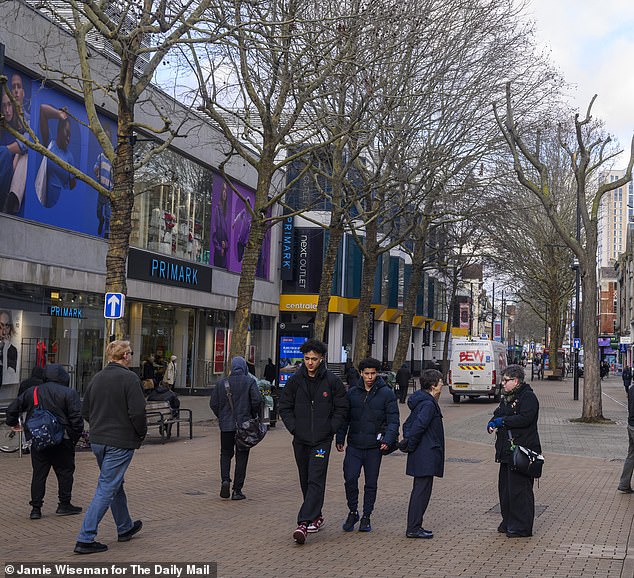
On average, one suspect has been arrested every 34 minutes in Croydon while the equipment is switched on
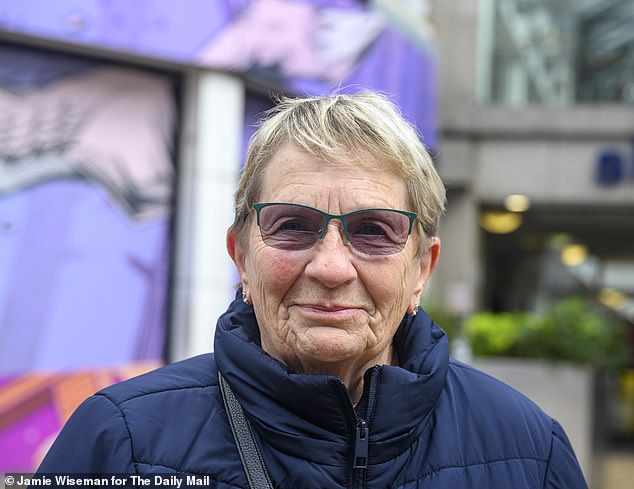
Rose Jane Bowdry, 77, comes to the town centre for shopping and thinks the cameras are a ‘good thing’
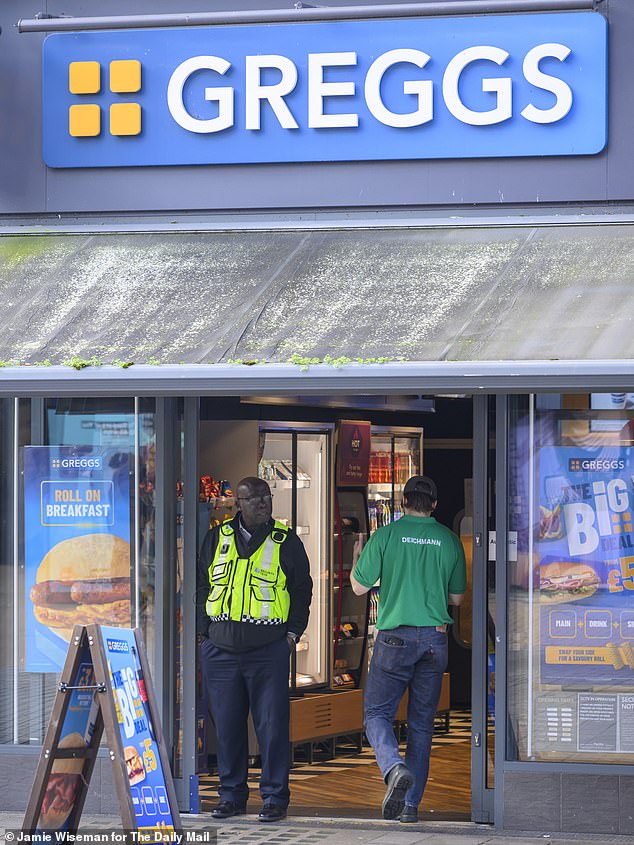
A security guard stands outside Greggs on Croydon high street – with locals saying crime in the area has been ‘rife’
The Met said that since the cameras were rolled out in Croydon, criminals wanted for kidnap, rape and strangulation have been caught.
In one instance, an alleged violent offender who had been on the run for over two decades was captured. The woman was wanted over an assault since 2004, but all previous attempts to locate her had failed.
A man wanted on suspicion of kidnap was also captured as a result.
So far, police have made 100 arrests, with a third being for offences of violence against women and girls including strangulation and sexual assault.
Critics previously hit out at Labour’s ‘dystopian’ plan to roll out the technology across the country, citing concern at the ‘erosion of civil liberties’.
It came after a series of controversial reforms by Labour, including mandatory digital ID cards and scrapping jury trials amid claims of a crackdown on free speech.
Former shadow home secretary David Davis raised concerns after police leaders said the cameras could be placed at shopping centres, stadiums and transport hubs to hunt for wanted criminals, missing people and monitor individuals on court orders.
‘Welcome to Big Brother Britain,’ he said. ‘It is clear the Government intends to roll out this dystopian technology across the country.
‘Something of this magnitude should not happen without full and detailed debate in the House of Commons.
‘From mandatory digital ID, to proposals undermining jury trials, now the expansion of facial recognition, this Labour Government seems intent on eroding civil liberties and chipping away at our most fundamental freedoms.
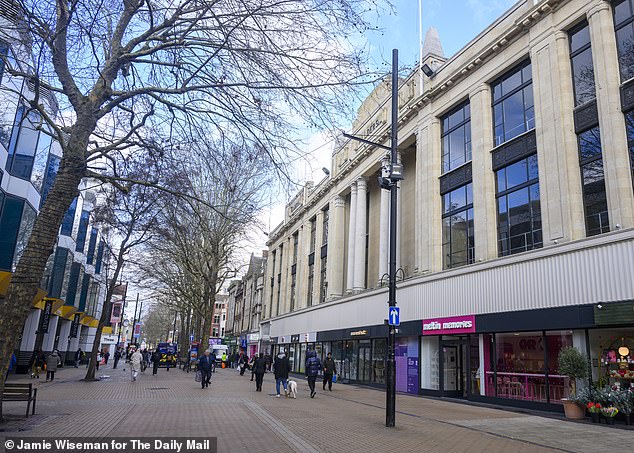
Croydon high street features some popular shops including Marks and Spencer, Primark and Next
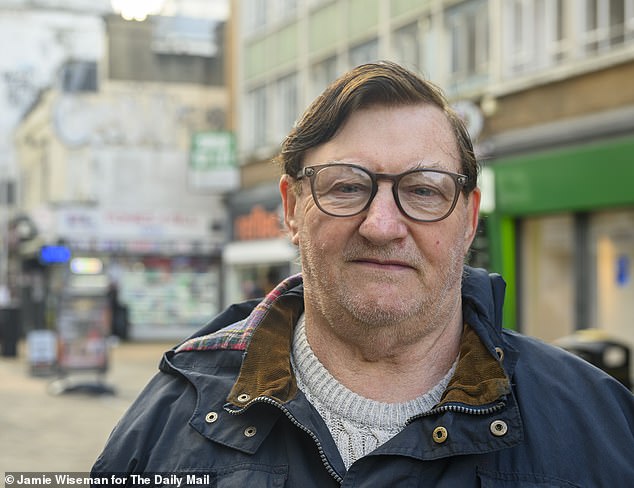
Long-term Croydon resident David McDonald said the cameras are ‘better than nothing’, but won’t stop crime in the area
‘We need clarity on what restrictions will govern live facial recognition, how long images can be held, whether children’s photos are used, and what judicial oversight will apply.
‘What happens to innocent people’s photos? The Commons must decide the limits of state surveillance in a free society.’
Sir Keir Starmer is said to be keen to scale up the use of live cameras, which work by taking digital images of passing pedestrians and feeding them into a computer using biometric software to measure facial features.
The image is compared with a watchlist and if a match is detected, an alert is sent to officers to consider an arrest. If a member of the public is not wanted by police, their biometrics are deleted.
Some forces have seen impressive results with the technology, which is so accurate that only one in 33,000 scans results in a false alert, according to tests.
Policing Minister Sarah Jones described facial recognition as the ‘biggest breakthrough for catching criminals since DNA matching’.
She said: ‘It has already helped take thousands of dangerous criminals off our streets and has huge potential to strengthen how the police keep us safe.
‘We will expand its use so that forces can put more criminals behind bars.’
But the Equality and Human Rights Commission called the Met’s policy on live facial recognition technology ‘unlawful’.
In July, it was reported that some 20 town centre and high street areas accounted for 10 per of knife crime, 24 per cent of theft person offences and 6 per cent of anti-social behaviour calls.
These areas included Croydon town centre – as well as Barking, Brixton, Ealing, Woolwich, Ilford, Kingston, Romford and Shoreditch.
A Met Police spokesperson said on Tuesday: ‘The increase in Live Facial Recognition deployments across crime hotspots in London is driven by its proven impact and success – with more than 1,700 dangerous offenders taken off the streets since the start of 2024.
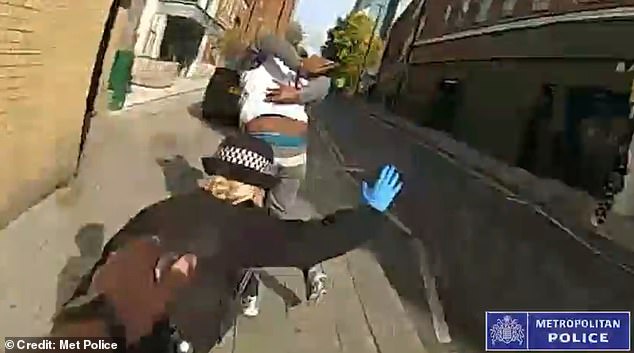
Met Police footage of arrests after using facial recognition cameras. On average, one suspect has been arrested every 34 minutes when the cameras are operating
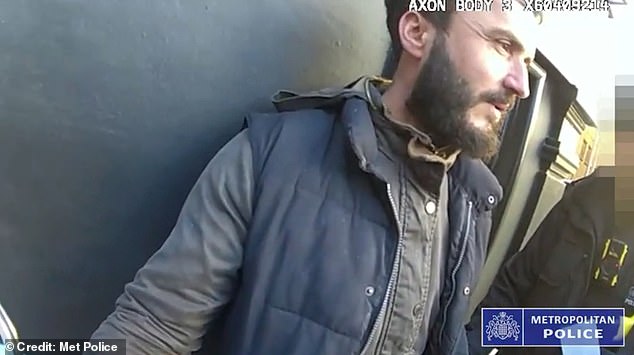
Police have spotted suspects on the run for 20 years using facial recognition cameras
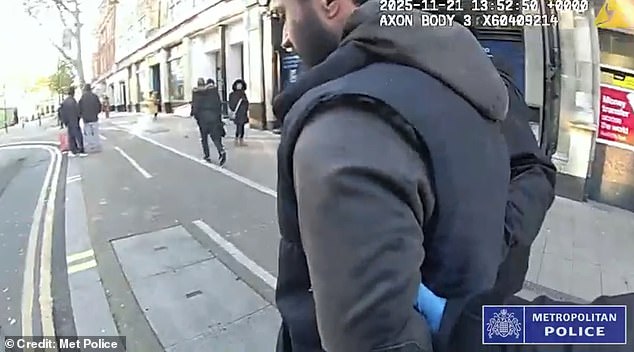
So far, police have made 100 arrests since the cameras were rolled out on the high street
‘This is why we are trialling a static LFR pilot in Croydon. In just three months and 13 deployments, crime in Fairfield Ward, Croydon, is down by 12 per cent – and 103 arrests have been made, including those wanted for kidnap, strangulation and other violent offences.
‘We have robust safeguards in place to protect people’s rights and privacy. If a member of the public walks past the cameras, and is not wanted by the police, their biometrics are immediately and permanently deleted. The cameras are only switched on when officers are deployed and using the technology.’
Executive Mayor of Croydon, Jason Perry, said: ‘Croydon Council has worked closely with the Metropolitan Police to support the trial of Live Facial Recognition (LFR) in our town centre to help identify suspects on police watchlists.
‘The pilot has led to a significant number of arrests, including individuals suspected of serious offences and violence against women and girls, demonstrating that this pioneering technology is helping to make our streets safer.
‘I look forward to continuing to work with the Met Police to tackle crime, as part of our zero-tolerance approach to fixing the “broken windows”, restoring pride in our borough and making Croydon a safer place for all our residents.’