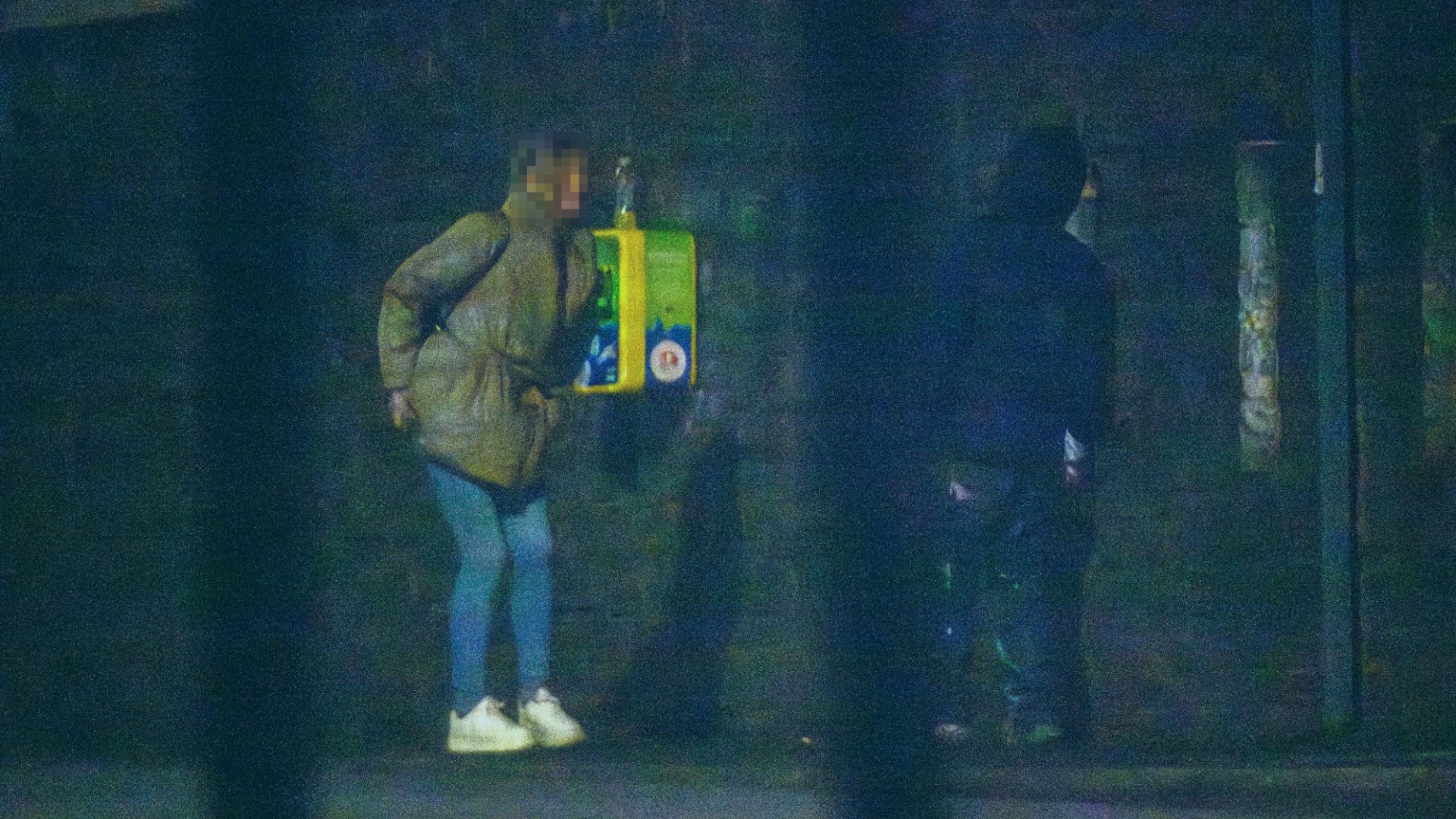
DRESSED in jeans, white trainers and a green coat, a young woman stands on the edge of a dark pavement smoking a cigarette, just yards from a primary school.
Alone in the dark, a hooded man walks up to her, gets close to her face and speaks, she nods and passes him something, before he quickly walks back down the street.
Minutes later a van pulls up, the woman speaks to the driver through a window before retreating into the shadows, occasionally walking a few paces before turning and walking back to the original spot.
She only emerges again when a flash looking Audi pulls up and after a
quick conversation through the passenger window, she gets in and is driven away.
The scene is mirrored across Bristol with dozens of sex workers walking the streets at night, with many exploited by organised gangs and often coerced into becoming addicts shackled to drug-dealers supplying heroin and crack cocaine, who often act as their boss.
A charity supporting street sex workers in Bristol reported an almost 50 per cent rise in women using its services since 2021.
READ MORE ON SEX INDUSTRY
Between 2022 to 2023, 135 women were supported through the outreach project, compared to 94 in 2021 to 2022 – a 44 per cent rise, according to charity One25.
Residents in the city, which is frequently voted the best place to live in the UK, raised concerns about a number of sex work hotspots including Fishponds, St Pauls and Castle Park in the city centre.
Student Connor Gayford, 22, said: “I was shocked the number of women working on the streets has risen so much, it’s kind of crazy, but I’m not surprised it happens in Castle Park as all sorts of stuff goes on here.
“This is a no-go area for me at night, because there are lots of muggings and stabbings, it’s not a safe place to be at night.”
In a unique project, some of the sex workers are incredible helping police to catch child predators by helping to identify kids at risk of exploitation and get underage girls off the streets.
Night Light, a partnership between police and the Barnardo’s charity, was set up after a network of abusers was found to be repeatedly trafficking and sexually exploiting a group of children in the areas of Bristol affected by street sex work in 2020.
On one recent shift, the Night Light team had contact with 17 women.
They shared information relating to one murder and one suspicious death, sexual assaults on children and possession of indecent images of children being assaulted.
The women also gave information on a registered sex offender wanted on suspicion of the rape of a child – which led to his arrest and the discovery of cable ties and plastic sheeting.
These females, despite being raped, abused, attacked and exploited themselves, still found the strength to provide police with information about dangerous males, which has led to their convictions, safeguarding many children in Bristol.
In 2023 they made 65 reports, and helped Night Light identify 18 children who were being exploited on the streets.
Some 182 children were being assessed as being at risk of child sexual exploitation in Bristol when a 2024 report was published, according to City Council figures.
Akasha Long, 19, who performs at events throughout Bristol, expressed shock at the increase in street sex workers and said their safety is key.
She said: “I think it’s part about accepting it to a certain extent and then regulating it properly to make sure everyone is safe.
“I feel a lot about is about environment, why women are working on the streets, their upbringing, and also where they are with earning.
“I like to think Bristol as a city is good at tackling these sorts of things, but not quite good enough to eradicate it.
We recognise the women are almost exclusively engaged in ‘survival sex’, and as such they are some of the most vulnerable and exploitable people in our communities.
Tom Tooth, Avon and Somerset Police
“I haven’t spotted anyone I thought was a sex-worker, but they come in every form, just like everything drug addicts, you can never really tell. I think a lot of it happens online these days too.
“It’s a bit like the people I know who’ve been on OnlyFans, they do what they need to do to get by, it’s not something they want to do.
“The fact they are coerced into taking drugs makes me sad, it makes me not want to go out and party. I’ve had some scenarios where someone will edge up to you and it feels like they have a bad intention.
“It could be them bringing you into bad group or it could be as bad as trafficking.
“It happens across the world, and I think it’s abhorrent for women in so many aspects.”
Music student Ellis Davies, 20, said: “I live in a well-known dodgy area of the city, it’s not a safe place to walk through at night, but I have seen random women standing alone there, and now it’s kind of clicked.
“It’s great to hear there is support available for them and that they are so hands on.”
Terrifying rape ordeal
Another hotspot is one of the underpasses below the M32 leading into Bristol, where one man using the skate park there told The Sun he’d witnessed a woman selling sex regularly in the past.
But while there are known hotspots of high levels of activity, there is no single ‘red light zone’, with the workers on pavements and street corners throughout the city.
One25 estimates there are 192 women working on the streets of Bristol.
CHILDREN EXPLOITED ON THE STREETS
A 15-year-old girl called Lily (not her real name) was spotted with her 16-year-old sister by the Night Light team frequently over a 2 week period.
They were seen to be spending time in the Stapleton Road area late at night and in the early hours of the morning.
The team spoke to the girls and explained why they were worried about them, helping them to understand some of the risks.
Lily shared that they would be quick to accept a seemingly kind man’s offer to sit in a car on a wet night, especially if there was the offer of a McDonalds.
Each night, the team would ensure they got home safely – however questions were being asked as to why they kept wandering the streets, even on cold and rainy nights.
The risks felt high and there was a need to understand the current situation for these girls better.
Both Lily and her sister were referred to BACE to receive specialist CSE intervention.
Having a 1:1 worker gave Lily the space to open up about what was going on at home and explain the levels of abuse and neglect that she was experiencing.
These conversations supported the Night Light team to advocate that Lily and her sister needed to move into foster care.
Credit: Night Light report
Its aim is to guide women towards independence and ultimately house them, while its night outreach van hands out hot drinks and condoms, as well as advice on how to get mental health support, seven days a week.
The charity told the BBC: “We work with some of the most marginalised women in Bristol so already you’ve got a lot of complex needs there and that’s further been compounded by the pandemic and cost of living crisis.
“Difficulties with access to healthcare, housing and trauma support are some of the reasons there may have been an increase in women working on the street.”
Street sex workers share details of people who rape or attack them with local charities, who circulate the descriptions of the so-called ‘Ugly Mugs’ among the community.
Clare (not her real name) worked on the streets for more than 10 years and was raped in a terrifying attack.
“One time a guy took me further than what I would’ve liked….my intent was to get out the car, pretend I needed a wee and run away but he ran after me and raped me,” she told the BBC.
“I thought he was going to kill me.”
Clare described herself as a “walking zombie”, often sleeping in car parks or on the streets.
‘Survival sex’
Avon and Somerset Police’s lead for sex work, Inspector Tom Tooth, said: “We share the concerns of our partners regarding the increase in women seeking support for involvement in street sex working.
“We recognise the women are almost exclusively engaged in ‘survival sex’, and as such they are some of the most vulnerable and exploitable people in our communities.
“Following the National Police Chief’s Council’s direction, our approach to on-street sex work is to collaborate with partners and the women themselves to prioritise harm reduction and safeguarding strategies.
“We focus our efforts on liaison and engagement with this often stigmatised and isolated group of women to understand the threats and risks they are exposed to.
“We can then identify and disrupt those who cause them the most harm, focussing on the wider category of ‘exploiters’, rather than exclusively on those who purchase sexual services.
“Following recent academic research on the topic, and local partnership data, we understand that women engaged in on-street sex work often suffer multiple forms of exploitation, including being robbed, assaulted, harassed, and coerced into sex work.
“In line with our force’s wider objectives for tackling violence against women and girls, it is the individuals behind these layers of exploitation that we want to uncover and robustly respond to.”
Bristol City Council has been approached for comment.
What is the law on prostitution?
In England, Wales and Scotland it is legal for a person to buy sexual services or be a sex worker.
But kerb crawling, having sex in public and a sex worker loitering in a street or public place are illegal.
The National Police Chiefs’ Council (NPCC) recommends not criminalising the women – who are often vulnerable – and instead targeting the men.
Campaigners such as the English Collective of Prostitutes have taken this a step further and are calling for blanket decriminalisation here.
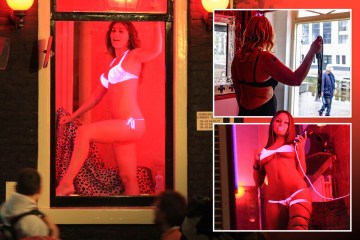
But legalisation of prostitution has failed to protect women — and what has happened in Amsterdam should act as a warning to the UK.
Female prostitutes are more than eight times more likely to be victims of serious or fatal violence, and since 2000 at least 127 women have been murdered by pimps or punters.
There are calls to repeal the law and shut down the notorious window – brothels such as those in the centre Amsterdam, which draw millions of sex tourists every year.