This article is taken from the April 2026 issue of The Critic. To get the full magazine why not subscribe? Get five issues for just £5.
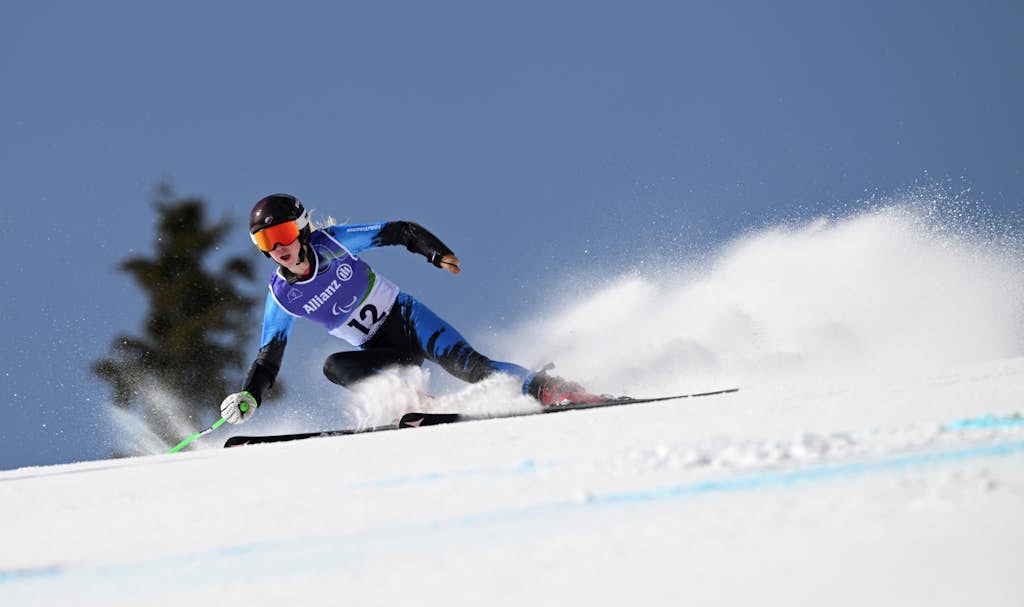
When Varvara Voronchikhina won a bronze in downhill skiing this month, it was the first time that the flag of the disabled athlete’s motherland had flown at an Olympic or Paralympic medal ceremony since 2014. Shortly before the opening of the Paralympics that year, Russia had invaded the Crimea, less than 300 miles across the Black Sea from where they were hosting the Games in Sochi.
From 2017, first in response to a state-sponsored doping scandal, then after another invasion of Ukraine, athletes from Russia and Belarus, her ally, were banned from representing their country. Russians could compete but under a neutral Olympic flag and receive their medals to Tchaikovsky’s first piano concerto rather than their national anthem.
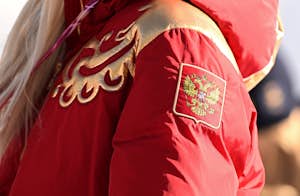
The ban applied at this year’s Winter Olympics but the Paralympic body decided to lift it, leading to a boycott of the opening ceremony by seven nations. On the day Veronchikhina won her medal, 11 people were killed by a cruise missile that hit a Kharkiv apartment block, one of 29 fired into Ukraine that night, along with 480 drones. One might wearily observe that Russia is doing its bit to create future Paralympians.
The West cannot cry foul. Four days before the Paralympics, the United States and Israel began their bombardment of Iran. Aboulfazl Khatibi, his country’s only qualified athlete, was unable to travel to the Games in Italy. There are reports that Iran may withdraw from this summer’s football World Cup in the US in protest. That might endanger Donald Trump’s chances of defending the FIFA Peace Prize he was given last year — were it not for the governing body’s toadying president, Gianni Infantino, attending the first meeting of Trump’s Board of Peace last month wearing a USA baseball cap.
This is not a column on politics, but the bogus platitudes that leaders make about sport’s ability to heal divisions and pause conflict. Before the Winter Games, the UN General Assembly passed its usual resolution calling for an Olympic truce, accompanied by a three-hour debate of pious claptrap about wanting to show “humanity at its best”. It was co-sponsored by 167 nations, though not the US or Russia. Nor Iran.
Ancient administrators were more capable of halting hostility, especially as the original Olympic festivals lasted for only five days. A truce was declared by heralds across Greece, called the ekecheiria (“holding of hands”, meaning “stay of arms”), to allow visitors safe passage to and from Olympia. It is said to have been violated only twice: by soldiers of Philip of Macedon; and by the Spartans in the 5th century BC, when they attacked a fortress in Lepreum. They were fined the equivalent of 200,000 workers’ daily wages.
The UN website used to call the Olympic truce “the longest-lasting peace accord in history”. Yet more diplo-balls. That page has since been removed, perhaps after someone pointed out that the Treaty of Windsor between England and Portugal has held since 1386. The Olympic truce was revived only in 1992; just as well since the Games in 1916, 1940 and 1944 were cancelled as everyone was shooting at each other.
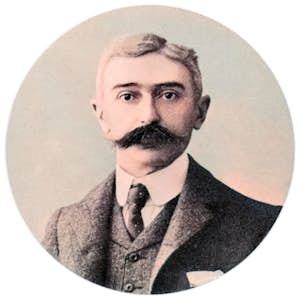
Baron Pierre de Coubertin, the father of the modern Olympics, had optimistically tried to introduce it in 1935, when he said that he “heartily welcomed the idea of belligerents interrupting their fight in order to display the strength of their muscles in a loyal and chivalrous manner”. The host of the next year’s Olympics in Berlin was not so keen. Austria’s annexation by Germany meant they were unable to compete in the 1938 World Cup, though Jules Rimet, Infantino’s predecessor, didn’t give Hitler the FIFA Peace Prize.
The most heartening sign of the modern truce in action was at the Sydney Olympics in 2000 when the North and South Korean delegations marched in the opening ceremony together wearing the same white uniforms. The London Olympics in 2012 was the first Games for which all 193 UN member states signed the truce resolution, and there was at least relative world peace as they were contested.
Other truces have been more delicate. The US, hosts of the Winter Games in 2002, proposed one that exempted the ongoing action in Afghanistan. Similarly, the Battle of Najaf in Iraq coincided with the Athens Olympics of 2004 and Vladimir Putin invaded Georgia the day before the opening ceremony in Beijing in 2008.
There are plenty of other examples of war or escalating tension getting in the way of sport. In 1973, the Soviet Union refused to take part in a World Cup play-off against Chile in protest at Augusto Pinochet’s dictatorship. Four years earlier, two World Cup qualifying matches between El Salvador and Honduras were marred by crowd violence that led to war between the countries. A brutal water polo match between the Soviets and Hungary in 1956 was seen as a proxy for the revolution being fought in Budapest.
More recently, India and Pakistan have refused to shake hands at cricket matches, whilst Elina Svitolina, the top-ten tennis player from Ukraine, won’t acknowledge her Russian or Belarus opponents.
Eighty years ago, George Orwell wrote that sport is “bound up with hatred, jealousy, boastfulness, disregard for all rules and sadistic pleasure in witnessing violence: in other words it is war minus the shooting”. Perhaps it applies the other way round, too, and war is shooting minus the sport?