The world faces a new reality: three predatory imperial powers in Russia, China and the USA
This article is taken from the February 2026 issue of The Critic. To get the full magazine why not subscribe? Get five issues for just £25.
“I believe in a British Empire, in an Empire which, though it should be its first duty to cultivate friendship with all the nations of the world, should yet, even if alone, be self-sustaining and self-sufficient, able to maintain itself against the competition of all its rivals,” Joseph Chamberlain, arch-liberal, and one of the foremost theoreticians of his age, said in a rather unfortunately timed speech (WW1 started a decade later). He added the rationale: “and I do not believe in a Little England which shall be separated from all those to whom it would in the natural course look for support and affection, a Little England which would then be dependent absolutely on the mercy of those who envy its present prosperity … ”
Chamberlain, the most talented politician (other than Curzon) of Great Britain never to be the prime minister, made his entire career making the liberal and progressive case for an empire, which basically stated that empires are the last protection of smaller countries, languages and ethnicities who would otherwise be erased from history, and that empires are the ultimate entities to balance other predatory empires. “The time of small nations has passed; the time for empires is now.”
It is therefore somewhat interesting a century after his mistimed prediction, Chamberlain is now back in discussions in strategic circles, with a bunch of followers, from Jean-Claude Juncker, to Guy Verhofstadt, to the British CANZUK enjoyers, to EU-Empire flag-waving anons on social media.

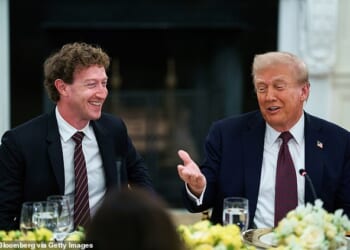
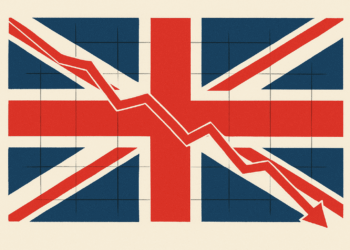
The proximate causes are varied. But the public intellect is using imperial terminology in a manner unseen in over eighty years. From the Wall Street Journal to the Economist to the Financial Times, there is a consensus that there are now three overtly imperial and predatory entities in China, Russia and the United States, alongside small acts of territorial conquests from Armenia to Syria. The concern is understandable, especially considering Russian actions in Ukraine, and American rhetoric and action in Greenland and Venezuela.
Whilst Washington’s National Security Strategy nominally mentions “burden shifting” as a doctrinal approach, it sprinkles that with Huntingtonian nonsense about culture and migration. Given American domestic political culture and coalitions, the end result is an incoherent approach from hemispheric resource consolidation in Venezuela, to overt imperial threats to Greenland, to attempted divide-and-rule in Europe.
But a key question is often overlooked. Is imperialism back, and if so, what might be the causes and effects? It’s empirically silly to attribute it to just reckless or rogue states. It sidesteps the issue to talk about “great men of history” without explaining what led to their rise. It is also an analytical folly of a peculiar Americacentric international relations discipline that it cannot foresee a world where the current order is over and the end result isn’t some progressive utopia, but rather a return to the old days; or that one considers the current order to be the systemic end state of foreign affairs.
There are a few reasons for this. To talk in imperial terms is often pretentious and anachronistic: it sounds ridiculous to call someone a “viceroy” even jokingly. America remains a democratic country and a republic in structure, regardless of how imperial in policy it actually is, and therefore the external facade remains unchanged enough to create an analytical mist. America is enormously powerful and at the same time sufficiently politically unsteady and unpredictable to risk rendering any prediction flawed, thereby discouraging prediction altogether.
But the question is important all the more because there haven’t been serious theoretical debates in international relations since at least the early 90s. Republics can be overtly expansionist and imperial. Early Rome, 19th century France and the USSR are classic examples, but American history itself is all about expansion and setting course towards hemispheric hegemony, all the while being republican in culture and practice, from Andrew Jackson in Florida, to James Polk in Mexico, to Theodore Roosevelt in Cuba and the Philippines. Most importantly, however, the core flaw of IR is considering imperialism as an act of predation whilst overlooking the structural causes of empires.
An era of imperialism isn’t usually planned. In fact, more often than not (as is evident from European empire-building from the 17th century onwards), it is usually a reaction to structural forces. It happens slowly over time. The Ottoman Empire formation was basically a long act of dividing Eastern Europe, by playing one self-loathing actor against the other.
Later Western-Ottoman alignments were a structural reaction to a concentrated Orthodox-Slavic bloc. In the West, Scotland joined England because individually it was incapable of defending its interests against Spain alone. Spanish success in Asia and Latin America in turn resulted in other seafaring nations venturing out. Technological advances and industrial revolutions resulted in great power competition between Britain and France, which then spilled out across the globe in a mad rush towards territory, manpower and resources, in turn liberalising the core of their respective empires and encouraging multi — ethnic imperial elites and the spread of Western sciences.
Sudden technological superiority and advantages also resulted in changes in offence-defence balance that encouraged further acquisition of protectorates. Surplus elites were sent to a stable jobs programme as imperial administrators in regions which needed order and competent administration to flourish, in return for manpower and resources.
In short, imperialism resulted because of multipolarity and great power competition, not the other way around, and the need for resources and manpower resulted in spheres of influence. None of this is either an approval or a disapproval of the process, but if one’s international relations analysis fails to accept structural reasoning, then one might be accused of being intentionally blind to reality.

A casual glance around will show that the conditions have at least partially returned. We are in a lopsided multipolarity whether we like it or not. Multipolarity entails great powers focusing on their own back yard to pursue its own national interest. For instance, the US focuses on the Western Hemisphere and alliances in the Indo-Pacific, whilst China asserts dominance in the South China Sea and along its Belt and Road Initiative routes.
This inward focus stems from an inherent asymmetry of interest: defending one’s core territories and allies is far more vital than projecting power into distant regions where stakes are lower, leading to a fragmented international order where cooperation is selective and competition is the norm. It further entails an imperial rush to establish defensible supply chains against potential rival, predatory powers.
This multipolar dynamic fuels an imperial rush for resources as great powers anticipate disruptions from predatory actors. As great powers scramble to control critical commodities such as rare earth minerals, semiconductors and energy sources, viewing them not just as economic assets but as strategic necessities for survival, it leads to a spiral. Spirals in turn lead to competitive poaching from other great powers, resulting in bloc formations and bandwagoning.
This scramble often manifests in aggressive investments, territorial claims or economic coercion, creating cycles of insecurity. One power’s defensive moves, such as fortifying trade routes or acquiring overseas bases, are perceived as offensive by others, prompting retaliatory actions such as competition for allies, markets or resources and accelerating arms races.
Added to that, there is an increasingly enormous gap in military tech between leading powers and the rest of the world. Finally, there is an enormous number of educated surplus elites who are jobless in their homeland. This leads to unchecked migration from the periphery which destabilises the core, because those peripheral regions require order and competent administration to economically flourish — the root causes of the migration in the first place.
Domestic pressures exacerbate the instability: a surplus of educated elites facing joblessness — due to automation or economic stagnation — fuels internal unrest and populist movements. Simultaneously, unchecked migration from regions fleeing disorder, poverty or conflict to seek opportunities in wealthier nations further destabilizes their host nations and strains their social fabric. Individually, these might seem trivial causes. Combine them, and we are in a world that looks structurally similar to the 1780s.
A case in point might be the rapid changes we see in Europe. To achieve true imperial consolidation within Europe, any aspirant entity (EU) or dominant power (Germany) must command several pillars that have historically sustained any form of imperialism.
The foremost pillar is hegemonic control over narrative formation, the capacity to mould public opinion whilst robustly countering exogenous media influences, social media platforms and information inflows. The European Union attempts to use regulatory frameworks such as the Digital Services Act (DSA), which mandates rigorous content moderation protocols for major digital intermediaries to mitigate disinformation, illicit material and risks to public security or democratic processes.
The second pillar is a meritocratic, supranational, race-neutral bureaucratic cadre. The European Union has somewhat progressed toward this through its supranational organs (the Commission, Parliament and Court of Justice), yet it lacks the requisite cohesion and overriding authority to decisively subordinate national prerogatives.
Finally imperial legitimacy presupposes an unambiguous monopoly on legitimate violence across its domain, not just a joint army against external predators, but also a continental guard or a gendarmerie, to crush potential dissent within. Both are powers the EU currently lacks. Notwithstanding advancements in the Rapid Deployment Capacity (RDC) primarily for external crisis management, the Union maintains no unified internal coercive instrument.
Germany, by contrast, is capable of both having an external force that could act as a continental deterrence, and corralling the rest of Europe to push for a continental guard under Berlin’s command, should Berlin elect to pursue another round of regional ascendency. Germany could sustain a formidable conventional land army whilst potentially spearheading a multinational, ethnically neutral gendarmerie-style force subject to de facto German operational primacy, even if nominally integrated under EU auspices.
By design or disadvantage, the US is not suitable to be an overt imperial power for the long term. It remains by structure democratic and chaotic, and it lacks the coherent social hierarchy or the requisite deference to a culture of pure meritocracy, despite many attempts. There’s a reason the two most successful phases of US imperialism or hegemony were in the 1890s, when it had a mostly homogenous elite class; and in the 1950s, after the massive nation-building project of the Second World War. But geopolitical spirals work in weird ways, insofar as power begs to be balanced.
Given the changing times, the key contradiction of the current national security strategy will increasingly come into play as the US simultaneously pushes for burden-shifting, whilst needlessly sounding imperial and Huntingtonian with regards to how Europe ought to organise itself internally. With a decline of US relative power, the difference will only get more pronounced.
Americans interested in shifting the burden of defence to Europe, and especially to Germany, have welcomed the news of European rearmament. Foreign Affairs wondered if Germany could be the “protector” of Europe, and Wall Street Journal reported on secret German plans for war, and the Atlantic studied the rapid German rearmament. There are talks of EU consolidation to a formal supranational (imperial?) entity to defend the continent from the three predatory great powers.
The paradox of this might be hard to swallow for some on both sides of the pond. For the American “civilisational” right, the monkey’s paw might curl, bringing unintended consequences. Burden-shifting will perhaps result in European independence, consolidation and, potentially, hostility. Going by European social media, Europe will not even consider America to be in the same civilisational bloc. For the Euronationalist conservatives on the other hand, a European independence will result in complete collapse of democracy and nationalism in Europe.
For small states across the globe, the choice will once again be to seek direct imperial protection in return for resources and manpower. For middle powers, the choice once again is between growing in territory and manpower or succumbing to economic warfare or outright predation.
Either way, we should perhaps re-read Joseph Chamberlain, a delayed prophet of our times.