Despite President Donald Trump ramping up domestic energy production in his second term, the recent conflict with Iran has exposed America’s deep dependence on global oil and international waterways.
It’s increasingly clear the nation cannot afford another protracted war in the Middle East. We’re still nursing our wounds from the last saga under former Presidents George W. Bush and Barack Obama.
Even the mere appearance of a drawn-out affair has caused enough chaos to distract from Trump’s entire domestic agenda. Following the start of “Operation Epic Fury,” oil skyrocketed to a peak of $120 per barrel due to speculation, uncertainty, and panic.
Trump and Energy Secretary Chris Wright temporarily calmed the waters with promises to tap the Strategic Petroleum Reserve, yet that hasn’t fully kicked in yet.
The commander-in-chief later issued a 60-day waiver of the Jones Act, which forces America to use U.S.-built and operated ships for transporting goods between American ports. Although the waiver was a smart move, gas prices are still hovering near $100 per barrel.
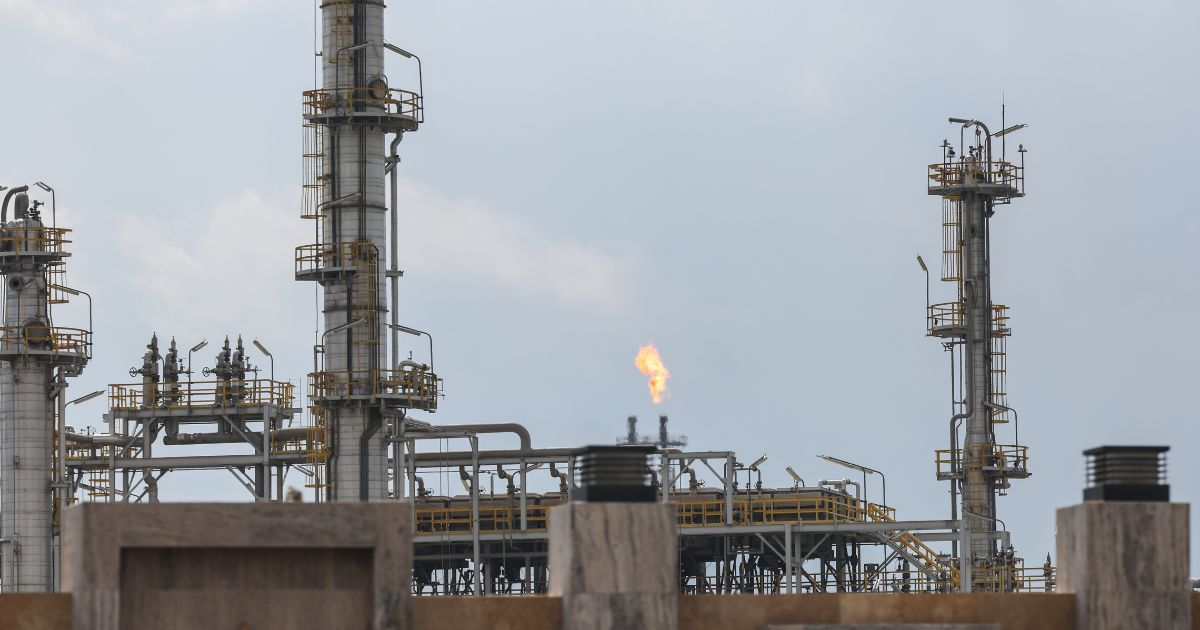
As long as Democrats, the media, and conservative skeptics keep expressing concern about the Middle East, such moves will only provide minimal relief. Detractors have a right to be worried, especially considering that if Iran’s Abadan refinery were to be bombed or severely damaged, prices would rise even more.
Even Trump’s repeated promises to end the conflict — and his deep resolve to keep the Strait of Hormuz operational — hasn’t stopped gasoline from rising.
You’d think oil-rich states like Texas would be less affected, yet certain areas have seen prices jump by over $1 per gallon in only 30 days.
Perception is reality. Reality is perception.
So how can the United States permanently secure its energy future?
It starts with doubling down on domestic drilling and natural gas extraction, while securing the Western Hemisphere.
The Panama Canal should be under U.S. control, as roughly 2.3 million barrels of oil and refined petroleum products pass through it each day. The federal government foolishly gave up control under President Jimmy Carter.
Having a large-scale energy production spike would mean more jobs and could trigger an economic boom.
When people think of “energy jobs,” they likely picture someone working on an oil rig, yet companies have a variety of roles for Americans to fill. They need public relations, legal teams, scientists, regulations experts, accountants, AI specialists, engineers, contractors, and computer programmers, among others.
The U.S. isn’t exactly sitting on its hands. It’s a net exporter of petroleum. Yet imports are still a large piece of the pie, accounting for about one-third of our supply.
The amount of foreign oil we rely on must be reduced.
Here’s the rub: That would require a costly revamp of the nation’s energy infrastructure.
Back in 2025, there was talk of U.S. refiners making massive investments to process more domestic light and sweet crude, and less oil from foreign suppliers.
Sources and analysts told Reuters, however, that industry leaders haven’t moved forward and are relying on blends of both heavy and light crude until the future becomes clearer, though that process has its own ceiling and can’t last forever.
Trump could provide a friendly shove in the form of energy tariffs, but he’d have to end the conflict in Iran first. He can also use his executive authority to speed up construction and permitting.
In the meantime, we can’t simply shut off the foreign oil spigot like a water faucet. Cue Venezuela, another piece on the chessboard that has come under American influence after U.S. military forces captured dictator Nicolas Maduro.
Trump announced that 80 million barrels of oil has been yielded from our “new friend and partner.” But why stop there? Let’s keep it flowing, at cost, and share the wealth as we shore up our domestic production.
Venezuela holds the world’s largest proven oil reserves, with over 300 billion barrels located primarily in the Orinoco Belt. More importantly, the nation produces extra-heavy and sour crude.
Trump, who has tasked Vice President J.D. Vance with rooting out nationwide fraud, could also direct him to create a fund — not unlike DOGE — where any savings are spent on achieving total energy independence.
That would be in addition to the almost $40 billion in fossil fuel subsidies included in Trump’s “Big Beautiful Bill,” WIRED reported.
Trump can also leverage trade deals and foreign aid to force allies, specifically Europe, into helping secure valuable waterways. They recently declined to get involved when called upon to help secure the Strait of Hormuz.
Above all, Americans must band together with Trump in rejecting the false “Green New Deal” doctrine. It is a creed of ignorance and poses extreme risks. The world is not yet ready to quit oil. This obsession with destroying a product that is used in so many aspects of daily life is suicide.
Even Hollywood had to recognize this reality in the Paramount+ show “Landman,” when actor Billy Bob Thornton listed off every reason imaginable to reject the myth of immediate alternative energy.
“There’s nothing clean about this,” he declared. “Never mind the fact that if the whole world decided to go electric tomorrow, we don’t have the transmission lines to get the electricity to the cities. It’d take 30 years if we started tomorrow.”
He added, “Unfortunately for your grandkids, we have a 120-year petroleum-based infrastructure. Our whole lives depend on it. And hell, it’s in everything. That road we came in on, the wheels on every car ever made, including yours. It’s in tennis rackets, and lipstick, and refrigerators, and antihistamines, pretty much anything plastic.”
On top of that, some of the very countries we rely on for oil imports are obsessively hung up on getting rid of gasoline.
Why rely on neighbors when we can do it ourselves?
Will it take time? Yes. Anything worth having must include a long-term plan.
In the years Trump has been president — including his first term — he’s taken unprecedented steps in the right direction.
But where do we want to be when the next global crisis strikes? Waiting on the docks for foreign ships to bring us what we need? Or do we want to lead in energy innovation, create jobs, and be able to secure our supply so that our options never run out?
If America is to have the “golden age” we’ve been promised, it must revolve around energy and economic affordability. Both of these start, and end, at the gas pump.
Reconfiguring our energy infrastructure may take years and cost hundreds of billions — if not trillions — of dollars. Yet we must all take a look in the mirror and ask ourselves one simple question: “What’s the future worth?”

Advertise with The Western Journal and reach millions of highly engaged readers, while supporting our work. Advertise Today.