I’m a first-time buyer and am in the process of buying a small house in London.
The conveyancing process has thrown up an issue. Plans show there is a public sewer within the boundary of the property.
I’ve been told access would have to be granted to the water company when required. If I want to build an extension over the sewer area, this could be a problem too.
An extension is something I might consider in future, as the home is small.
Should I abandon the purchase altogether? If I go ahead, how could I ensure I’d be able to extend? Or would this be too costly and complex?
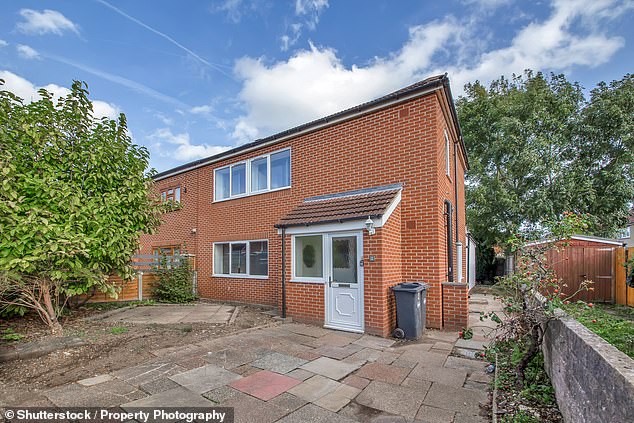
Derailed? This reader wants to buy a home, but there’s a public sewer within the boundary
Jane Denton, of This is Money, replies: Public sewers running through property boundaries are very common.
If you end up buying the house, the public sewer will still be owned and maintained by your local water company, even though the land is yours.
The water company will have legal rights of access to your property if it needs to repair or upgrade the sewer.
This can normally be done via a manhole – so it’s unlikely they would need to dig up your garden for example.
The water firm’s legal rights could affect your planned extension, however, so understanding your rights and responsibilities now will help you avoid future legal, financial, and planning issues.
While this may sound daunting, you shouldn’t be put off. There is a good chance you will be able to buy the home and build an extension.
To build an extension legally, you would need to apply for what is known as a build over agreement from your local water authority. Without this approval, you could face challenges when selling your property in the future.
In the worst-case scenario, the water company could seek permission to remove the extension and force you to pay
I spoke to two experts for their thoughts on your question.

Olivia Egdell-Page is a partner and head of property at Joseph A. Jones & Co
Olivia Egdell-Page, a partner and head of property at Joseph A. Jones & Co, says: A water and drainage search is a crucial part of the conveyancing process.
Not only does this confirm the connection status of the property and the means of billing, it also confirms whether any pipes or sewers lie within the property boundary, or if they are in the vicinity.
I note you intend to extend the property, and so having this information at this stage will allow you to make an informed decision as to how you wish to proceed.
If you are building within three metres of a public sewer, or within one metre of a public lateral drain, you will need to obtain consent from the water company, presumably Thames Water in this case.
The water company is entitled, by virtue of the Water Industry Act 1991, to enter the property in order to maintain, repair, replace and renew public sewers.
If any building work limits this, the company is entitled to apply for an injunction to remove the building and potentially recover damages, which clearly would not be your intention.
It is possible to enter into a build over agreement with the water company, which is entirely separate to the planning process.
A formal agreement will confirm their consent to the works proposed and can be relied upon by you, and passed to future purchasers.
Works should not commence without an agreement in place, and the water company reserve the right to make changes to your design, which could result in you incurring unexpected costs or delays.
The cost of entering into a build over agreement is dictated by the internal diameter of the sewer, so it may be worth enquiring with Thames Water to confirm this, and therefore the expected cost of the build over agreement, before committing to your purchase.
Please be aware that liability for any damage caused to the sewers or drains during the construction lies with you as the homeowner, so you must ensure that you fully comply with Thames Water’s requirements in building your extension in due course.
For example, they may require you to relocate a manhole within your boundary, or even to divert the sewer in some cases.
Provided you are aware of and understand the requirements, there is no obstacle to you proceeding with your purchase, however this scenario does highlight how important searches are in the process.
Jessica Barnes, a solicitor at So Legal, says: Finding a public sewer within the boundary of a property can sound alarming, especially when you already have plans to extend, but it doesn’t automatically mean you should walk away.
In London in particular, this situation is surprisingly common. Our London conveyancing team comes across it regularly, and most buyers are relieved to learn it is usually something that can be managed rather than a reason to abandon a purchase.

Jessica Barnes is a solicitor at So Legal
Many homes were built long before modern drainage layouts, and sewers often run under gardens, side returns, and even parts of the house itself.
Because the sewer is public, the water authority has legal rights of access if repairs or upgrades are needed. That access cannot be blocked, even by an extension, which is why the issue feels challenging at first.
Across much of London, that authority will be Thames Water, and any building work within three metres of a public sewer, or directly over one, is likely to require a build over agreement.
This is a formal contract confirming that your proposed extension will not damage the sewer or prevent future maintenance.
Where an agreement is required, it is not optional, and you must apply before work starts. You will usually need to provide detailed plans and foundation designs to show that the pipe will remain protected.
In straightforward cases, the process is fairly painless. There may be an application fee, often in the hundreds of pounds, and sometimes inspections during construction. What matters is doing it properly.
Building without an agreement can leave you exposed to significant repair costs if the sewer is damaged later, and it can also cause problems when you come to sell.
Before deciding whether to pull out, replace uncertainty with facts
Cost is understandably a concern, but most buyers are surprised to learn this rarely turns into a major financial headache. Unless the sewer needs to be diverted, which is far less common, the extra expense is usually modest in the context of an extension project.
One point that is often overlooked is your mortgage lender. It is worth checking early on whether they have any requirements relating to the presence of the sewer, and your solicitor can confirm if anything needs to be reported to them.
Lenders generally accept this, but they may want reassurance that the right permissions will be in place.
Before deciding whether to pull out, replace uncertainty with facts. Ask your solicitor for detailed sewer plans, speak to a surveyor about feasibility, and, if needed, make informal enquiries with Thames Water.
If extending is absolutely essential to you, and early advice suggests approval would be very unlikely, walking away may be sensible.
But for many first-time buyers, this turns out to be a manageable issue rather than a deal-breaker.