This article is taken from the March 2026 issue of The Critic. To get the full magazine why not subscribe? Get five issues for just £25.
A company from over here that’s also doing rather well over there,” went the tagline of Hanson Trust’s memorable TV advert from the mid-1980s. I still remember the tingle of pride as the British conglomerate’s US achievements were listed — mind-blowing quantities of everything from office chairs to Frankfurter sausages.
The commercial oozed solidity and permanence — an oak-panelled boardroom, big brass plates screwed into marble architraves and Denholm Elliott in a Savile Row suit. Yet, just a decade later, thanks to hubris and the darkening mood around “diversified industrials”, Hanson was broken up and much of its transatlantic holdings had reverted to American ownership.
Amidst growing talk now of an irrevocable end to the Special Relationship, this cautionary tale is a reminder that corporate invasions of America have rarely been successful in the long term. If there is a rupture which makes it even harder for our businesses to thrive in the US, well, perhaps that wouldn’t be a total disaster.
The lure of breaking America is as great for CEOs as it is for rock bands and actors. I have lost count of the number of strategy presentations I have seen with balloon diagrams illustrating the gargantuan scale of the US market. “All we need is just 1 per cent of this prize,” says the salivating head of corporate development.
The executive directors murmur assent as they dream of the corporate jets and the opportunity to renegotiate their pay with the remuneration committee. (A recent study by Schroders found that, adjusted for company size, the packages of UK CEOs are worth less than half of their US equivalents.)
But the reality of an American invasion is less like our triumphant torching of the White House in the War of 1812, and much more like the feeling of being ambushed by Patriot militias, who then disappear into the countryside and the next day reemerge pretending to be your allies.
The fact is that no American with self-respect can stand the idea of having a Limey boss
Whilst they never say this out loud, the fact is that no American with self-respect can stand the idea of having a Limey boss — and American subsidiaries will go to extraordinary lengths to maintain their freedom.
In the defence sector, national security provides convenient cover for US business units to be “ring-fenced” from their British owners. In other industries, the US general counsels have successfully argued for “operational independence” as a means of protecting the parent company from class action litigation.
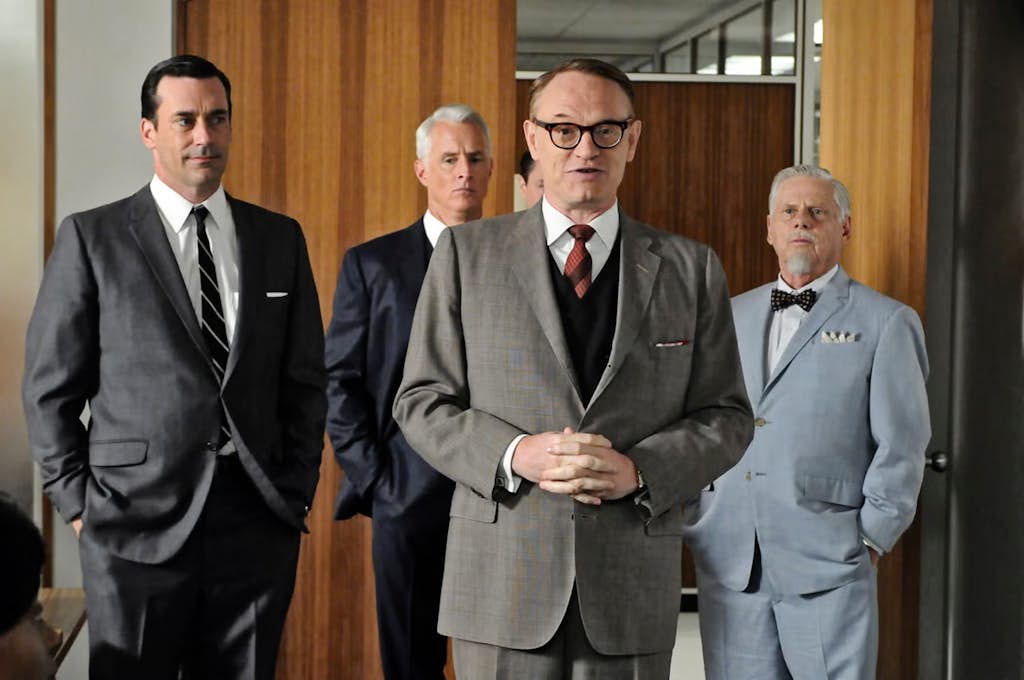
The quotidian frustrations of managing Americans were brilliantly dramatised in the TV show Mad Men. There were a couple of seasons that focused on the endless lengths to which the Madison Avenue admen would go to thwart their British boss, portrayed by a permanently haggard Jared Harris.
The story arc culminates in a disastrous office Christmas party when a drunken secretary driving a ride-on lawn mower mutilates the foot of one of Harris’s British lieutenants. It’s a painful metaphor for the experience of operating in the States.
Another problem with our forays into American markets is that pretty soon 1 per cent is not nearly enough. The enormity of the US economy intoxicates, and our appetites get supersized. An underlying reason for Royal Bank of Scotland’s collapse in the financial crisis was the way Fred Goodwin’s hunger for it to become a top ten bank in the US led to a series of value-destroying decisions.
Then, if an American drama becomes a full-blown crisis, British business leaders rarely fare well. As a tribe, we are diffident communicators and on US television this reserve can look like evasiveness and a lack of empathy. Tony Hayward’s performance following the Deepwater Horizon catastrophe was so scarring that, since his departure, the BP Board has never again appointed a Brit to lead the company.
So, if America is often a bridge too far, where else should we seek international connections? Chinese markets have a similarly exciting scale. But in practice it is tough getting a return on investment from those tickets on prime-ministerial junkets and the 12-course banquets involving mysterious blobs of jelly.
Instead, perhaps we should focus on markets closer to home. The Europeans all have their problems. The French like to pretend they can’t speak English (even if their LinkedIn profile suggests they spent half a dozen years in South Ken). The Germans have their Kafkaesque labour laws. And Spanish corporate entertainment tends to leave you sleep-deprived and liverish.
But I find there is greater mutual respect, there are fewer barriers to bringing profits back to London and, importantly at my age, you don’t have to worry about jet lag. I hate to sound like a “remoaner”, but, as any kid with a lemonade stand will tell you, the neighbours can also be your best business prospects.
Yet, our ambitious executives will always be drawn to the vertiginous skyline of midtown Manhattan, sizzling Wagyu at the Capital Grille and the smell of kerosene in the PJ hangar at Teterboro.
To have a chance of preventing these wide-eyed dreams from curdling into nightmares, they must learn the awkward lessons of our history.