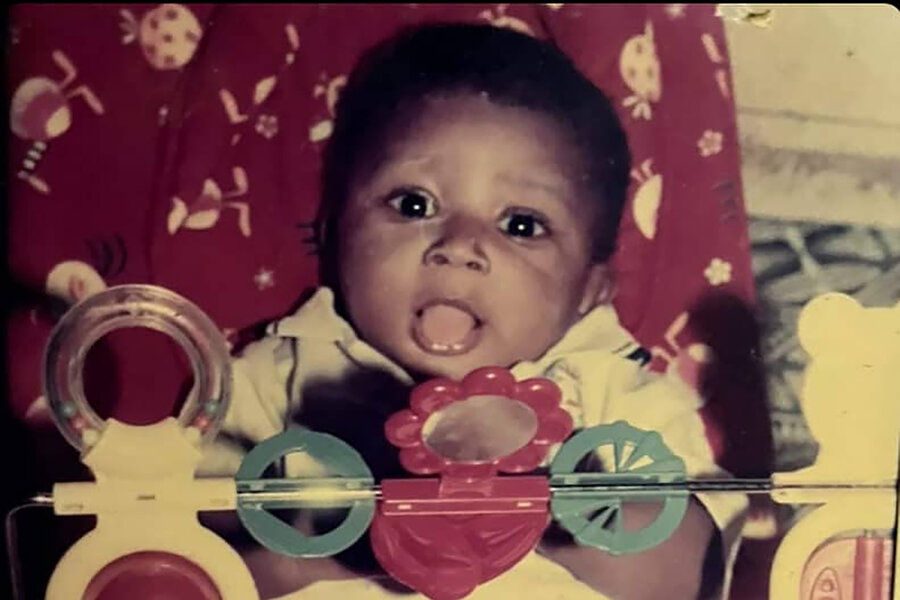
I’ve grown used to the pause. That moment when someone hears my name – Goodluck – and looks at me with confusion, curiosity, or hesitation. “Wait, is that really your name?” “Thank you!” “How do you spell it?” It’s something I didn’t think would require a lot of explanation.
Back in Nigeria, it didn’t. Names like Precious, Beauty, Grace, or my siblings’ Prince and Princess were common – one of the former presidents of Nigeria was named Goodluck Jonathan. Mine was just another name in the system. I was rarely called by my first name throughout high school. My teachers called me by my last name. Friends did the same. My dad used a native nickname, Nkem (which means “mine”), at home. Whenever he uses my first name, it means I’m in trouble.
I didn’t realize how different my name was until I traveled to the United States to continue my education when I was 19 years old. That was the first time “Goodluck” stopped blending in. I thought it would be easy for people to hear and remember – after all, it’s something people say to each other. But instead of recognition, it was met with repetition and disbelief. I had to spell it out. Repeat it, countless times. Explain that I was not joking.
Why We Wrote This
Names are often laden with meaning about our heritage. For our essayist, his name is a thread that connects him to home, a reminder of the rich traditions he carries with him everywhere he goes.
When it came to my middle name, I had the perfect explanation. “Have you seen ‘Avatar: The Last Airbender’?” I would ask. “Remember Zuko’s sister, Azula? My middle name is Azuka. You just replace the letter ‘l’ with a ‘k.’” This took a little bit of time, but it worked.

Courtesy of Goodluck Ajeh
However, when it came to my first name, I thought it was straightforward. I couldn’t understand why something normal back home needed so much clarification in the U.S.
But I also felt a quiet sense of gratitude. I never had to change my name to fit in. I didn’t need to shorten, tweak, or replace it with something that won’t be “butchered” when pronounced. I’ve met people who did – who dropped the names their families gave them just to make things easier. To avoid the 15-minute pronunciation lesson. While I understood their reasons, it made me all the more proud that I didn’t have to compromise my name.
In Nigerian culture, names are more than words – they’re messages. Some reflect the circumstances of birth, while others are blessings, affirmations, or even prayers for the child’s future. Mine remains a mystery. I don’t know why my parents chose it; I’ve never asked.
To some, it means I carry good fortune with me. To others, it means I bring it. But to me, the meaning isn’t something I need answered immediately. I believe the mystery is part of the journey – something I’m meant to grow into and discover for myself.
What started as just a name – one I barely used and others rarely said – has become a part of me I now lead with. It’s the first thing people learn about me, and sometimes the first thing they question. But it’s also one of the few things I’ve carried unchanged. In a new country, surrounded by new people, cultures, and places, my name has become a thread that connects me to where I’m from. It’s a reminder that home isn’t something I left behind – it’s something I carry with me.