This article is taken from the December-January 2026 issue of The Critic. To get the full magazine why not subscribe? Get five issues for just £25.
Animosity towards Canada is central to President Trump’s policy for the Americas — one that reaches from Greenland and the thawing North-West Passage to pursuing regime maintenance or change from Argentina to Venezuela. These are scarcely novelties, for hemispheric expansion and control have been major themes in American policy from the outset — beginning in 1775 when it first invaded Canada. Yet, Trump’s stance represents a shift from what, since 1871, has been the United States’ attitude towards its northern neighbour.
From 1775 until 1814, Canada was central to American plans for expansion. It remained episodically an issue thereafter. Interest in Canada brought together particular American constituencies for, as always, the abstractions of state and nation contained contradictory attitudes and aspirations. In the American case, these crucially were regional, or, in another light, proto-national.
Interest in annexing Canada was strongest in New England and New York from where British North America seemed the natural next step for extension. It was also popular in Trans-Appalachia, especially Ohio, Kentucky and Tennessee. There, the British position was seen as supportive to Native American/First Nations opposition to American expansion.
Thomas Jefferson, President from 1801 to 1809, a committed supporter of the conquest of Canada but who greatly underestimated its difficulty, informed his predecessor, John Adams, in June 1812 that “the possession of that country secures our women and children for ever from the scalping knife, by removing those who excite them”. He claimed the war would be a “mere matter of marching”, with Quebec taken in 1812 and Halifax in 1813. There was also a perception of the American Revolution as unfinished until Canada could be “liberated”.
In contrast, southern states, notably South Carolina, put a greater premium on the case for expanding into the south-west. In part this was because, as with Louisiana and Florida, slavery was present there and so could be incorporated into the southern states’ slave society. This North/South contrast was evident in the Mexican-American War of 1846-8 which was far more strongly supported in the South than in New England, as had been earlier campaigns against the Seminole tribe in Florida.
There were successive American invasions of Canada in 1775, 1812, 1813 and 1814. Henry Clay, a Kentucky landowner and lawyer, a leading Westerner and a war hawk who was Speaker of the House, wrote in December 1813: “When the war was commenced [June 1812] Canada was not the end but the means; the object of the war being the redress of injuries, and Canada being the instrument by which the redress was to be obtained.”
The redress to which he referred was Britain’s control over Atlantic trade and attempted impressment of British deserters on American ships to fight Napoleonic France. However, Clay also observed, “If Canada could be conquered and retained, it should be held.”
Reality proved otherwise. American weaknesses were met with Anglo-Canadian resolve and strengths. Although it soon evaporated, the Americans had met with greater success in 1775 in part because they had caught the British unprepared for the initial invasion. By contrast, in 1812, the Americans discovered British readiness much improved.
What the invasion of 1812 had in common with that of 1775 was a large degree of wishful thinking on the part of the Americans who believed they would receive significant support from Quebec’s French population.

Basing plans on inflated popular support in both the United States and Canada for annexation posed major strategic and operational challenges. Indeed, American military failures at the frontiers disguised the wider problem that the Americans were underprepared for conquering Canada. The difficulties were compounded by the settlement, notably in Ontario, of Loyalist exiles of the American Revolution. As a result, the War of 1812 was in some respects that Revolution’s second stage, which, despite the American public myth, was a civil war: in the Thirteen Colonies, in British North America and in the Anglosphere.
This is the link to the more famous third civil war of 1861–65. This was a victory for the American state in large part because the absence (despite its apparent imminence in 1861 and 1862) of British intervention on behalf of the Confederacy meant that the American rebels could not call on British naval and amphibious capabilities.
As with the 1861–65 conflict, morale was a key feature in the war of 1812–15. Alongside the puffery, there was considerable truth in the “Appeal to the British Public” issued anonymously in July 1814:
The defenceless situation of the Province of Upper Canada on the sudden and totally unexpected declaration of war against Great Britain by the United States of America, instead of dispiriting its brave inhabitants animated them with the most determined courage. Consisting chiefly of Loyalists driven from their native homes during the American rebellion, they beheld with indignation their old enemy envying them … they volunteered their services with acclamation … united with the small body of regulars … they have enabled to take or destroy every enemy that has had the temerity to pass the borders.
This determination extended to the French Canadians (and more clearly so than after the Fall of France in 1940), many of whom fought and fought well, in the Voltigeurs Canadiens, helping to secure Lower Canada (Quebec) where they were the majority population.
As in 1775–76, the Americans were seen as a challenge to French Canadian culture, which was perceived as protected by British rule, a perception that was a major success for the incorporating nature of the British Empire. The Catholic clergy worried about the Protestant zeal of the Americans, the peasantry and seigneurial landowners about the American eagerness for land, and the urban middling order was anxious about a challenge to their position. Backing for Britain was not universal in Canada, but it was stronger than the backing across the United States for the war. Moreover, the quality of Canadian military support was high.
The Americans completely and repeatedly failed to conquer Canada in the War of 1812. This failure was concealed in a public myth focused on stopping a British amphibious attack on Baltimore in 1814 and defeating one on New Orleans in 1815. These attacks instead, like the burning of Washington in 1814, and the wartime blockade, showed the capabilities and power of the British threat.
Contentious issues, nevertheless, remained, notably the settling of the border. In 1821, John Quincy Adams, the US Secretary of State, told Stratford Canning, the British envoy, that he was not interested in the British point of view or the 1818 convention between the two powers:
The United States had an undoubted right to settle wherever they pleased on the shores of the Pacific Ocean without being questioned by the English government, and he had really thought that they were at least to be left unmolested on their continent of North America.
In 1827, Charles Vaughan, the British envoy, regretted “our interminable negotiations upon points which two wars [1775-83 and 1812-15] have left unsettled, and which the tenacity of the [American] people seems inclined to leave to be decided by future wars, makes one hopeless of seeing the relations between the two countries put on a good footing”.
The strengthening of British North Canada, notably by immigration, with the population of Upper Canada alone rising from 60,000 in 1811 to 150,000 by 1824, helped ensure that, as a target, it posed an even greater difficulty.
Tensions with America became more acute in 1837-9, with the Maine border a particular threat, but the British were able to draw on strong Loyalist backing, not least in suppressing an insurrection in 1837–38. Furthermore, the interconnected nature of British military strength and the role of the Royal Navy was shown with the navy moving troops to and within British North America, between 1838–39 and subsequently — notably during the American Civil War.
The end of the Civil War in 1865 was a particularly dangerous moment for Canada, as America was left with a large battle-hardened army and a significant navy. There was the risk that recent tensions during the Civil War would lead the Americans to take the opportunity to invade. Instead, in one of the most significant moments in 19th century military history, the United States disbanded most of its forces. Its principal external concern anyway became not Canada, but the French in Mexico.
Nevertheless in September 1866 Lord Monck, the Governor-General of Canada, called for reinforcements against another Fenian attack from across the American border. In hindsight, he was overly alarmed, but fears of such an invasion continued for some time thereafter.
The situation stabilised with the British-supported Canadian confederation in 1867, a clear sign of the country’s readiness to unite against a common foe. Confederation ended fears that the Canadian West would be absorbed by America. So also with rail links, for in 1870 — when there was no Canadian transcontinental railway — Hamilton Fish, the Secretary of State, had told the British envoy that the region should logically join America as it alone could provide them with the necessary commercial outlets.
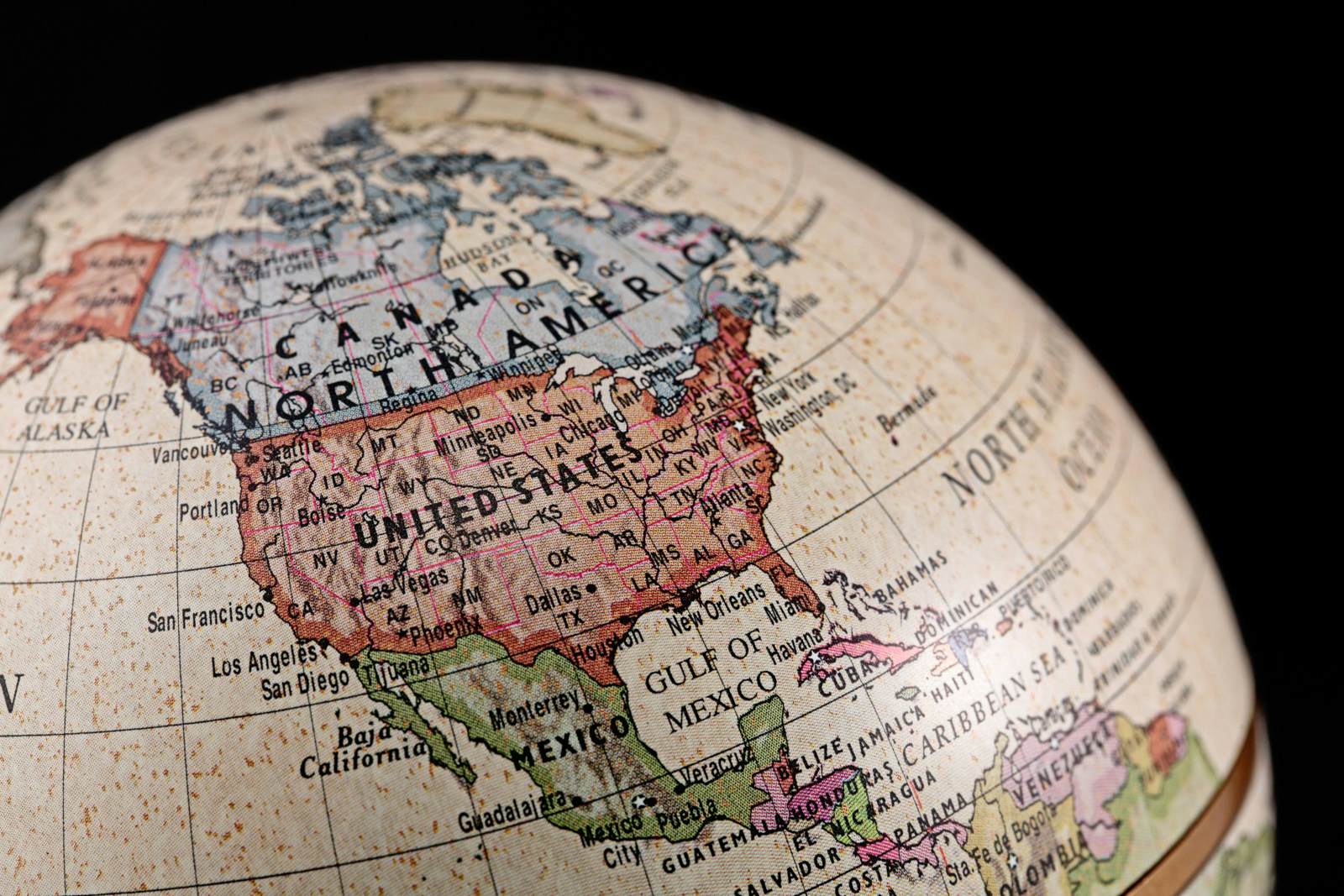
The Treaty of Washington of 1871 settled Anglo-American differences. Thereafter, the British withdrew their armed forces with the exception of two oceanic naval bases, Halifax and Esquimault, whilst the Americans reduced their military presence in frontier areas, with forts becoming public parks. The British withdrawal was matched in Australia, and the colonies were encouraged to develop their forces, a process that bore fruit with the support given to Britain in the Boer War of 1899–1902. In part, Britain was focusing on Russian expansionism.
Charles Sumner, the chairman of the Senate Committee on Foreign Affairs, might have declared in 1869 that he regarded Canada’s union with America as an appointed destiny, but he said that it had to come peacefully and with the consent of the people. Developments in Canada ruled this route out. When, in 1885, the Canadian government mobilised militia to suppress the separatist Métis in the West, the Americans did not intervene.
Relations were easier than those between the US and Mexico, with the US more generally drawn into Latin America in order to protect its growing economic and strategic interests, a process that continued in the 20th century.
Furthermore, by allying with Britain in 1917 and 1941, America automatically allied with Canada and with the world’s largest navy, and both greatly increased American security. The two powers committed to running the Atlantic as a protected zone for security and trade. Britain, the United States and Canada were all founding members of NATO in 1949, whilst, from the 1950s, the US and Canada were jointly involved in defence systems across Soviet bomber or missile attacks.
After the Cold War, the alliance cooled. Canada did not participate in the Gulf Wars. However, popular anxieties in America focused on Mexico rather than Canada, notably with Ross Perot claiming that, as a result of NAFTA (the North American Free Trade Agreement), there was a “giant sucking sound” of jobs moving across the Mexican border.
The situation has changed dramatically with the mercantilist geopolitics of Donald Trump’s second term and the hemispheric security policy (defence is a somewhat inappropriate term) that is being pushed. Canada is a problem for both the mercantilist geopolitics and the unilateral security policy, as it has the capacity to follow an independent line: as it does in its policies towards Cuba and the Caribbean.
For Canadians, the rhetoric from President Trump is more threatening because of its abrupt change to the predominant tone over more than a century, and because of American strength and unpredictability. This is a new age. It is one where Canada lacks the powerful security guarantee that it had between 1775 and 1871 from Britain.