What happens when you give Paul Thomas Anderson, one of the most acclaimed auteurs of the 21st century, a budget of roughly $150m, a hare-brained Thomas Pynchon novel about washed-up revolutionaries and the biggest movie star in the world?
The film of the year, of course.
With One Battle After Another, Anderson, or PTA as he is widely known among fans, has delivered a masterpiece: a 160-minute-long thrill-ride of terror and humour and action that already appears destined to sit among the pantheon of Great Films.
Not content with merely flexing his cinematic muscles, Anderson has used his 10th feature to skewer extremism on both the right and the left and ask the timeless question: what happens when our past comes back to haunt both us and our children?
One Battle After Another starts with Johnny Greenwood’s pulsating, staccato piano (the Radiohead guitarist reuniting with Anderson for the sixth time) and Teyana Taylor’s Perfidia Beverley Hills brooding on an overpass near the Mexico border.
Soon her revolutionary group, the French 75, launches a daring raid on an ICE-like immigration centre.
Her lover, Leonardo DiCaprio’s “Ghetto” Pat Calhoun, is also part of the breathless operation, which Anderson directs with supreme confidence; immediately proving that his arthouse chops translate seamlessly to more mainstream filmmaking.
It’s at this compound we meet the villain of One Battle After Another: Colonel Steven J Lockjaw (Sean Penn), a quivering and simmering monster of racism, anger and bristling insecurity.
He’s a ball of rage and there’s more than a bit of WWE supremo Steve McMahon in his style and mannerisms, from the bulging biceps, to the awkward, puffed-out-chest strut.
Perfidia strikes up a twisted tryst with Lockjaw and, after giving birth, flees her familial responsibilities to “do the revolution”.
When she’s caught and starts naming names, Pat must go into hiding with their daughter.
Flash forward 16 years and Lockjaw needs to clean up a potentially dirty past. He invents a reason to raid the fictional city of Baktan Cross where Pat, now known as Bob Ferguson, lives a paranoid, drugged-out life with his teenage daughter Willa (newcomer Chase Infiniti).
For the next two hours the chase is on and Anderson has his foot firmly on the accelerator, bringing the movie to a climactic, undulating car chase that is unlike any other committed to celluloid (Anderson, a film purist, shot the movie entirely on VistaVision).
Along the propulsive journey Anderson deftly weaves in cameos, subplots and real-world nods that hint towards a bigger picture than just Bob, Willa and Lockjaw. Baktan Cross is a “sanctuary city”, specialist anti-immigration police forces act with impunity and a shadowy group of white supremacists calling themselves “The Christmas Adventurers” appear to be in the ascendancy.
Despite these overriding politics, Anderson is smart enough to avoid MAGA optics and Joe Biden’s successor as President. He is more interested in the brass tacks of revolutionary politics, extremism and what happens when a revolution fails. The far-left militant group The Weather Underground is a clear inspiration for the French 75 and Sidney Lumet’s lesser-seen Running On Empty — about a counterculture couple on the run from the FBI — was name-checked by Anderson while on the PR trail.
But it’s Al Pacino, specifically in Lumet’s Dog Day Afternoon, who served as a reference for DiCaprio. His Bob is a ball of nervous and paranoid energy, striving to do the right thing but events, and one Steven J Lockjaw, keep conspiring against him.
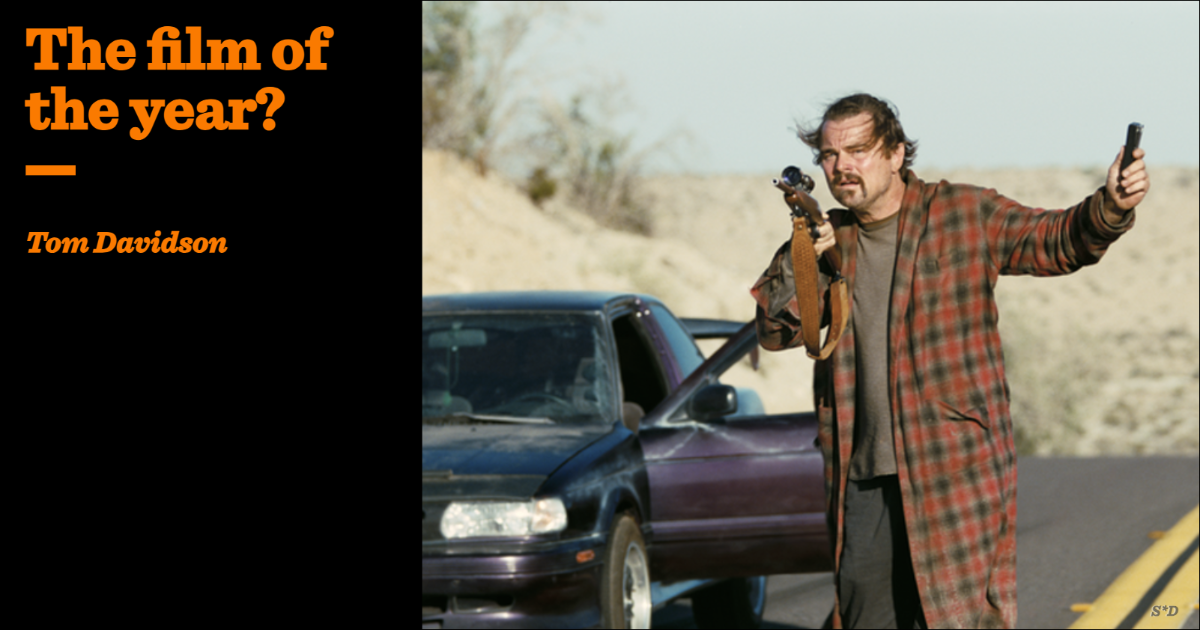
Bob actually starts the film as a 2025 version of The Big Lebowski’s Dude (he’s even got the bathrobe), huffing from a vape, doing quick bong hits (to the tune of Steely Dan) and getting chewed out by his daughter for drink-driving.
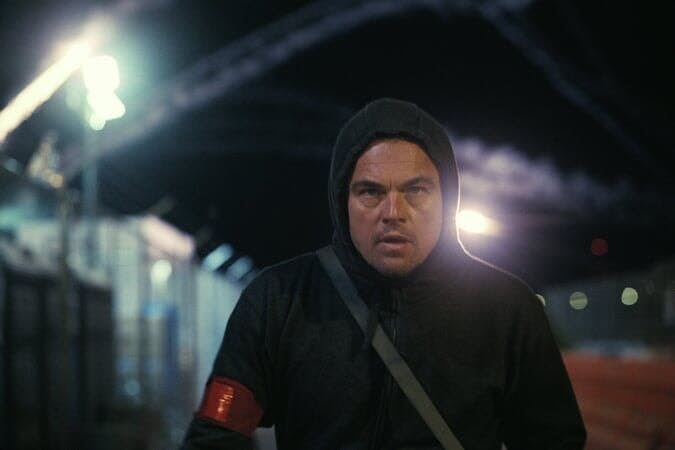
But when Willa comes under threat, the mania and paranoia quickly come to the surface. DiCaprio’s Bob is the ultimate girldad who will stop at nothing to make sure his daughter is safe. A touching moment where he laments being unable to do his mixed-race daughter’s hair appears to have been directly pulled from Anderson’s partner, comedian Maya Rudolph, who said the same was true of her dad when she was the only mixed-race girl in her school.
Indeed Anderson has been working on the script for 20 years, while still churning out classics such as There Will Be Blood and Phantom Thread, but one wonders if becoming a father of four might have been the biggest inspiration to finally get the cameras rolling (that and Warner Bros coughing up the budget which is easily the biggest in Anderson’s career).
His early work of Boogie Nights and Magnolia was marked by comparisons to New Hollywood legends Martin Scorsese and Robert Altman. However, from 2007’s There Will Be Blood through to 2021’s Licorice Pizza, Anderson found his own cinematic voice, exclusively in period films, almost exclusively set in California (Phantom Thread being the notable exception).
He may have returned to familiar geography once again with One Battle After Another, but it’s hard not to see it as a synthesis of all his skills and tricks over his 30-year career at the top of the game. He has delivered a playful mix of highbrow and lowbrow humour that asks questions of its characters, and of the audience, that we don’t have all the answers for.
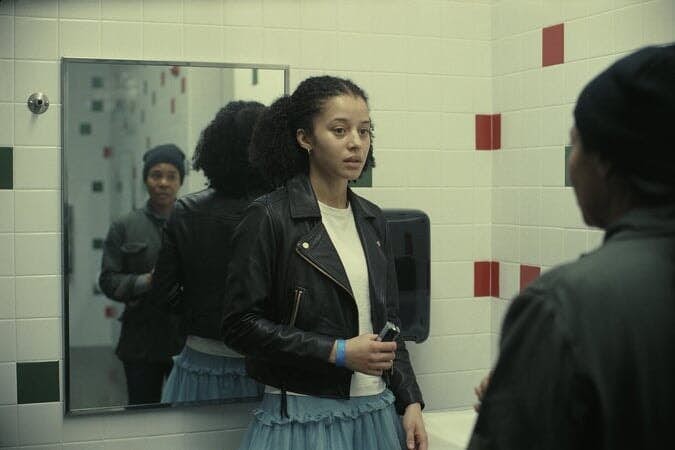
One thing we do know is that Anderson has uncovered a gem in Chase Infiniti, who makes 16-year-old Willa a steely, determined teenager. She is an unwitting pawn in a story that is bigger than her but no damsel in distress. She has agency to make mistakes, to learn and to grow. It’s no surprise to hear the 25-year-old’s name (one so good it could have come from Pynchon himself) spoken about when it comes to the Oscars, where One Battle After Another will surely enjoy major success.
Benicio del Toro rounds out the main cast, reuniting with Anderson for their second Pynchon adaptation after Inherent Vice in 2014.
His karate sensei Sergio St Carlos — who is also running “something of a Latino Harriet Tubman situation” from above his perfume shop — is a welcome tonic to Bob’s paranoia and foul-mouthed frustration (seriously, does any actor swear better than DiCaprio?).
Penn’s Lockjaw will get most of the attention for his scene-stealing fury and the pure disgust he elicits yet del Toro is the secret star of One Battle After Another, an ocean of calm resistance to the forces around him, always with a few cold beers close at hand.
A frequent criticism of Anderson, and some of his contemporaries, such as his close friend Quentin Tarantino, has been a failure to confront the present day and instead seek refuge in the easy romanticism of period films (Anderson’s last contemporary film was 2001’s Punch-Drunk Love).
Yet in one fell swoop PTA has laid down a marker for the rest of the industry and delivered One Battle After Another: the defining film of 2025 and, maybe, of this generation.