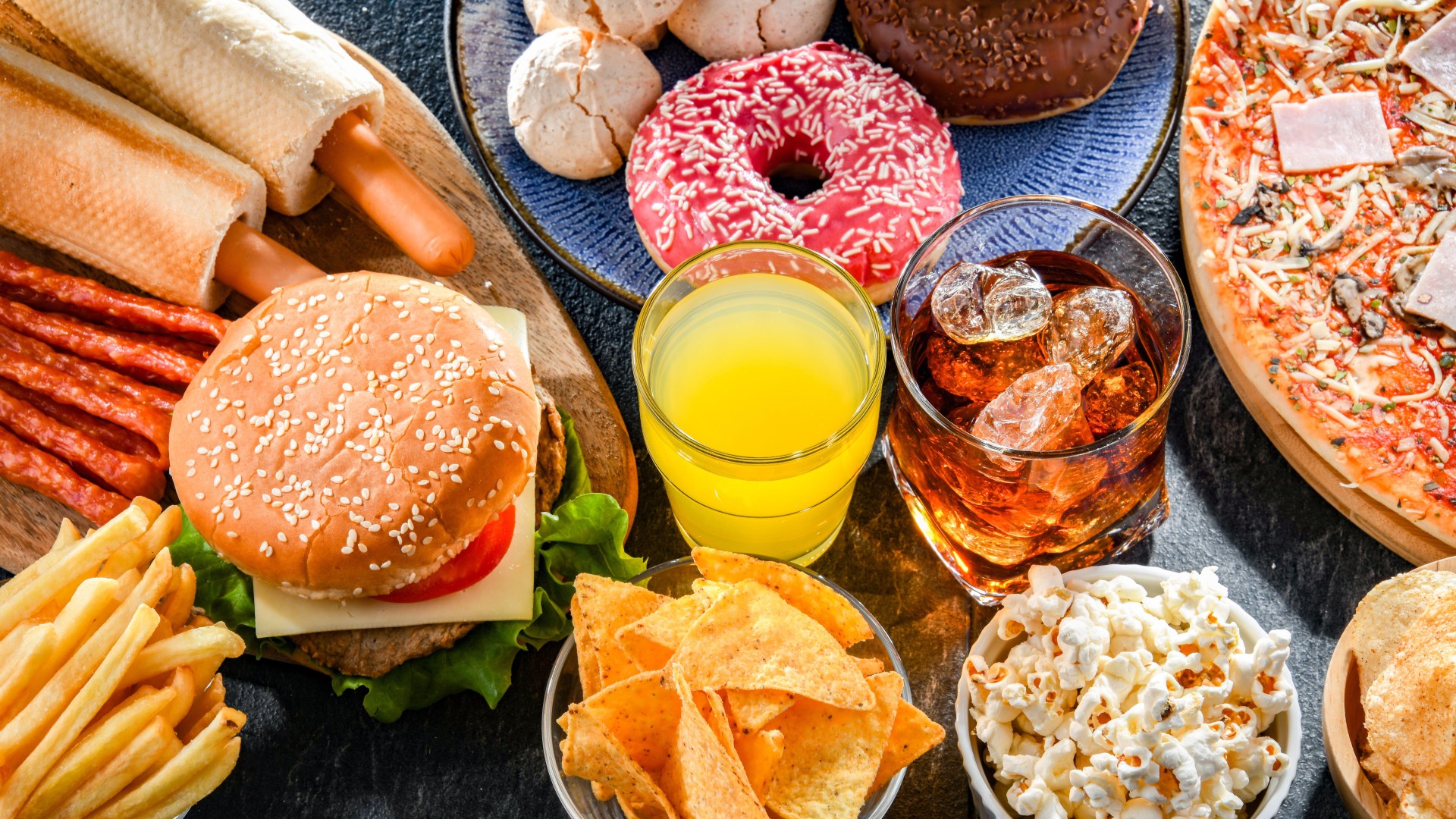
POOR diet packed with junk foods could be driving fertility problems in men, shock research has suggested.
Foods laden with preservatives such as ready meals, biscuits, bacon and crisps have been vilified for decades over their alleged risks, with dozens of studies linking them to a host of diseases.
Experts have even called for ultra-processed foods (UPFs) – typically anything edible that has more artificial ingredients than natural ones – to be slashed from diets.
Now, Dutch scientists have discovered that men are likely to be less virile if they consume a higher proportion of UPFs per day.
Couples who ate a diet in which UPFs comprised more than 25 per cent of their total food intake per day, were also found to have babies that grew more slowly in the womb.
Writing in the journal Human Reproduction, the researchers said their findings suggest that reducing UPF consumption is better for both parents and their unborn babies.


But, experts also cautioned that the study could not prove UPFs were to blame and that researchers had to make assumptions about what each UPF contained.
Dr Romy Gaillard, an associate professor of developmental epidemiology at Erasmus University, Rotterdam and study lead author said: “Our study shows for the first time that UPF consumption in men and women is associated with fertility outcomes and early human development, but also has limitations.
“Importantly, as this is an observational study, our study shows associations, but cannot prove direct causal effects of UPF consumption on these early life outcomes.
“More research is needed to replicate our findings, in diverse populations, and to study the potential biological mechanisms underlying this effect.
“For instance, are these differences driven by the low nutritional value of UPFs or by the increased exposure to additives or microplastics?
She added: “Our research shows that we should think more broadly about fertility and early pregnancy.
“We should move away from the idea that only the health and lifestyle of mothers-to-be is important for pregnancy and offspring outcomes, and recognise that the health and lifestyle of both the mother- and father-to-be play an important role.
“Our results highlight the need to pay more attention to male health in the preconception period, which has traditionally been overlooked.”
In the study, researchers analysed the health and diets of 831 women and 651 male partners.
Couples were included during the pre-conception period or during pregnancy between 2017 and 2021.
Researchers assessed the parents’ diet with a questionnaire during early pregnancy around 12 weeks.
The different foods were classified as either non-UPFs or UPFs, and UPF intake was recorded as a percentage of total food intake in grams per day.
The average consumption of UPFs was 22 per cent and 25 per cent, respectively, of women’s and men’s total food intake.
A questionnaire also provided information on time to pregnancy, fecundability – the probability of conceiving within one month – and subfertility, if it took 12 months or more to become pregnant, as well as if assisted reproductive technology was used.
The distance between the embryo’s head and its buttocks which is an indication of its size and development, and the volume of the yolk sac were measured by ultrasound at seven, nine and 11 weeks of gestation.
Dr Celine Lin, a researcher at Erasmus University and study co-author, said: “We observed that UPFs consumption in women was not consistently related to the risk of subfertility and time to pregnancy, but was associated with slightly smaller embryonic growth and yolk sac size by the seventh week of pregnancy.
“In men, we observed that higher UPF consumption was related to a higher risk of subfertility and a longer duration until pregnancy was achieved, but not with early embryo development.
“This association may be explained by the sensitivity of sperm to dietary composition, whereas maternal UPF consumption may directly influence the environment in the womb in which the embryo develops from the start of life onwards.”
Previous research has also suggested that slower embryonic growth in the first trimester is associated with an increased risk of health issues for mother and baby, including premature birth and an increased risk of heart and blood vessel problems in childhood.
5 ways to boost your chances of being a dad
Dr Amit Shah, leading fertility expert and co-founder of Fertility Plus, shares tips that will increase male fertility over time:
- Eat a healthy well-balanced diet with lots of vegetables and protein, such as Brazil nuts, fish, meat, poultry, eggs and wholegrain cereal.
- Aim for a healthy body weight (BMI between 18.5 and 24) with regular exercise, even if it is a 45-minute walk four times a week.
- Keep alcohol intake down, so no binge drinking and ideally less than ten units a week (a pint of lager is roughly 2-3 units).
- Cut out smoking, which deteriorates sperm health.
- Don’t sit and suffer. Seek help from professionals.
But, experts who weren’t involved in the research today also warned that the study made “bold claims” considering it was merely observational.
Professor Gunter Kuhnle, a professor of nutrition and food science at the University of Reading, said: “Making bold claims based on single observational studies is always worrying – especially when the results are likely to cause distress to some people.
“Fertility is an important but very sensitive topic – and should therefore be handled accordingly.”
He added: “The methods used in the study to estimate UPF intake have several limitations.
“The authors had to make assumptions based on average food consumption data.
“While this approach can be used to estimate population intake, it has severe limitations for studies such as this.
“For example, the authors assumed that everyone who consumed ‘grains for porridge’ had “79.7 per cent breakfast product Brinta, 16.4 per cent oatmeal, 2.3 per cent Breakfast product Albona 7-grains-energy breakfast, and 1.6 per cent rice flour Bambix.
“When in reality, some people might have had no oatmeal at all while others consumed nothing but.
“There are no reliable data on how much ultra-processed foods were actually consumed by individuals, making it impossible to estimate the impact on health.”
Dr Channa Jayasena, a professor of reproductive endocrinology at Imperial College London, also said: “These results are interesting, but there are several reasons to be caution interpreting them.
“First, we have no way of knowing whether it is UPF itself, or some other behaviour that is linked with the things they observed.
“Secondly, the differences observed are tiny, and hardly significant compared with measures such as weight loss.
“This means that even if UPF are causing reproductive problems, their impact on individuals appears very small indeed.”
The umbrella term UPFs is used to cover anything edible made with colourings, sweeteners and preservatives that extend shelf life.
Ready-meals, ice cream and tomato ketchup are some of the best-loved examples of products that fall under the umbrella UPF term.
They are different to processed foods, which are tinkered to make them last longer or enhance their taste, such as cured meat, cheese and fresh bread.
The UK is the worst in Europe for eating UPFs, which make up an estimated 57 per cent of the national diet.
Experts recommend around 80 per cent of our diets should be from whole or minimally processed foods – fresh meats, fruit, vegetables, cheeses, nuts, whole grains and legumes.
How ultra processed is YOUR kitchen?
Ultra processed foods (UPFs) were defined by Brazilian researchers who made the NOVA classification system. It breaks foods into groups depending on how processed they are. The most natural foods are in group 1, while the most processed are in group 4.
The groups do not entirely indicate how healthy a food is. However, it does indicate how processed it is – and studies have linked UPFs to a number of diseases.
How does your kitchen compare to the following groups?
Unprocessed or minimally processed foods (group 1)
- vegetables and fruits (fresh or frozen)
- dried fruits with no added sugar, honey, or oil
- grains and legumes (chickpeas, lentils)
- meat, poultry, fish, seafood, eggs
- milk without added sugar
- plain yogurt with no added sugar
- nuts and seeds
- spices and herbs
- tea, coffee, water
Processed culinary ingredients (group 2)
- iodized salt
- salted butter
- sugar and molasses from cane or beet
- honey extracted from combs
- syrup from maple trees
- vegetable oils crushed from olives or seeds
- butter and lard from milk and pork
- starches extracted from corn and other plants
- vegetable oils with added anti-oxidants
- vinegar with added preservatives
Processed foods (group 3)
- canned vegetables, fruits, and legumes
- fruits in syrup
- salted or sugared nuts and seeds
- salted cured or smoked meats
- canned fish
- artisanal breads and cheese
Ultra-processed foods (group 4)
- pop and fruit drinks
- sweetened yogurt
- sweet or savoury packaged snacks (e.g., cookies)
- candies and cake mixes
- mass-produced packaged breads and buns
- margarines and spreads
- breakfast cereals
- cereal and energy bars
- energy drinks
- instant soups, sauces, and noodles
- poultry and fish nuggets, hot dogs
- many ready-to-heat products: pre-prepared pies, pasta, and pizza dishes