British businesses haven’t had an easy ride. They’ve spent the last few years navigating a pandemic, soaring energy bills and a relentless ratcheting of the tax and regulatory burden. Over three-quarters of business leaders report “low” or “very low” confidence in the UK. In such a gloomy environment, it’s no surprise that our GDP per capita continues to flatline — trundling along at post-financial crash levels.
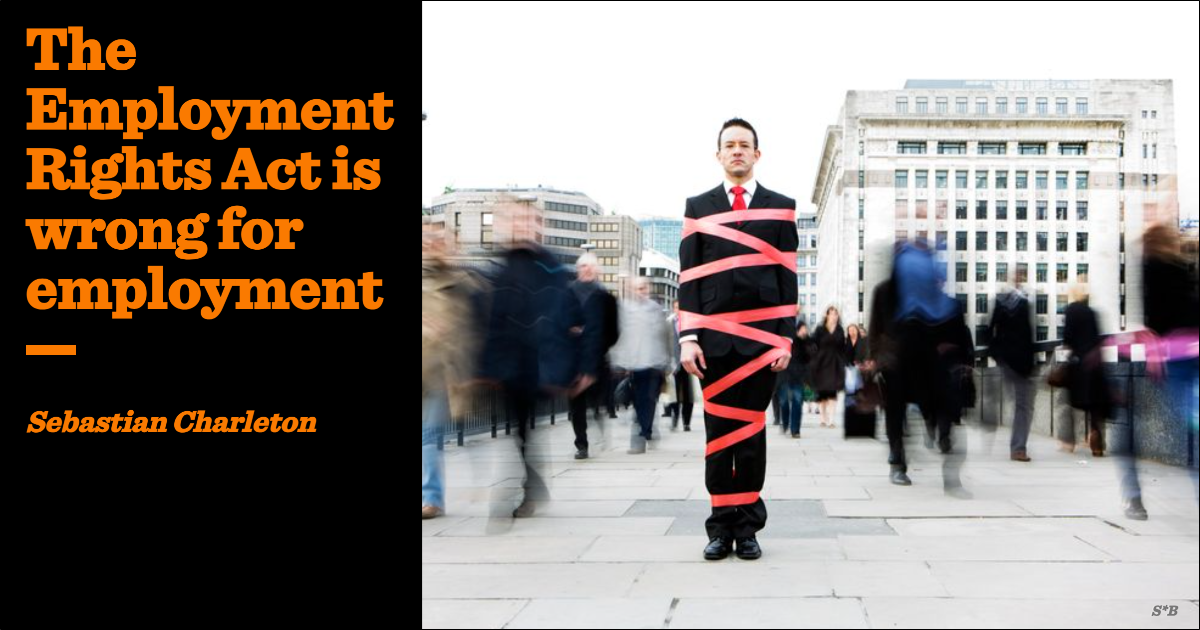
Desperate for growth, the government has promised to cut red tape, looking to ease the administrative burden it places on business. Yet, the Employment Rights Act, the ideological brainchild of the recently defenestrated Angela Rayner, threatens to derail this mission. In fact, its plethora of new labour laws would drive the economy deeper into sclerosis.
Whilst the media has (rightly) made hay over many of the more eccentric plans laid out in the ERA, its trade union component has, in my view, escaped the scrutiny it deserves. This shockingly intrusive policy would rewrite the relationship between the state, trade unions and shopkeepers.
Under the Act, trade unions would be handed a legal skeleton key. Officials could demand access to a workplace to recruit new members even if not a single employee has expressed the slightest interest in joining.
And, in line with the government’s penchant for heavy-handed digital regulation, unions could demand electronic as well as physical entry. Watch out, your Slack channel is a government matter!
This would allow outside, often hostile, actors a permanent, government-mandated foothold in a business’s internal communications. It is an extraordinary presumption — the state would not only sanction unions to enter a private space to pitch a service no one asked for, but would grant them the license to sift through company emails. Billy Bragg, eat your heart out — turns out there really is power in a union.
Of course, it’s not just this gross invasion of privacy that’s a problem. The rules around trade union access also place a steep financial burden on businesses. The ASI’s latest report, Knock, Knock finds that these new access rules could saddle SMEs with a staggering £680 million bill.
Dealing with union officials is rarely a matter of a quick chat over a digestive biscuit and a cuppa. Managing a sharp, alert union officer represents a massive opportunity cost, cannibalising the hours a founder should be spending on product development or market strategy. Every hour spent liaising is an hour stolen from the much-needed business of innovation.
As is the way with heavy-handed regulation, this burden is deeply regressive. For a FTSE 100 giant, a union visit is a tick-box annoyance — just more busywork for a sprawling, well-insulated HR department. But for a bootstrap tech startup or an independent cafe, these costs are painful.
Time wasted filling out forms and liaising with unions can make or break businesses teetering on the edge of survival. In fact, our research suggests that for these smallest firms, the combination of weekly visits and eventual unionisation could swallow nearly a quarter of their profits.
The US produces so many unicorns because the burden on plucky entrepreneurs is low. Apple (sort of) began in a garage. Across the pond, founders can focus on building a product. They’re not forced to waste time hosting a recruitment drive for the GMB.
This touches on the wider problem with the ERA — it makes our economy more European and less American. Don’t get me wrong, I like the idea of lounging on a cobbled street corner, pastel de nata in one hand and a Vogue in the other. In fact, culturally, we have much to learn from our neighbours. But with Spain’s unemployment rate sitting at 10 per cent, I can’t say it’s their labour laws I’m particularly envious of.
If you make hiring more complicated and expensive, businesses will simply do less of it
From a crackdown on restructuring to beefed-up labour laws, this legislative package would make hiring a much bigger gamble, increasing the incentives for businesses not to take a chance on new hires, in what is already a choppy job market. Flexibility leads to higher wages and higher employment. By contrast, if you make hiring more complicated and expensive, businesses will simply do less of it.
The politics of scrapping the ERA are, admittedly, tough. Having seen off a Burnham return, Sir Keir Starmer will hardly look to pick a fight with the formidable Angela Rayner, burning with the passion of a former minister who’s desperate to get their tax affairs in order.
However, common-sense reforms could make the Bill less crazed. Raising the exemption threshold to 250 employees would shield small businesses from costly wrangling. Similarly, swapping disruptive weekly visits for monthly ones, and ensuring union access only follows a request from at least two existing members, would temper the Bill’s more authoritarian edges.
If this government is to drive growth, it needs a new attitude. While I’m as disgusted by New Labour’s constitutional vandalism as any good Critic reader, its economic record is not to be sniffed at.
Its first budget was defined by a singular focus on growth — Gordon Brown sang the praises of globalisation in a way even the most ardent Thatcherite would wince from today. Being, granted, rather charitable, New Labour did implement some sensible reforms — such as Bank of England independence and benefit reforms. Certainly, its blue skies optimism is a far cry from today’s pork-barrel politics, where politicians of all stripes throw bits of cash at amorphous metro regions in the hopes of winning a few votes.
Labour governments will always invent happy-clappy rights that make them feel warm and fuzzy. That’s okay. They just need to implement them in a way that actually runs with the grain of human nature. If the cabinet is serious about getting Britain growing, it must find the courage to reform this toxic piece of legislation before union meddling starts to take its toll.