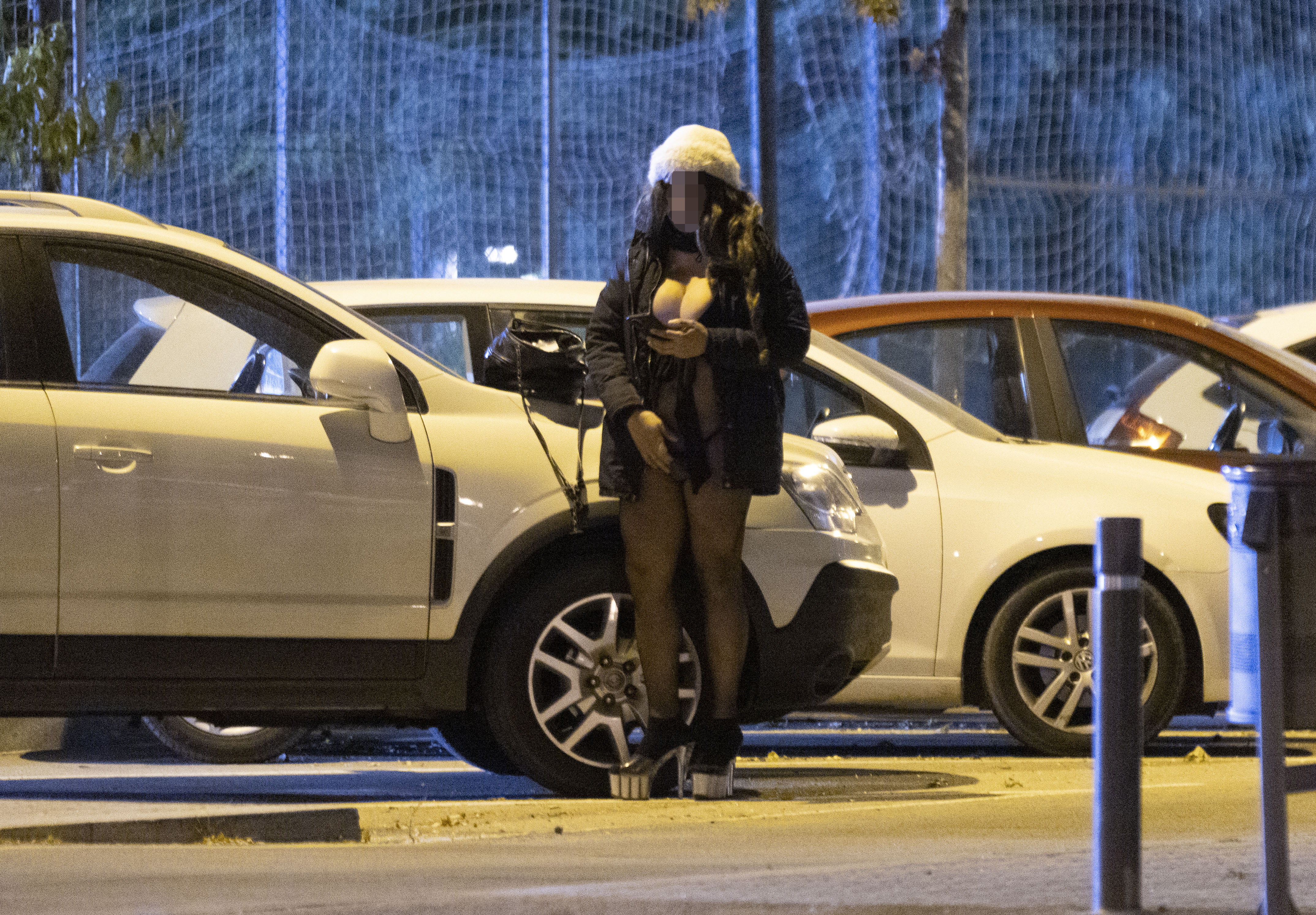
SNATCHED from their homes and “schooled” in abuse by vile pimps, they are the desperate women who walk the streets of Las Ramblas – selling sex for as little as £4.
It is the darkest and most shameful side of a city described as ‘Europe’s prostitution capital’, where – yards away from high-end brothels visited by rich tourists and even famous footballers – young girls are trafficked in and “disappeared” by gangs.
The Sun has been in Barcelona investigating its ‘alegal’ sex trade – meaning it is not illegal to sell sex, but there are no laws protecting it either.
With Brit tourists among those flocking to the coastal Spanish holiday hotspot to visit its red light districts, we talked to bosses at luxury brothels where women charge £190 for an hour of their time and met workers selling a ‘girlfriend experience’ from their own homes.
But there is a more sinister side to the Catalonian capital’s sex trade, with sickening gangs using it as a trafficking corridor into Europe, where vulnerable and desperate women are forcibly shipped over from other countries to work the streets.
Young teenagers are taken from Nigeria and Senegal to port cities in Morocco or Libya where ruthless criminals will “break” them in – meaning beatings, gang rapes and other vile techniques to make them compliant.
Then, once they are little more than zombies, they are herded into an inflatable dinghy to undertake a dangerous journey across open ocean, briefly stopping in the Canary Islands, before heading to mainland Spain.
Sex work in Barcelona is estimated by the United Nations to be worth billions of euros a year, the third highest of anywhere in the world aside from Thailand and Puerto Rico.
And a large proportion of the workers selling sex at the lowest price point are believed to be trafficked.
While women in the luxury brothels can charge in excess of £114 for half an hour, girls on the streets are reduced to charging just £20 for 15 minutes to keep their ever-watchful pimps happy. Most see barely any of the money themselves.
Pressure to axe the sex trade has been mounting. In 2021, Spain’s ruling party, PSOE (the Spanish Socialist Workers’ Party), vowed to make prostitution illegal within two years.
But five years on from that pledge, when The Sun visited, business was booming – and on the famous Las Ramblas strip, groups of young women were openly scouting for customers in plain sight.
“We know that the girls suffer a lot of violations and violence in the African port cities. Many tell us it’s the worst part of their journey,” psychologist Cova Alvarez Diaz tells us in her office at SURT, a charity helping women, in Barcelona.
“Often they are brought though multiple countries before reaching port cities in Libya and Morocco. They cross half a continent before even attempting to go on the sea.
“There’s a lot of raping and violence. The gangs view it as a training process. By the time they arrive in Spain, they are totally desensitised to what is happening to them.
“Many tell us that being prostituted here is easy compared to what they have gone through to get here.
“In Nigeria, before they go, often the gangs do rituals to provide protection and control.
“Their families back home are used to keep the girls in line, and in some cases they feel like they’ve failed if they can’t send money home.”
Explaining how many women are completely disconnected from their previous life, with no paper trail of their whereabouts, Cova adds: “It’s common for these very young girls, all under 18, to be ‘disappeared’ once they get here.
“Each year, they get younger and younger.”
No woman would want to engage in prostitution if she could be doing something else
Nuria González López
Women here are also forcibly brought over from South and Central America – normally lured with promises of jobs within hospitality.
And girls are brought across Europe from the eastern block with promises of better wages.
Human rights lawyer Nuria González López said: “We know that the majority of women in prostitution in Catalonia, specifically in Barcelona, are from Nigeria. And then women from the East, and then Chinese and so on. But the majority are from Nigeria.
“Many are immigrants who come in small boats from Africa on the Canary Islands route — many girls leave the Canary Islands, and then those girls disappear.
“I recently read in the news that last year 700 minors had disappeared on the migration routes between Africa, the Canary Islands, and Spain, and that the majority were girls.
“We know perfectly well that those girls are in the brothels, they are victims of trafficking. Maybe they don’t stay in Spain, but they end up in the brothels of Germany or Holland.”
Fight to end trade
Spain is known as a two-fold country for traffickers.
It is used as a transit point – where girls stay for a few days before being moved to other European countries – and as a destination country, meaning they stay to work in Spain.
Nuria is an abolitionist, meaning she is for the ending of prostitution in all forms, as she views it as a form of violence against women.
Her hope is for the country to adopt the Nordic Model – where sex buyers are criminalised, not the prostitutes.
Lawyer Nuria has actively attempted to combat attempts from those in the sex trade to fully legalise their activities.
She was a key figure in the attempts to stop the sex workers organisation OTRAS from forming, taking her arguments all the way to Spain’s Supreme Court. Ultimately she was unsuccessful.
While some women in the higher end brothels told us they worked willingly, there is no doubt that hundreds are trapped in the trade against their will.
And Nuria argues: “No woman would want to engage in prostitution if she could be doing something else.”
Constant abuse
A large part of Nuria’s work focuses on the Raval neighbourhood, where trafficked women are forced to prostitute themselves on the street and charge clients as little as £4 for oral sex.
It means she has become friendly with the local residents, who are horrified at the abuse of the women they claim to see happening daily.
Ivan Vecino, head of Raval neighbourhood association, works with Nuria to try to convince lawmakers of the dangers for the women working in the area and the problems it poses residents.
“Unfortunately, the clients who come to demand their services don’t know how to distinguish whether they are asking for sex from the girls on the street, our neighbours, or our daughters, and so on. And this is a very serious problem for us,” he told The Sun.
“The women also attract a lot of people, including the homeless and those with mental health issues who can pose a danger. to everyone.”
But for Ivan the hardest aspect is seeing the women abused and hospitalised by clients and pimps. He recalled the story of a woman called Lili who had been trafficked from Eastern Europe.
He recalled: “Lili was a girl who was really exploited by the people in charge of her. They never gave her a break, and we could tell she was sick, but they didn’t let her seek treatment.
Knowing that in one second your life can end because of some crazy lunatic who hits or attacks you for no reason
Jennifer,
“One day she collapsed, exhausted, and was taken to hospital and died.”
Lili was controlled by her pimps as they held her children in Eastern Europe and threatened them to ensure her compliance.
Nuria added: “She was beaten by her pimp when she collapsed, and in my view that was what killed her.
“It was counted as femicide because she arrived at the hospital after many times of arriving at the hospital with many injuries from a brutal beating she had received, but she was admitted because she was also very sick from other things, but from having been on the street prostituting herself for a long time.
“In the end, the official note from the doctors is that she died from the diseases she had, but the reality is that she entered the hospital from the beating they gave her and never left.
“We don’t know if her pimp faced any consequences.”
Lili’s death certificate showed that she had untreated Leukaemia, which had contributed to her death.
SURT’s Belen Camarasa also works with the women in the area to try and get them into the charity’s programme to help escape sex work.
“Services here start from as little as €5 for a b***job and goes up to €20 for full sex. It will only last ten to fifteen minutes as it’s all about a fast turn around,” she says.
“These women live in poverty. This is their reality.
“At night many of these women will go down to the street from here to Las Ramblas. There are many more tourists, many more clients. They bring them back here to these buildings to perform the service.
“For women with families, they’ll do their services in a room by the front door.”
Two of the women they’ve helped are Nuria*, 42, and Jennifer*, 38, who both came to Spain from South America expecting to work in hospitality.
Both were forced into prostitution, working in dirty and dangerous conditions for little pay. They had to rely on Red Cross for condoms, as their pimps wouldn’t provide them.
Trafficked across the globe
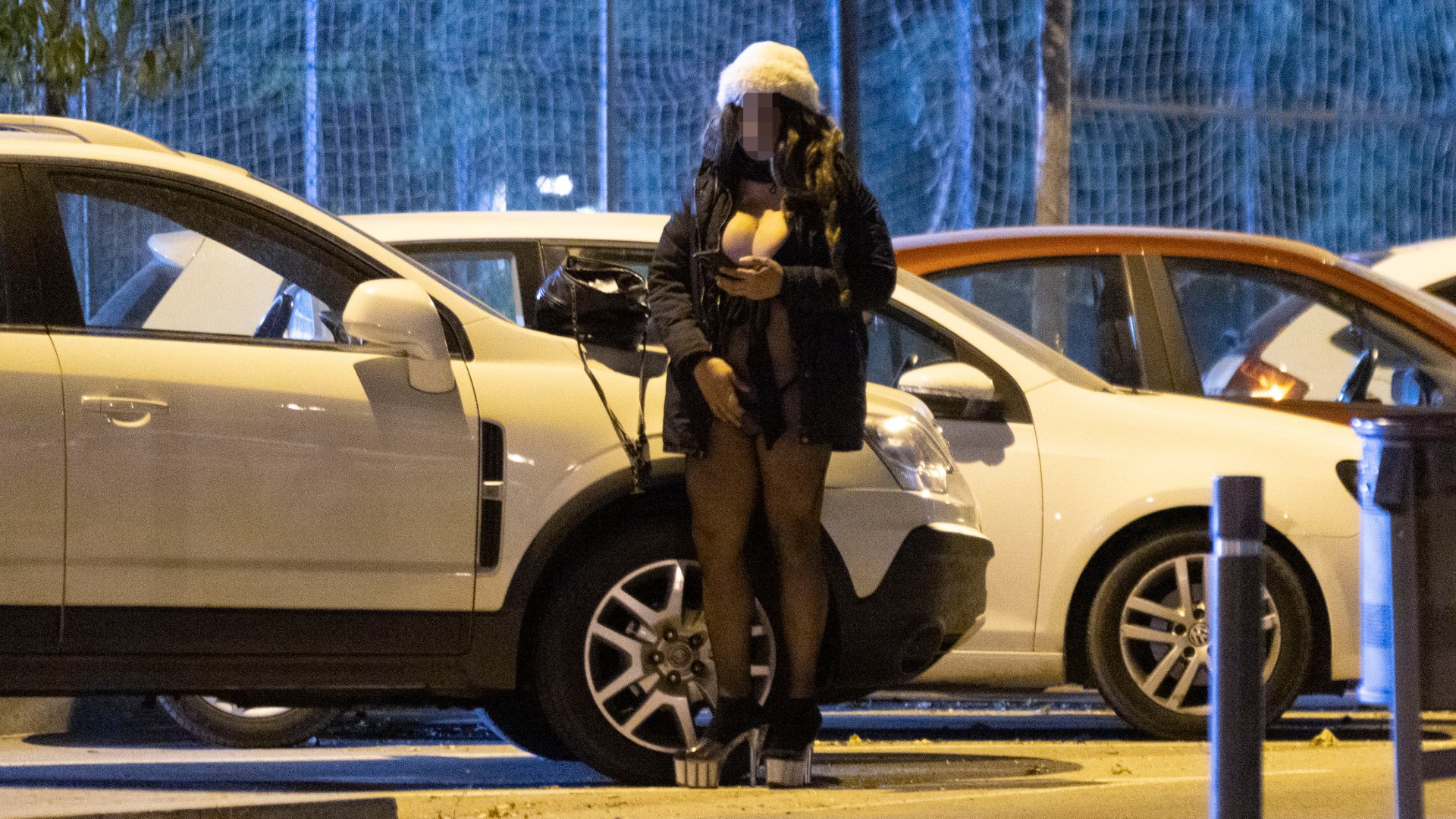
Many prostitutes work near the city’s Camp Nou stadium, standing on street corners to solicit clients.
They’re often wearing revealing lingerie and a large warm coat over the top. They charge the same as the girls in the Raval district, usually carrying out the acts in the punter’s car.
Nuria, from Chile, wasn’t based here; instead, she was situated in a flat which had no furniture in it. Her pimp expected her to save up to buy her bed.
“I worked on the street, and the room they gave me to take clients to had nothing,” she said.
“No bedding, no pillows; I had to buy them with my own means. Since I worked the street, the Red Cross gave me condoms because they would come by the area and hand out supplies and lubricants.
“They always told us that if anything happened, we should come to them— if there was violence or illness.”
There’s a lot of raping and violence. The gangs view it as a training process
Cova Alvarez Diaz
But asking for help wasn’t that simple as both women feared being judged.
Nuria said: “People judge and say, “Oh, they looked for the easy way.” This is not easy money.
“It’s money that might come fast, but at the cost of many tears and much dissatisfaction.”
Both women had been hospitalised by attacks from clients, but claimed they had been robbed rather than admit being sex workers.
Jennifer, from Peru who had two young children in the country, told The Sun: “I was told when I got here I’d have a job as a kitchen assistant, but they took me to spa where I was subjected to all sorts of things. Being in that world led me to total depression.
“Many times, it crossed my mind to take my own life. I was living just for the sake of living. You used to wake up and not know what kind of client you’d run into, what crazy person you’d face. It was constant anguish. Since I stopped, I am calmer.
“One of the biggest reasons I want to stop is my children. I wouldn’t want them to know or understand what I’ve had to do.
“The second reason is everything I’ve been through. Knowing that in one second your life can end because of some crazy lunatic who hits or attacks you for no reason.
“Those things make me realise this isn’t the life I want, nor the one I want for my daughter.”
SURT is helping the women to get the correct documents to be able to live and work in Spain legally, as they do with many others. They also help women find alternative work.
‘Prepayment rape’
While SURT works to support women, Feministes de Catalunya are an abolitionist group who are unhappy with Spain’s reputation as the largest bordello in Europe.
President Dr Silvia Carrasco Pons said: “Prostitution is just prepayment rape. Men don’t have the right to access any woman’s body just because they have paid.
“We want to see Spain take the Nordic model on and go after the pimps who are making great benefits from exploiting women and smuggling them and transferring them all over Spain every few weeks. The girls are moved cities and countries so the meat is fresh for the buyers.
“In Barcelona and Catalonia it is tied up in violence, not just sexual violence but physical violence too.
“They are enslaved. They cannot leave prostitution freely. They are threatened by the pimps that if they go or if they talk or if they report this exploitation their family members will be killed or will be harmed no matter whether they live here or abroad.”
- Names have been changed to preserve anonymity