United States Founding Father Thomas Jefferson was a firm believer in “the good sense of the people” when it came to exercising citizenship in a democracy. To promote constructive public engagement, he urged, “give them full information … thro’ the channel of the public papers.”
“Were it left to me to decide whether we should have a government without newspapers, or newspapers without a government, I should not hesitate a moment to prefer the latter,” Mr. Jefferson wrote to a friend in 1787.
The third U.S. president could likely not have imagined the huge volume and varied forms of today’s “newspapers” – accessed 24/7, in print, over the airwaves, and online. However, even as media access has increased exponentially, press freedoms in 2025 are shrinking globally.
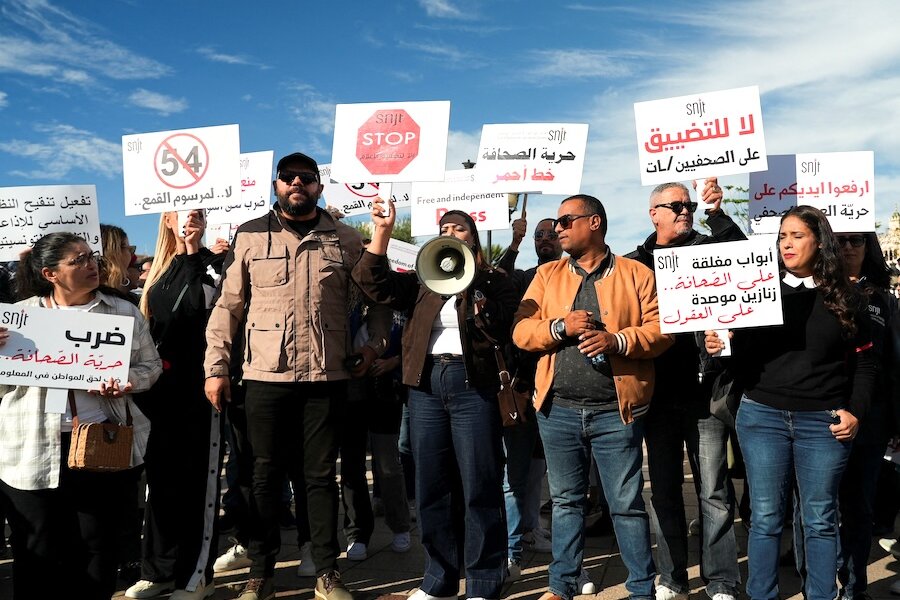
News outlets are facing unprecedented political and financial pressures, and journalists are increasingly being silenced or targeted. In its annual December report, the watchdog group Reporters Without Borders lists 503 journalists in detention, 67 killed, and 135 missing over the past year. In most cases, the organization says, governments are responsible, although criminal cartels and rebel groups are also implicated.
Amid this sobering picture, citizens around the world continue to strongly believe in the value and importance of a free press. A Pew Research Center survey of 35 countries reported that 84% of respondents viewed the ability to report news freely as important. (For the U.S. alone, that figure rose to 93%.) Over the past 10 years, the share of respondents defining press freedom as “very” important increased in one-fourth of those countries.
Citizens are also expressing concern over increasing partisanship in the media, reflective of broader political divisions. In the case of the U.S., according to historian Miles Smith, “The founding fathers understood that a free press would often be a messy press.” The system, Professor Smith said on a podcast in July, was designed to present “competing ideas and narratives” to “an educated citizenry capable of self-government.”
Perceptions of a vibrant press appear to correlate with civilians’ satisfaction with governance. Citizens who think the media in their country can freely report the news rate their democracies positively; those who believe the press is constrained tend to rate their governments and leaders more negatively.
Perhaps Walter Cronkite, the legendary 20th-century American journalist, captured this dynamic most aptly, when he observed: “Freedom of the press is not just important to democracy; it is democracy.”