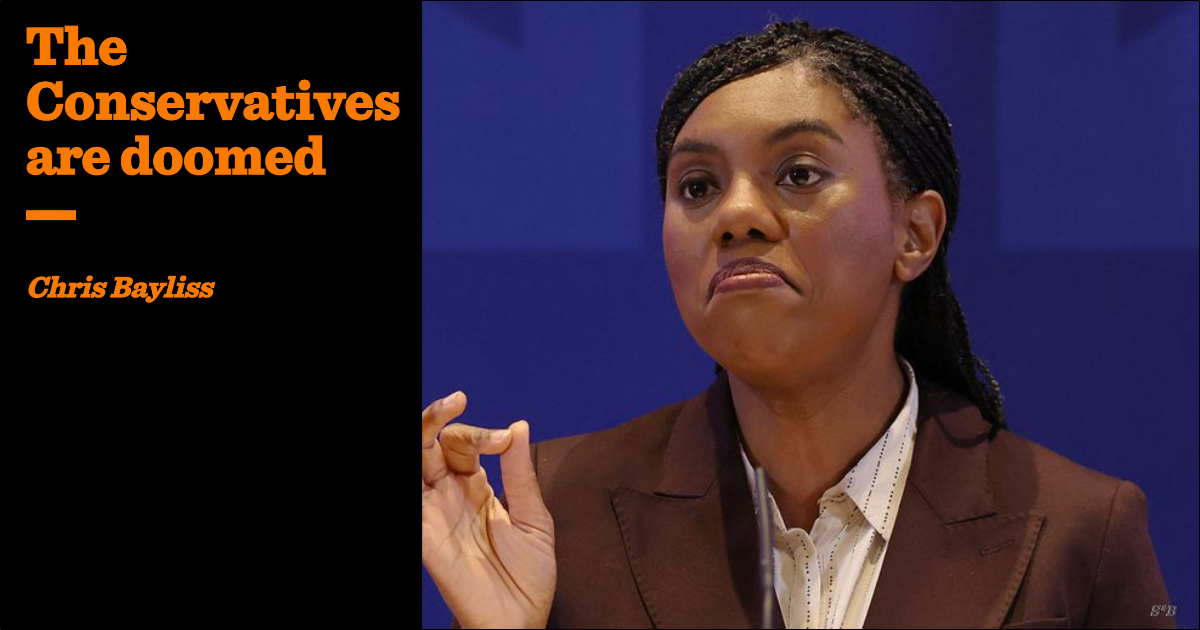
Very occasionally, there are days in British politics where there is a real danger that people actually start thinking about the substance of politics, and January 15th very nearly became one of them. Fortunately, the court eunuchs were on hand to ensure that our attention didn’t wander too far from the rigmarole at hand.
The shadow justice secretary and Tory leadership runner-up Robert Jenrick had been sacked, and his party membership suspended, announced Kemi Badenoch, after she had uncovered his plot to defect imminently to Reform in a manner designed to embarrass at least one of the two parties involved. There was then complete radio silence from all involved for several hours, leaving idle minds and thumbs free to muse on what this might actually mean for British politics.
Whilst the morning’s events raised some very big questions for the future of the Tory Party and the British right, it also raised lots of very small questions which is what Westminster’s lobby correspondents chose to go with, in accordance with the protocol. Had a member of Jenrick’s “team” left a printed copy of his plot next to a photocopier? Did Badenoch’s decisive social media announcement have the right leadershippy vibes? If they had really uncovered “irrefutable evidence” of treachery, they surely ought to publish them, et cetera.
The Conservatives’ fundamental problem was still not being addressed
For Westminster vibe-readers, the timing of Jenrick’s departure was rather off. The narrative arc since just before Christmas has concentrated on the Conservative recovery, and Badenoch had been “getting into her groove” recently. I wrote a few months ago about the metrics of formulaic opposition by which the leaders of HM Most Loyal Opposition are usually measured, and why they represent a dead-end for the Tories as they currently stand. But one must concede that by those limited metrics alone; effective communications and eye-catching performances at the dispatch box, Kemi Badenoch’s performance has been pretty solid in recent months, and this has been reflected in the Conservatives recovering from around 15 per cent to around 20 per cent in the polls.
But the Conservatives’ fundamental problem was still not being addressed. It is a party containing two wings with fundamentally irreconcilable approaches to law, sovereignty and the moral basis for government. As Mark Littlewood wrote for The Critic recently, the party stands athwart the new faultline in British politics which is between those with a national and a post-national conception of identity. This was revealed dramatically and constantly in government between 2016, and prevented successive Tory prime ministers from fulfilling their promises to voters. It was this that led to the calamitous wave of disillusionment that compelled over half of the voters who had supported the party in the 2019 election not to bother in 2024.
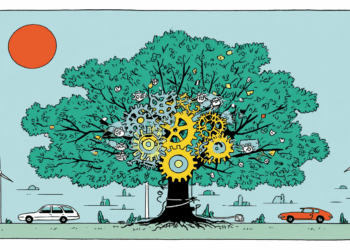
Until this is addressed, the Conservative Party is the equivalent of a cut’n’shut car; the remnants of two separate vehicles that have been welded together. These two elements are being held together supposedly by a common approach to questions of political economy, but even that is frayed. There is no structural integrity — it is destined to break in half catastrophically every time it encounters so much as a stiff breeze.
Ideally, this dichotomy would have been addressed in the last leadership election, by representatives of the two irreconcilable but at least internally consistent camps, facing off as the final two candidates that were put to party members. This would probably have meant Mr Jenrick meeting somebody like Mel Stride or Tom Tugendhat, and winning. But this didn’t happen. Instead, Jenrick faced Mrs Badenoch, who offered the chance to continue ignoring the problem, and to carry on regardless. This was highly appealing to those Tories who thought they could apologise for 2010-2024 and move on. Labour’s unpopularity and a competent display in formulaic opposition would see them through; the ideological incoherencies could wait until they were back in government in a few years’ time.
As somebody from very near Bewdley, I have a rather sentimental attachment to the legacy of Stanley Baldwin, and as such I am probably in no position to dismiss “wait and see” as a political strategy during a moment of political flux. But the Tory luck ran out on this occasion, and the 14 months since the leadership election have seen the party irrefutably supplanted as the main party on the right. Reform UK has firmly occupied the political territory that could have been held by an appealing Conservative leader who was able to articulate a national sovereigntist perspective, and backed it up by seeing off post-nationals and human rights legalists from positions of influence.
As Reform’s polling average steadily ticked up past the Tories’, and then out into blue water of the high 20 per cent, many of us who hoped to steer the party back in the right direction started to wonder whether we were missing the chance to jump. But such is the venerability of the Tory ship that there was naturally a deep reluctance. That last chance seemed to be the May 2026 local elections, or those which the government hadn’t cancelled (in some cases, shamefully, with the connivance of Tory-controlled councils), which might finally allow a second and more meaningful contest. But that now will not happen.
Many Tories mistake the Iron Lady’s wilfulness for an end in itself, rather than a means by which a … political agenda was pushed through
Questions of personality are not relevant here. Jenrick may or may not have been able to shore up the Tory position had he won in 2024. He may or may not have been behaving in a disloyal manner, although nobody can really question Badenoch’s right to get rid of a rival as he surely was. Some have been impressed by her gumption and decisiveness, but this seems yet another hangover of the Thatcher era, whereby many Tories mistake the Iron Lady’s wilfulness for an end in itself, rather than a means by which a controversial yet coherent political agenda was pushed through. If Badenoch showed that she ‘can just do things’, it was only in the service of delaying a political reckoning. That reckoning will now come from the general electorate rather than the party membership.
My feeling is that Mr Jenrick is likely to find life in Reform bleak. If nothing else, Badenoch’s decisiveness lost him a great deal of leverage in carving out his position in the new party. But in any case, Reform is a very different type of organisation; less deferential, and lacking the Tories’ class-based and historical baggage. Fundamentally, it is a party that emphasises its radicalism over its conservatism. Although the Tories had long since ceased emphasising conservatism, except on the occasions when it involved conserving liberal assumptions.
None of this matters now. The chance to force a showdown and land the Conservative Party on one side or the other of the new political fault line has gone. At some point, it will be swallowed up. For those of us on the “national” side of the new realignment, the game is up; whereas we had hoped we could make the post-national faction skulk off to the Liberal Democrats, it is we who will be packing our bags. Whatever our hang-ups with Reform, most notably its lack of conservatism, it is now the only game in town. Shove has come to push.