Lots of people find it hard to get into the rhythm of keeping fit.
The root of the issue, however, often lies in the fact we don’t know what exercises and routines are best for our body—and our age group.
Ageing may be inevitable, but getting more fragile and weaker definitely doesn’t have to be.
It’s a common misconception that the older you get, the less intense your exercise routine should be.
You might not be quite up to a HIIT workout or a session of circuits, but moving your body on a regular basis continues to have a huge positive impact on your physical health as you age.
Research has also long shown that exercise can not only help manage your waistline but it reduces the risk of heart disease and other health conditions, including dementia.
According to Professor June Andrews, a dementia care specialist and author of Dementia: The One-Stop Guide, squats and weight bearing exercises ‘are vital to maintain your bone density and also to maintain your muscle strength’.
She adds: ‘For older people, particularly those who have cognitive impairment—one consequence of dementia—if you stumble, your reaction times might be slow, and you’re more likely to fall.
‘So being strong and knowing how to get off the floor without help is a useful thing to start practicing early so it offers some protection.
‘Exercise improves your mood, improves your circulation. Physical fitness is good for helping you maintain cognitive fitness as well.’
Indeed, Dr Tim Beanland, head of knowledge and learning, at the Alzheimer’s Society also agrees that any kind of exercise that you enjoy can make a difference and will help reduce your risk of a host of diseases — including dementia.
‘If you are already living with dementia, remaining active and keeping on with the sports or activities you love can make a big difference and help reduce feelings of low mood or isolation,’ he adds.
While exercise isn’t recommended for those feeling tired, ill or in pain, there are many gentler or seated exercises that can continue to provide activity and enjoyment.
‘Of course, exercise isn’t just for the body,’ Dr Beanland also says.
‘There are lots of cognitive exercises that will keep your brain active for longer— crosswords, puzzles and quizzes are all ideal exercises for the long winter evenings.’
Now, three of the UK’s leading exercise and cognitive health specialists have shown the Daily Mail five simple everyday exercises to complement other workouts, such as swimming or walking, in midlife for maximum health benefits.
Chair Stand
How to do it:
– Sit at the edge of a sturdy chair with your feet flat on the floor, hip-width apart.
– Lean slightly forward and push through your heels to stand up straight.
– Slowly lower yourself back into the chair without plopping down.
Benefits:
Whilst it might sound overly simple, moving from a sitting position to standing can help strengthen muscles we rely on for everyday movement.
Also known as sit-to-stand, the exercise is ‘excellent for building leg strength and improving balance’, says Dr Robin Chatterjee, a consultant in musculoskeletal, sports and exercise medicine at Chelsea Outpatient Centre, part of HCA Healthcare UK.
The exercise also helps ‘enhance functional strength, making it easier to perform daily activities like getting up from a chair or climbing stairs’.
Dr Claire Agathou, a GP and co-founder of The A-Z General Practice, in London, agrees, adding that the exercise is a ‘strong marker of long-term independence’.
This is because practising the move can build confidence and reduces the chance of falls.
As you progress, you can also start adding in squats and lunges to increase your range of motion.
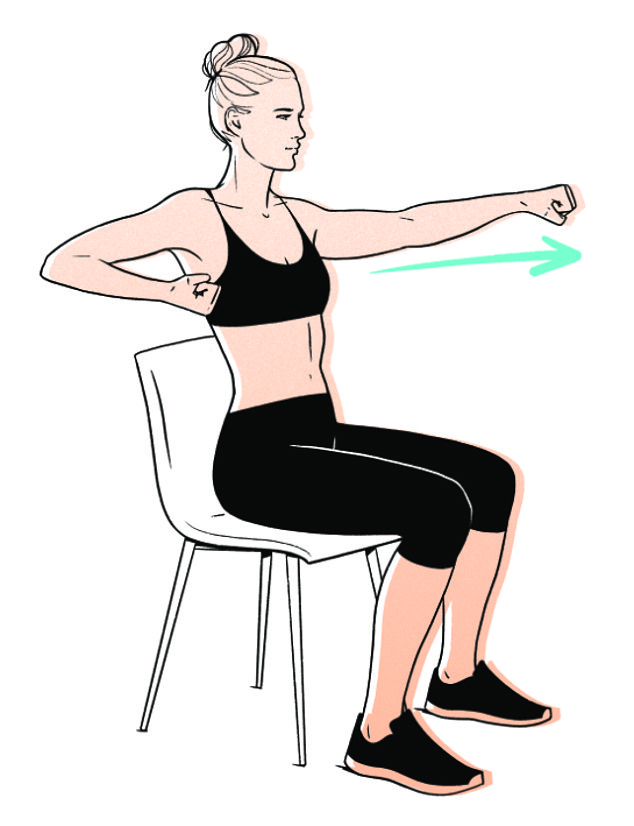
According to Dr Oliver Guttmann, a consultant cardiologist at The Wellington Hospital, in London, this type of movement keeps the upper body active and encourages deeper breathing
Seated boxing air punching
How to do it:
– Sit upright in a supportive chair with your feet firmly on the floor
– Lightly punch the air in front of you, alternating arms. Even 20 to 40 seconds can raise the heart rate in a controlled and comfortable way.
Benefits:
According to Dr Oliver Guttmann, a consultant cardiologist at The Wellington Hospital, in London, this type of movement keeps the upper body active and encourages deeper breathing.
This, in turn, helps the heart pump blood more effectively around the body.
‘It can also improve circulation and muscle tone in people who spend long periods sitting,’ he adds.
‘Over time, these small bursts of effort may support cardiovascular endurance and help with day-to-day tasks that require upper-body strength.’
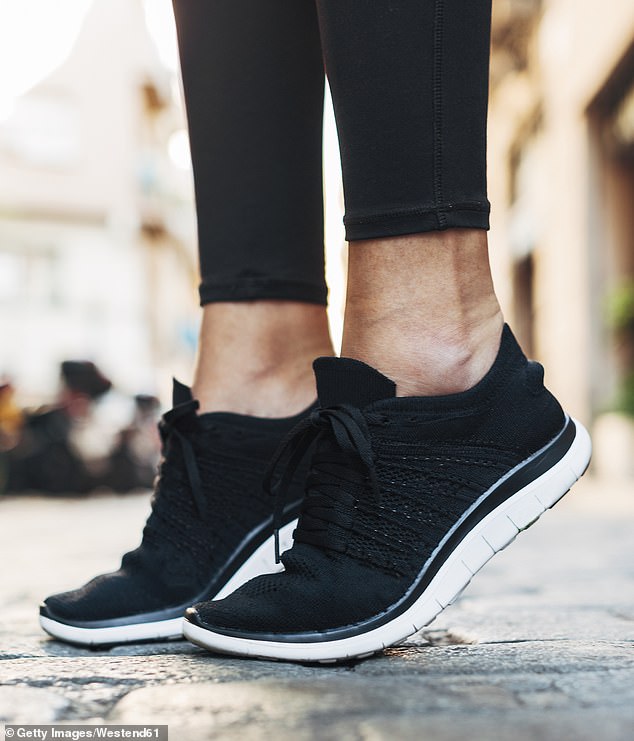
Calf raises offer several benefits, including improved balanced, improved ankle stability and mobility, and enhanced strength, experts say
Standing Calf Raises
How to Do It:
– Stand behind a chair, holding onto the back for support.
– With feet shoulder-width apart, slowly rise up onto your toes, then lower back down.
Benefits:
Calf raises offer several benefits, including improved balanced, improved ankle stability and mobility, and enhanced strength, experts say.
Specifically, strong calves support daily activities ‘such as walking and climbing stairs, and they can also help prevent falls’, adds Dr Chatterjee.
This is because the exercise can improve lower limb blood circulation, which also reduces sprains.
It may too help reduce the risk of tendonitis––where a tendon becomes inflamed causing pain and joint stiffness.
Wall Push-Ups
How to Do It:
– Stand about an arm’s length from a wall.
– Place your hands on the wall at shoulder height and shoulder-width apart.
– Lean in toward the wall while bending your elbows, then push back to the starting position.
Benefits:
According to Dr Chatterjee, wall push-ups are a gentle way to strengthen the upper body, particularly the chest, shoulders, and arms.
It’s a great alternative to the classic exercise but for those who are able to, for more of a burn, try and keep your elbows tucked in close to your body.
As people build strength, adding more repeats of the movement or positioning yourself further away from the wall can build resistance.
‘This exercise helps improve muscle tone and endurance without the strain associated with traditional push-ups, making it safer for older adults,’ Dr Chatterjee adds.
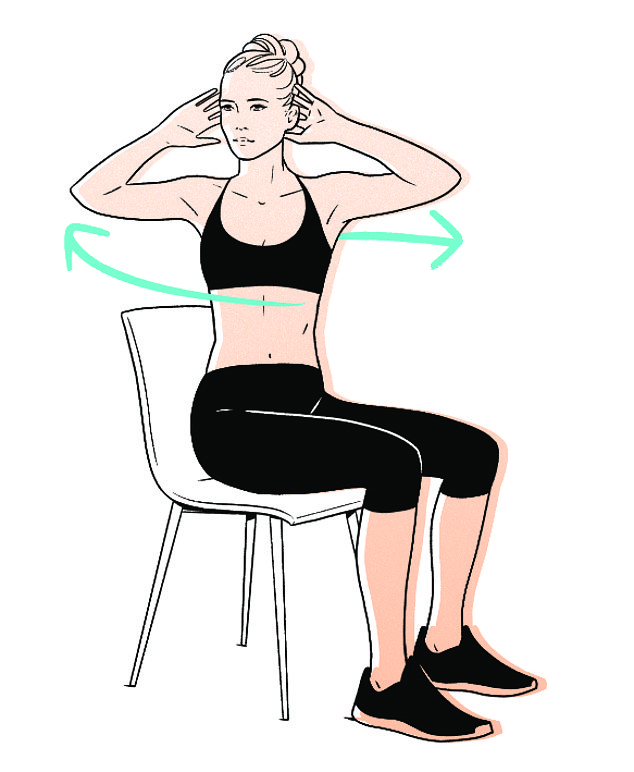
MINUTE 2: TUMMY TWISTER. Place your fingertips on your temples, your elbows wide and in line with your shoulders. Now twist to the right from the waist, so your right elbow reaches behind you. Change sides and keeping belly button pulled in, alternate side twists for 60 seconds
Seated Spinal Rotation
How to Do It:
– Sit upright on a chair
– Place hands on thighs or if able to, behind your ears
– Rotate gently from side to side
Benefits:
After prolonged periods of sitting, stretching the lower back can relieve tension and stiffness in the middle and lower back, as well as improving mobility for everyday activities.
‘It also encourages mindful breathing and reduces stress — a contributor to cognitive decline,’ Dr Agathou says.
‘Small daily movements accumulate into major long-term benefits.
‘Importantly, exercises do not need to be strenuous, they just need to be safe, comfortable and consistent.’
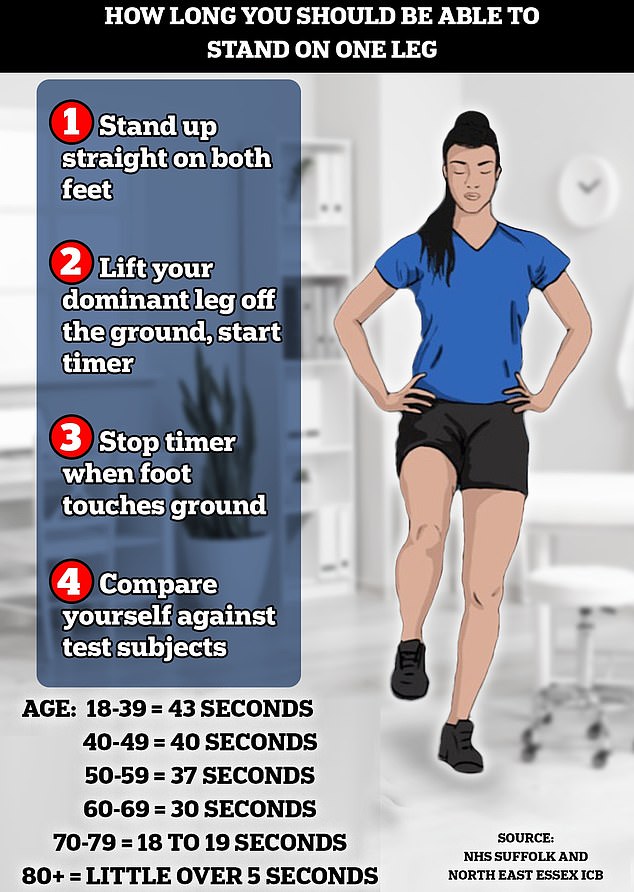
Balancing on one leg continuously for more than 40 seconds is a key sign of strength and mobility among 18 to 39-year-olds, the health service says
Don’t be afraid to exercise in groups
As well as ensuring you’re moving your body and working your muscles, it’s also worth considering doing group fitness classes, experts say.
Not only does it allow you to form a community but it’s also fun.
People often underestimate the power of aerobic exercises but regularly swimming, cycling, and even using an elliptical trainer are all great activities if you’re in your 60s, Dr Agathou says.
‘For anyone unsure where to start, your GP can help by signposting to a social prescriber or referring to a physiotherapist if needed.
‘Many people also find support through their local gym, where personal trainers experienced in working with older adults can offer safe guidance and organisations such as Age UK can also help identify community classes and activities tailored to over-60s local to you.’
Little and often is also a ‘very good rule’ to abide by when it comes to heart health after 60, Dr Guttman adds.
‘What matters most is finding movement that feels safe, achievable and enjoyable because that is what people are most likely to continue.’