This article is taken from the February 2026 issue of The Critic. To get the full magazine why not subscribe? Get five issues for just £25.
There’s much to love in the Winter Olympics, which begin in Milan on 6 February. The athletic grace of the figure skaters and the muscular elegance of their speedster cousins; the puck-slapping violence of the ice hockey; the soaring Icaruses of the ski jump, humans briefly made avian.
But no event is simpler and more thrilling than the downhill, and never more so than at Innsbruck in 1976, exactly 50 years ago. Franz Klammer was the local boy, a hot favourite (he’d won 11 of the previous 12 World Cup races) and a charismatic daredevil: a combination which heaped enormous pressure on his shoulders.
Schoolchildren and workers were let out at midday so they could go home and watch their hero. Come race time, the streets were deserted, an entire nation glued to the national broadcaster ORF. Sixty thousand people laden with cowbells and hope had packed the Patscherkofel course itself, and they’d come to see their boy win. Nothing else would do.
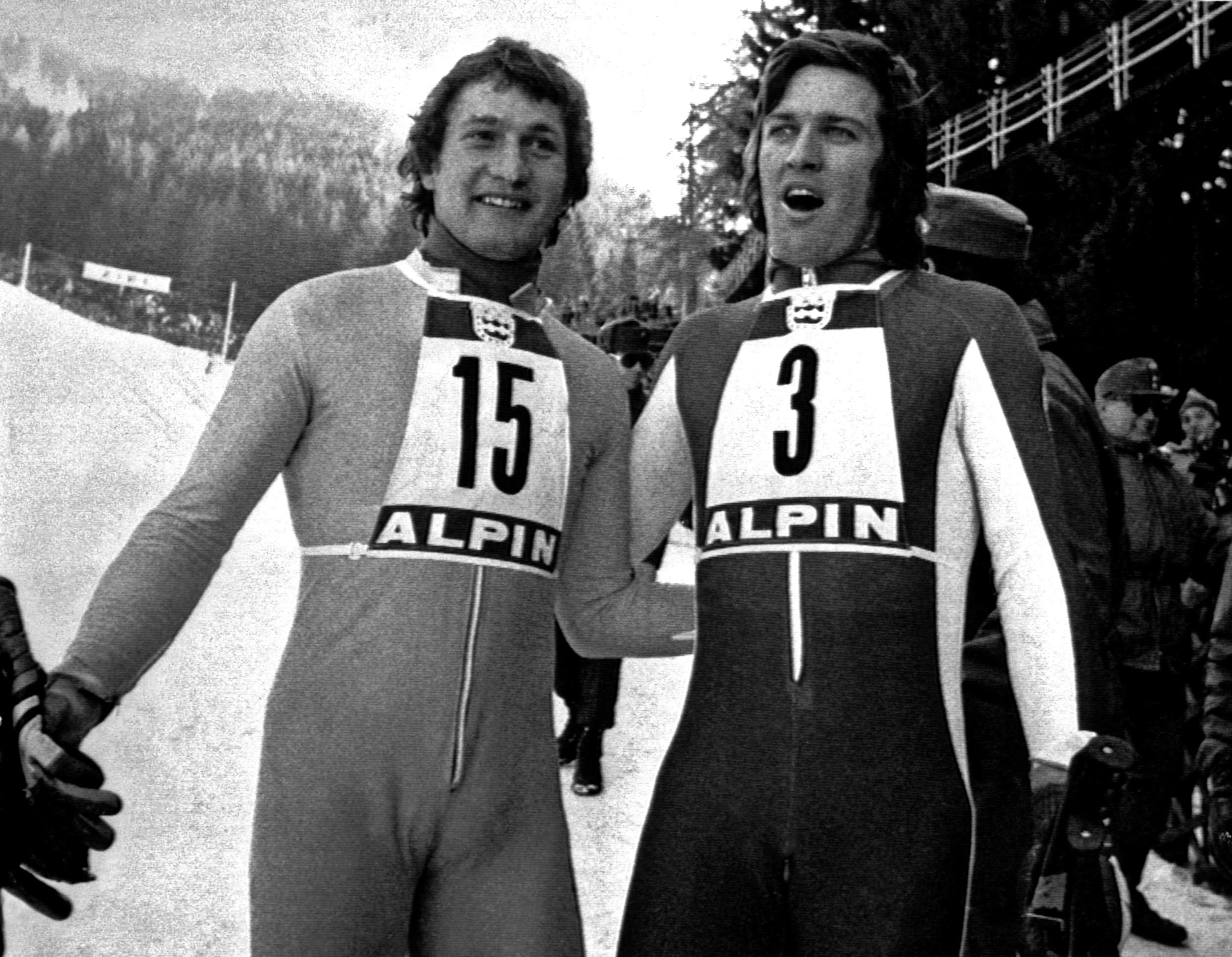
There were 15 skiers in the top group, from which the winner would come. Klammer wanted to go third, a spot which went to defending champion Bernhard Russi of Switzerland. Russi’s run was smooth, compact, almost flawless, and none of the others could match his time of 1:46.06.
The course was getting more treacherous with each run. Going last of the favourites was a decidedly mixed blessing: Klammer knew the time he had to beat, but he would find it almost impossible to do so.
“Impossible” wasn’t a word he understood.
To the starter’s hut. His coach giving him final words of advice, “final” perhaps in more ways than one.
“Kill yourself.” Win or die: a stark, binary choice.
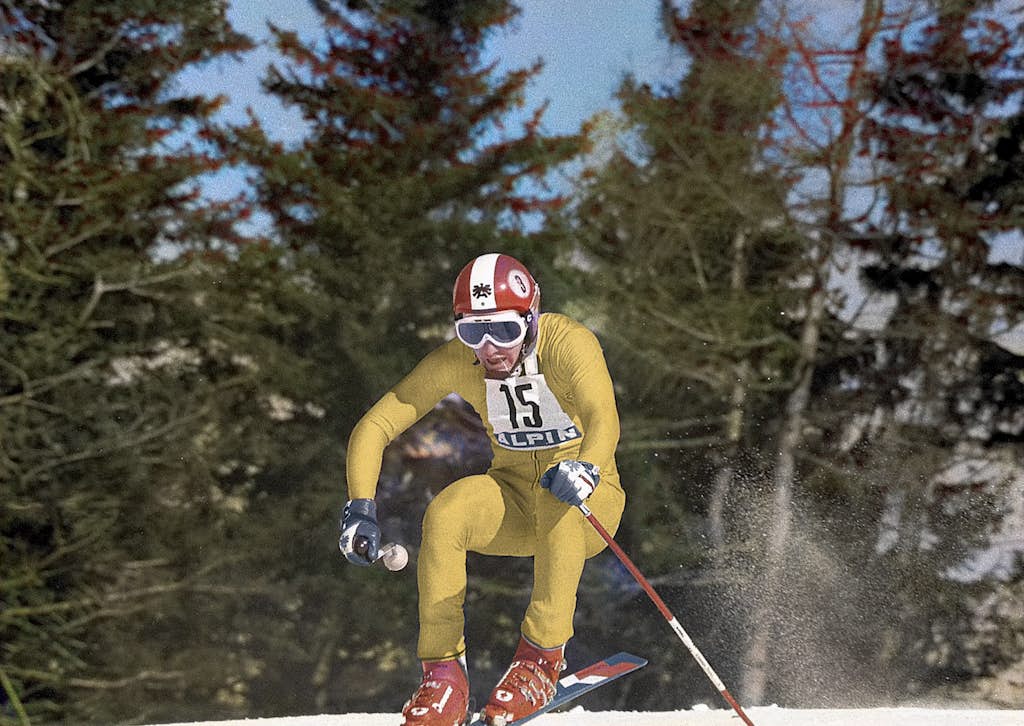
In the gate. Red helmet, yellow suit, red boots: a superhero’s primary colours. The mountain falling away beneath him, a vertiginous gradient way steeper than the two dimensions of TV make it look: 800 metres of drop over a 3,000-metre course. The packed masses in the distance. His people. He will not, can not, must not let them down. The focus, the moment. Destiny. Seize it or lose it.
The starter’s voice in his ear. “Drei. Zwei. Ein.”
Klammer pushing off as hard as he can. The screams echoing up the mountain. One ski caught in a rut he hasn’t seen in the shadows. Trying to adjust. Left leg flailing out and high as he turns. The first gasp from the crowd. It won’t be the last.
First time check. Russi went through in 32.22. Klammer 32.24. Two-hundredths down. Narrow margins. Klammer can feel the time gap. He knows he needs to be faster. Ice and bumps beneath his Fischer C4s. Attack this course and it bites back.
Over the Ochsenschlag jump. Long seconds in the air, body tilting, arms windmilling. Lands on one ski, half sits back on his haunches, gets the other ski down. Somehow still upright. Reckless and fearless in equal measures, out on the razor’s edge where control is just a rumour. Spectators hanging off trees. Cowbells and the ululating yodels. Come on, Franz. Come on. Plumes of snow white and bright in the sunlight as this manic genius carves down the mountain.
Second time check. Russi 1:13.05. Klammer 1:13.24. Almost two-tenths down now. The race slipping away from him. “Franz,” he tells himself, “now you have to do something, because you’re going to lose.” The crowd seeing the splits and redoubling their volume, trying to drag him down towards them. The mountain shaking with the force of their desire.
Klammer all over the slope, skiing faster and faster, as though he alone can defy the laws of physics. Gravity? Pish! Friction? Never heard of it! Centrifugal force? Away with ye! Hammering up and down in the jumps, off the rollers and the knolls, through the pine boughs, clinging white-knuckled to his poles as he clips gate after gate.
He’s taken all the risks and is taking yet more. Into a long right-hander at Bernegg, and an improvisation quicker than thought: swinging wide to his left, so close to the fence that spectators yelp in alarm, and then using his farm boy’s strength to carve all the way through the turn, a single groove six seconds long which slingshots him out the other end like a missile.
Nothing in his head now except man and mountain. No crowd, no cameras, no rivals. Just him and the white all around. The last two jumps: flying, flying. In the BBC commentary box, Ron Pickering finds the perfect words. “The hero of Austria. Takes the leap well. Survives it well. Hugs the course. Sits down. Gets a lower line if he can. There’s the time, it’s coming up now … ”
Flashing across the line in a technicolour blur. Spraying snow in great arcs as he slows and turns.
“ … 1:45. He’s done it! Klammer’s done it! And this crowd go wild!” His voice cracks on the final word.
“That power from the spectators,” Russi will say later. “That gave him the extra kick. There was something in the air. He could not lose that race. No way.”
Russi goes over and hugs his conqueror, smiling in resignation and congratulation: a friendship which endures to this day, half a century on, two greats bound together by two immortal minutes on an Austrian mountain.
What can you do against a man who can ski like Klammer? If you can even call it skiing, that is. More like barely controlled crashing.
But whatever you call it, you can never forget it.