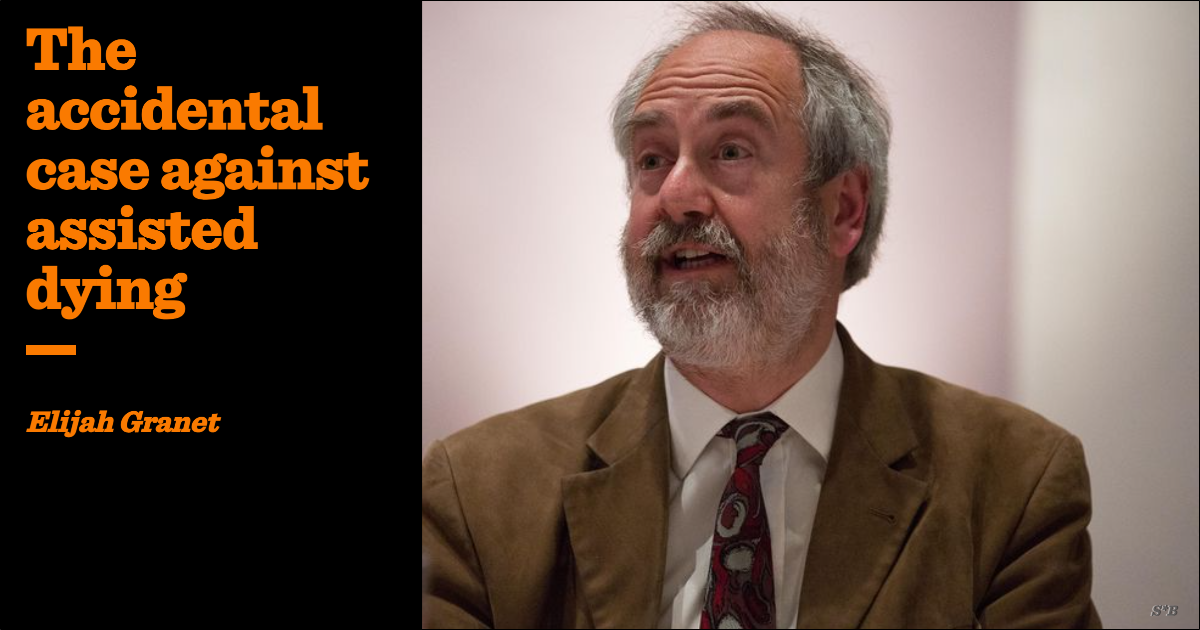
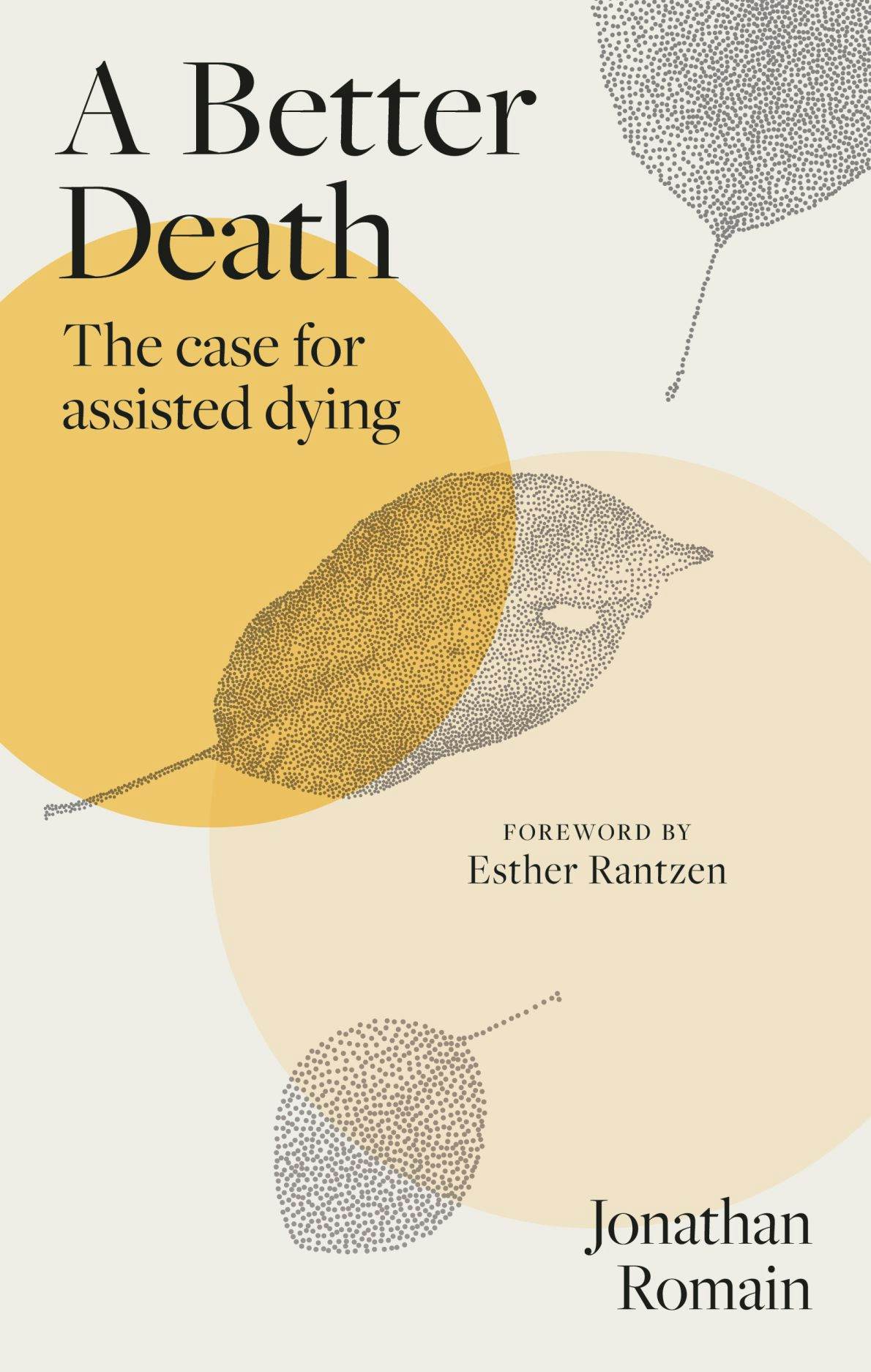
In the preface to his mis-titled book A Better Death: The Case for Assisted Dying, Rabbi Jonathan Romain promises to show the reader “what a good case there is” for the eponymous practice. In fact, Romain spends very little time making any sort of case, good or otherwise. With disoriented and disorganised style, Romain demonstrates an inability to hold a point in a medium longer than a Thought for the Day contribution. This is mostly amusing. Yet, when Romain manages to advance an argument, he reveals a ghastly moral vacuum in the case for the practice.
Let’s start with the fun stuff. When not occupied by tangents (like an entire chapter recommending ceremonies for watching loved ones kill themselves), Romain contradicts himself constantly. He mentions that Robin Williams killed himself due to Lewy body dementia. Three sentences later, he says that this suicide was not “in response to an incurable disease or failing faculties”, ignoring that Lewy body dementia is an incurable disease characterised by failing faculties. He denounces conflating “euthanasia” and “assisted dying”, only to later refer to Belgium’s euthanasia programme as “assisted dying”. He focuses on a prominent joint statement by Catholic, Jewish, and Anglican leaders stating religious reasons for opposing assisted dying. Then, pages later, he decries the failure of religious opponents of assisted dying to cite theological grounds.
Nor did Romain appear to do any thorough research. His law, especially, is abysmal. He says that when the Suicide Act 1961 was passed “no one envisaged” that it would criminalise helping a suffering, terminally ill person end their life painlessly when this was explicitly cited as an example of the offence. He claims that in the 2014 Nicklinson case, the Supreme Court ruled that the Suicide Act was “not compatible” with the Human Rights Act 1998; that in fact, describes the dissents. Equally, in discussing the 2018 Conway case, Romain claims three Supreme Court justices unanimously held the Suicide Act 1961 to be incompatible with the European Convention on Human Rights. In fact, the justices declined to hear Conway’s case (let alone rule on it), and in their brief order doing so, admitted they wouldn’t agree with each other had they heard the case.
When he actually bothers to argue, Romain’s points border on facetious. He says worries that people choosing assisted dying in Oregon due to fears of being a burden are misplaced because terminally ill people who don’t elect to die also fear being a burden. Well, that’s okay then. He says, apparently seriously, that Brexit is evidence England won’t adopt Dutch-style euthanasia laws. In discussing theology, the rabbi asks “if it is possible to thwart the will of God” by (his examples) calling an ambulance or putting a baby in an incubator, “why is it not possible to do so” by facilitating suicide? To his credit, Romain then grants that “one case involves preserving life whereas the other case involves taking it”. To his discredit, he then insists that this doesn’t apply “when the person is already dying”, without explaining why that doesn’t apply to a premature baby (dying). Then, he says, with an apparently straight face, that there is no moral distinction between failing to give fatal drugs to a terminally ill person and declining to rescue a “child being tortured by abusers”.
Now to the disturbing bits. Romain cites the embarrassment of cancer-induced incontinence as valid reasons to elect for assisted suicide. He acknowledges people will be pressured by relatives into dying, but says there is no reason to “let the perfect be the enemy of the good” and that it shouldn’t be banned “because of potential malpractices by a few”. It’s not clear how many deaths of this sort are acceptable to Romain, but the number is certainly greater than zero. He manages to express an opposition to suicide in the case of temporary depression. Outside that caveat, though, Romain is rather comfortable with suicide:
[Suicides] have a shocking impact on whoever discovers them, as they are often undertaken using crude methods. They can leave behind a terrible image that can traumatize the person who finds their body, haunting them for years to come. There are also suicide attempts that fail and leave the person in agony or a worse-off condition than before. Now that suicide is no longer a criminal offence, there has to be a better method for those determined to end their life. The moral qualms of other people should not prevent a more civilised way of letting go for the person concerned. This, as will be argued, is especially imperative if that person is already dying and if they are seeking to avoid a painful deterioration.
Romain thus admits his logic is not limited to the terminally or even physically ill — he simply thinks it’s imperative to start with them. This reasoning cleanly continues to, as the Dutch do and Canada is threatening to, helping people with treatment-resistant, lifelong depression that suicide is a good option. The problem with suicide is apparently that it’s too gory and attempts can too easily go wrong. Instead of suicide prevention, he says the state should facilitate cleaner and simpler methods of offing yourself, leaving no mess to disturb survivors. Think this general facilitation of suicide for anyone determined is barbaric? Romain says your “moral qualms” are not a good basis for policy.
It is fun to laugh at Romain’s contradictions, tell him off for his factual errors, and mock the incoherence of his attempt at argument. Yet, when he does manage to express his reasoning, it turns out to be amoral dreck, a fetishisation of autonomy so intense it logically ends with Robert Sheckley’s satirical public suicide booths. Romain says he’s making the case for assisted dying. In fact, the callous attitude to human life displayed by this prominent proponent of Kim Leadbeater’s bill demonstrates a remarkably strong reason to reject it.