Whatever one may think of President Donald Trump, it’s hard to deny that the man is a quote machine.
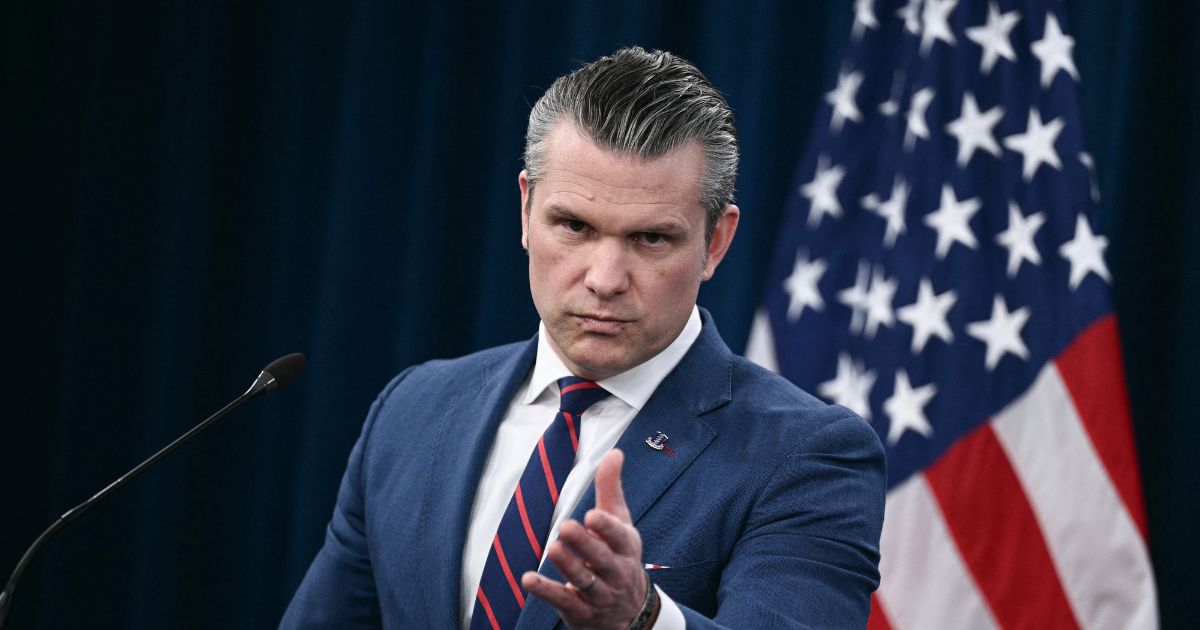
That ineffable trait appears to have trickled down to his administration as well, if Secretary of Defense/War Pete Hegseth’s “60 Minutes” interview is anything to go by.
Hegseth recently appeared on CBS News’ flagship program and spoke about — what else? — the ongoing Iran conflict, dubbed “Operation Epic Fury.”
Now, it goes without saying that there are a lot of mixed feelings about the joint U.S.-Israeli military operation. Concerns ranging from economic ramifications to U.S. boots on the ground are all legitimate worries without simple answers.
Given that, it would’ve been easy for any other president’s Secretary of Defense to give demurring non-answers so as not to rile up the hornet’s nest.
Trump’s Secretary of War didn’t choose that option.
Here’s Hegseth’s response when pressed on whatever it is that Trump is planning on doing in the Middle East:
🚨 WOW! SecWar Pete Hegseth just FIRED BACK at the Fake News who think they know President Trump’s secret Iran military plans, and jump to panicked conclusions
“You don’t tell the ENEMY, you don’t tell the PRESS, you don’t tell ANYBODY what your limits would be on an operation.”… pic.twitter.com/Dn1sfwaTWU
— Eric Daugherty (@EricLDaugh) March 9, 2026
“President Trump knows — I know — you don’t tell the enemy, you don’t tell the press, you don’t tell anybody what your limits would be on an operation,” Hegseth said. “We’re willing to go as far as we need to in order to be successful.”
Here’s Hegseth’s response to what the Trump administration means by “unconditional surrender.”
.@SECWAR on unconditional surrender:
“It means we are fighting to win. It means we set the terms. We’ll know when they are no longer capable of fighting.
Whether they know it or not, they will be COMBAT INEFFECTIVE. THEY WILL SURRENDER.” pic.twitter.com/jeth0q1UIb
— DOW Rapid Response (@DOWResponse) March 8, 2026
“It means we are fighting to win,” Hegseth explained. “It means we set the terms. We’ll know when they are no longer capable of fighting. There’ll be a point where they’ll have no choice but to do that.
“But whether they know it or not, they will be combat ineffective. They will surrender.”
Here’s Hegseth responding to a question about how transparent the Trump administration has been in its war efforts:
.@SecWar on Operation Epic Fury: “We can be clear with the American people that this is not a fair fight — and that’s on purpose. Our capabilities are overwhelming compared to what Iran’s are.” pic.twitter.com/VKZLAi5xfe
— Rapid Response 47 (@RapidResponse47) March 8, 2026
“We can be clear with the American people that this is not a fair fight,” he said. “And that’s on purpose. Our capabilities are overwhelming compared to what Iran’s are.”
And this was Hegseth’s response when “60 Minutes” asked him if he was aware that Tehran was not likely to quietly surrender:
.@SecWar on Operation Epic Fury: “This is war. This is conflict. This is bringing your enemy to their knees. Whether they will have a ceremony in Tehran Square and surrender, that’s up to them.” pic.twitter.com/AP0ecPzZx8
— Rapid Response 47 (@RapidResponse47) March 9, 2026
“This is war. This is conflict,” Hegseth said. “This is bringing your enemy to their knees. Whether they will have a ceremony in Tehran Square and surrender, that’s up to them.”
When was the last time Americans heard a Pentagon chief speak this plainly about war?
Listening to Hegseth on “60 Minutes,” it sounded less like a cautious bureaucrat parsing words and more like an actual War Secretary explaining the brutal math of conflict.
In calmer eras, the title “Secretary of Defense” makes perfect sense: a steady steward maintaining order and deterrence in a relatively stable world.
But the world today is anything but stable.
After years of drift under former Presidents Barack Obama and Joe Biden, American deterrence was stretched thin, tested by adversaries who increasingly believed Washington had neither the will nor the clarity to respond decisively. When deterrence erodes, the ugly truth of geopolitics reasserts itself: sometimes restoring peace requires demonstrating unmistakable strength.
That’s what makes Hegseth’s tone so striking.
Rather than pretend war is a tidy exercise in press statements and diplomatic hedging, he’s speaking about it in the blunt terms soldiers and strategists have always understood.
The goal isn’t endless conflict. It’s reestablishing the kind of overwhelming deterrence that convinces enemies the fight simply isn’t worth starting in the first place.
And that’s the uncomfortable reality critics often ignore. When deterrence fails, rebuilding it can come at a cost — sometimes measured in blood and treasure. But pretending otherwise doesn’t prevent conflict. It only invites more of it.
For better or worse, that appears to be the philosophy behind Donald Trump’s national security team. And if Hegseth’s interview showed anything, it’s that this administration would rather speak honestly about the realities of war than lull Americans into comforting illusions about a dangerous world.

Advertise with The Western Journal and reach millions of highly engaged readers, while supporting our work. Advertise Today.