What happens when just the thought of being sick makes you want to throw up… but you have a deep-seated phobia of anything and everything to do with vomit, both yours and other people’s?
According to Jess Smith, 62, who has struggled with emetophobia—a fear of vomiting—since she was a child, life becomes inescapably miserable.
‘The most common reaction is “no one likes being sick”, but if you haven’t lived with it, you can’t understand it,’ she tells the Daily Mail.
‘The phobia makes you feel nauseous all the time, you create what you fear. The brain gives you symptoms it thinks are helpful.
‘A lot of people have reflux, IBS, bloating… you develop hypersensitivity from being so vigilant about being sick. The brain gives you more of what you focus on.’
Ms Smith says that the intrusive thoughts about being or seeing sick were most problematic when she was a teenager, even triggering an eating disorder, but they faded away slightly in her twenties, only to return with a vengeance in her thirties when she became a mother for a second time.
‘At school, if someone said they’d been sick, I’d literally hold my breath and get away as fast as possible,’ she explains.
‘My sister was undergoing chemotherapy when I was a teenager, and I was afraid to be near to her in case she was sick. I couldn’t comfort her, I’d hide in my room with tissues in my ears.
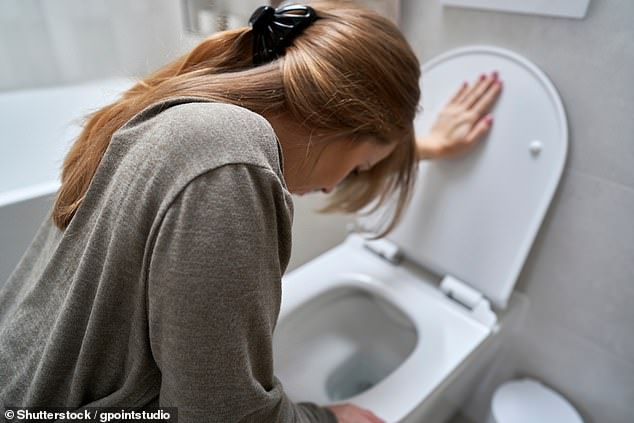
Emetophobia is the fear of being sick or seeing someone else vomit
‘Going through pregnancy, having my babies, then my children growing up and just being school age were also real triggers.
‘I had my first son at 23 and my second one at 35. He was a very sickly child, he’d get vomiting bugs every year and coat every surface in the house.
‘That really triggered it again. I’d start dreading September, listening in playgrounds, hearing other mums talk about bugs.
‘When my children were sick, I’d leave them with their dad and drive around in the car.
‘I would do everything I could to try to avoid getting any kind of bug or virus in house.
‘During Covid, I noticed the rest of the world behaving like I had for years, but by then I was in a better place.’
Unlike more mainstream fears—clowns, heights, spiders or the number 13—being afraid of vomit is less discussed, and Ms Smith believes that this means many people who struggle with emetophobia are suffering in silence.
Experts from the Cleveland Clinic also regard emetophobia as being potentially under reported.
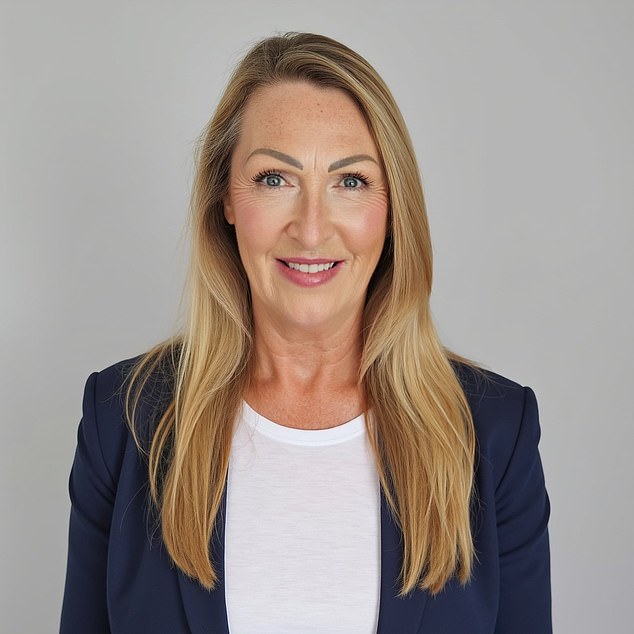
Author Jessica Smith has shared how she overcame the condition in a book
They claim that while some sources dismiss it as being a rare condition that affects less than 0.1 per cent of the global population, opposing schools of thought argue that a significant minority, ranging from 2 per cent to nearly 9 per cent, suffer with it.
It is mostly believed to affect women, and is defined by the NHS as being an intense, specific fear of vomiting or seeing others vomit.
It is impossible to go through life without being sick, and like a lot of people with emetophobia, Ms Smith can count the number of times she’s thrown up on one hand.
‘I have vomited, and it’s interesting because it’s happened very few times compared to most people,’ she says.
‘That’s common with emetophobia. People say they haven’t been sick for decades. It shows how powerful the mind is. When you really want to avoid something, you can override it to an extent.
‘The times I have been sick were when the phobia was quieter, when I was less bothered by it. There was less resistance.’
Emetophobia is classed as a type of anxiety disorder. It can significantly impact daily life because sufferers often avoid social scenarios and not eat certain types of food which could lead to them becoming unwell.
It can also manifest as an obsession with cleaning as people try to remove all germs and bacteria from their immediate environments, which is a symptom of Obsessive Compulsive Disorder (OCD).
Treating emetophobia is complex and lengthy, and is usually a mixture of Cognitive Behavioural Therapy (CBT) and if necessary, treating any underlying anxiety with antidepressants.
In some cases, emetophobia can be misdiagnosed as something entirely different; and in Ms Smith’s case, she was told she had anorexia.
Her fear of vomiting compelled her to avoid food as much as possible, leading to a psychiatrist telling her she had the restrictive eating condition, as well as diagnosing her with anxiety.
‘I had anorexia at one point, or was thought to. I hardly ate anything, mostly because I was afraid of food,’ she says.
‘I didn’t eat meat for years, or anything else I deemed to be a risk.
‘I’d see black flecks in soup and think “bacteria” when it was just pepper. It was super intense for a long time.’
In the case of most phobias, a trained therapist can safely help you address the original source of the fear to help you overcome and move on from it, but Ms Smith isn’t totally sure where her emetophobia began.
‘I’d always thought it might have come from when I was very young, under the age of two, and our family went on a cruise,’ she says.
‘I have no memory of it, but my mum told me that the conditions were awful and everyone was getting seasick.’
But since learning more about emetophobia and undergoing several types of treatment to overcome it, she now believes it was her subconscious’ way of coping with a terse and chaotic ‘troubled childhood’.
‘I don’t really know where it came from, but my feeling is it was my subconscious trying to get control in an out-of-control situation, similar to how an eating disorder can manifest,’ she says.
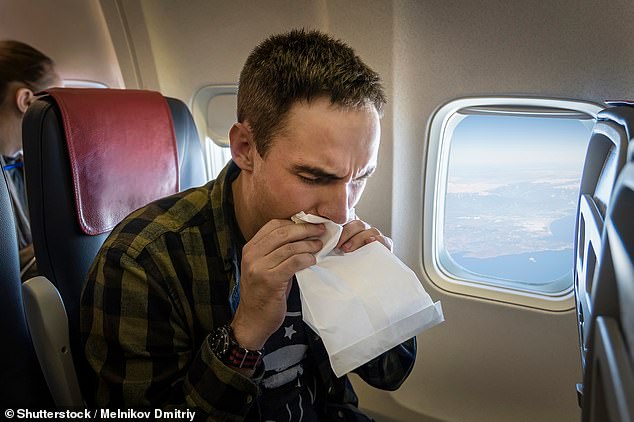
Just the sight of someone else being sick can trigger emetophobia
Ms Smith eventually managed to conquer her phobia when she attended an online course aimed at tackling anxiety.
‘I’ve been in loads of groups for emetophobia for many years, and I see the same cycle and the pattern play out,’ she says.
‘People believe they’re in danger. That’s how any phobia works. There’s a perception of danger which is a misunderstanding.
‘The online course was very different to conventional therapy, and encouraged us to see the truth about a fear, where it comes from, and how it’s kept alive.
‘What my coach said that changed everything was, “you’re not afraid of being sick, you’re afraid of the thought of being sick”. That burst the bubble.
‘We’re afraid of thoughts, not the thing itself. Once you see that, things start to shift.
‘Slowly, slowly, it changed things for me, and now emetophobia is something that’s there in the background but it certainly doesn’t rule my life.
‘I hardly think about it at all, and I don’t plan my life around it anymore.’
Eager to support other people like her, and most crucially, to share how she gradually overcame her crippling fear of being sick and navigated the inescapable vomit-filled moments of parenthood, Ms Smith has penned a book, Emetophobia and Me.
‘I really want to shine a light on it; it’s not talked about on TV,’ she says.
‘With other phobias, you can get away. With emetophobia, it invades your safest place, your bed at night.
‘It makes you want to run away from your own family.
‘A lot of people have it and don’t talk about it because there’s so much guilt and shame. That’s why I wrote the book.’