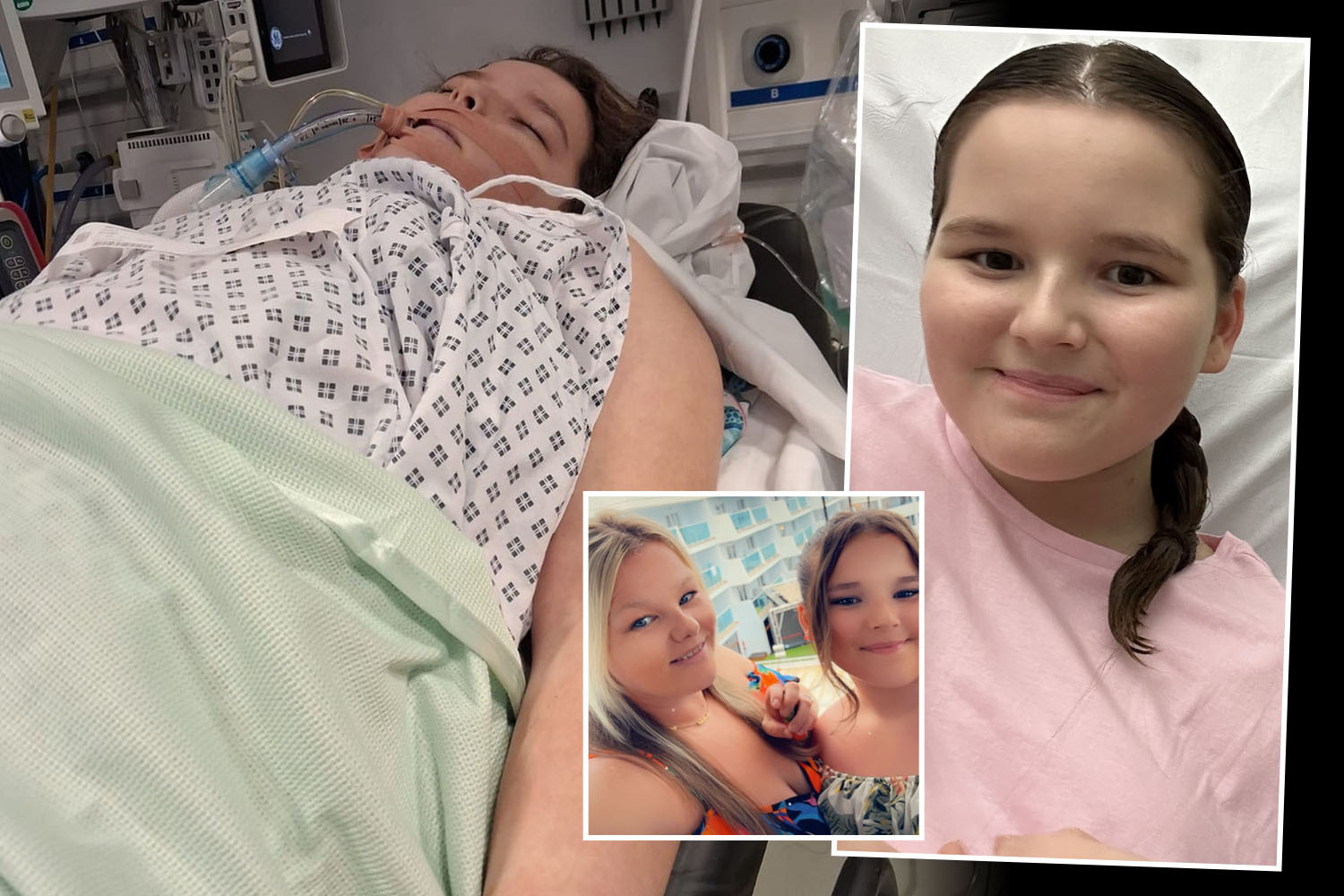
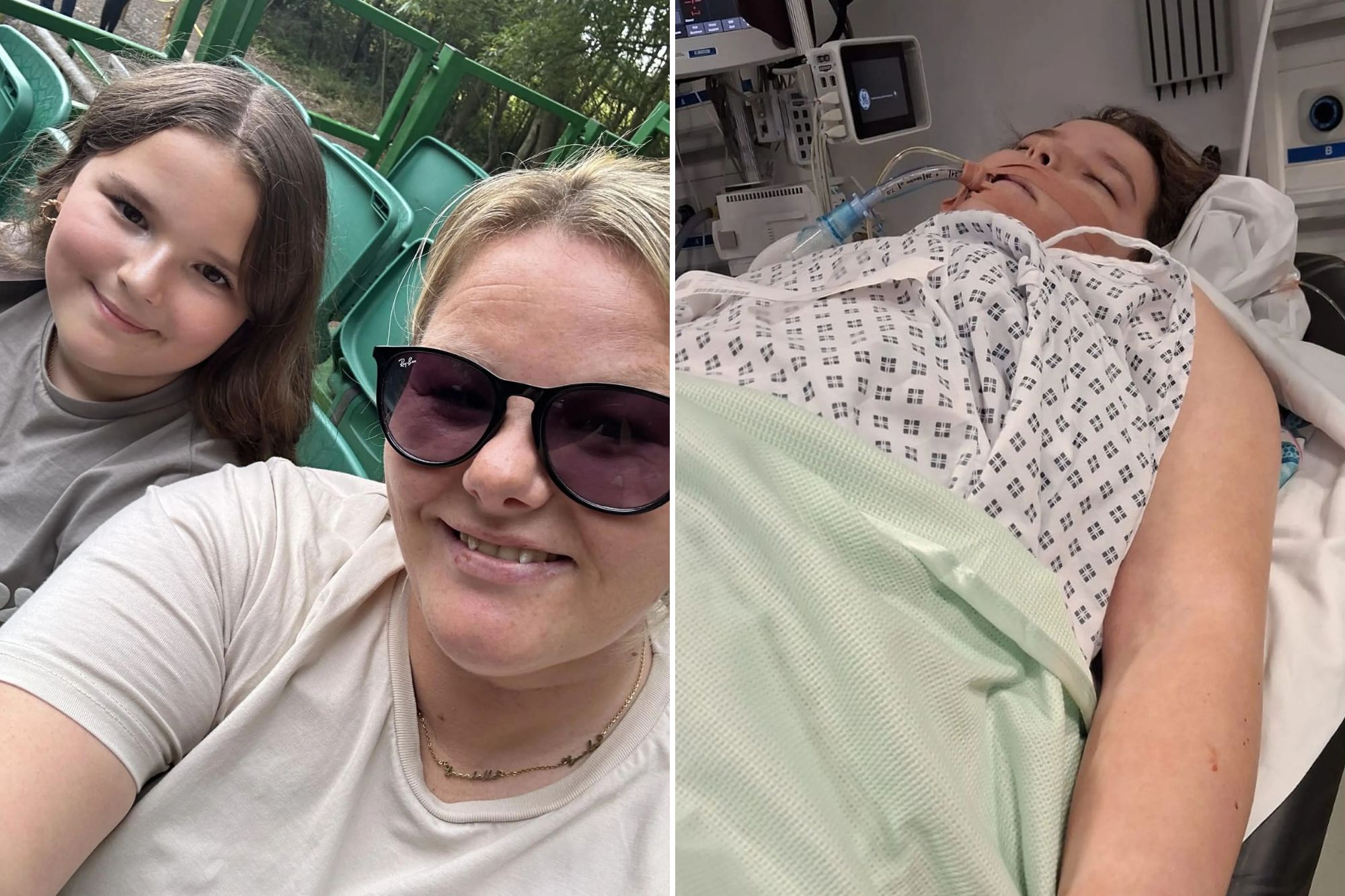
THE parents of a 12-year-old girl who was left in a coma after a schoolbug turned out to be ‘superflu’ say they almost missed the signs.
Jessica Williamson had initially been given a single paracetamol by doctors during a hospital trip, but was blue-lighted back hours later when her worried parents checked on her overnight.
Ashleigh Moore, 34, is sharing her daughter’s story to show how serious contracting flu can be, and is urging everyone eligible to get their flu jab.
This year’s flu strain, H3N2, a type of influenza A, is a mutated strain that is causing havoc in hospitals across the UK.
Also now known as ‘subclade K’ or ‘super flu’, immunity against it was low in the UK, which caused an unusually early outbreak and pressure on the NHS; but the strain itself is not thought to cause more severe disease.
The ‘tidal wave’, which has left the NHS braced for the ‘worst case scenario’ over Christmas, began with a surge in kids’ cases first.
Ashleigh said: “It was heartbreaking to see her like that in an induced coma. I felt like I was looking into someone else’s life and it didn’t feel real.
“There were several moments where we didn’t think she would ever leave the hospital and see Christmas.
“I said to all the nurses, I was one of those hypocritical people that thought it was ‘just’ the flu.
“I don’t think you get it until you see the inside walls of the ICU and sit in those four walls for weeks staring at your baby all because of the flu.”
Last week, an average of 2,660 patients were in hospital with the bug each day – the highest ever for this time of year and 55 per cent up on last week.
Jessica said she was suffering from a headache and threw up when she arrived home from school on November 13 [Thursday].
Ashleigh said: “Jessica came home from school and didn’t feel very well and complained about a bad head and was sick a couple of times.
“At this point I thought it was a school sickness bug. She deteriorated that night and the cough started, it was like a bark and a very dry cough.
“Even then we thought she had a bit of a cough and cold as it was that time of year.”
Jessica was then taken to Queen Elizabeth Hospital in Gateshead, Newcastle-Upon-Tyne.
“On Friday morning she was really bad and we were worried about her breathing, and we took her to the hospital,” Ashleigh said.
“She had a bit of a temperature and they gave her antibiotics.”
Ashleigh says doctors assured her there was no cause for concern.
But when the schoolgirl’s temperature spiked that evening, Ashleigh took her back to the same hospital for a second opinion.
Ashleigh claims her daughter was given a paracetamol tablet to treat her fever before being sent home again.
Ashleigh’s dad James Moore, 34, claims at this point, his daughter’s lips kept turning blue.
It is scary to think that if we had just gone to bed that night [instead of taking her to hospital again], where would we have been?”
Ashleigh Moore,
James, also from Gateshead in Newcastle-Upon-Tyne, said: “She was continuing to cough and her lips were going blue.
“We started to get worried so we took her back to the hospital [on Friday] as her temperature was 39.4.
“They gave her a single paracetamol and got her temperature down to 38 degrees and sent her home again.”
It was only when Jessica became ‘delirious’ in the early hours of the following morning that her parents called an ambulance.
Ashleigh said things could have turned out very differently had they not acted when they did; delirium is a symptom of sepsis.
The deadly condition – the body’s overeaction to an infection – can strike anyone, and causes 48,000 deaths every year (five an hour).
Ashleigh said: “It is scary to think that if we had just gone to bed that night [instead of taking her to hospital again], where would we have been?”
Who gets sepsis and what causes it?
Sepsis can affect anyone. The condition occurs when the body’s immune system has an overeaction to an infection.
As a result, the body attacks itself.
Some people are more likely to get an infection that could lead to sepsis, however.
This includes babies under the age of one, people over 75 years old, people with diabetes or a weak immune system (either due to treatment, a condition or genetically), people who have recently had surgery or given birth.
Any infection can lead to sepsis. But those more likely to are those of:
- Lungs, such as pneumonia.
- Kidney, bladder and other parts of the urinary system
- Digestive system
- Bloodstream
- Catheter sites
- Wounds or burns
Jessica was blue-lighted to hospital. She was transferred from Queen Elizabeth Hospital to the ICU ward at the Royal Victoria Infirmary (RVI) in Newcastle Upon Tyne and was put into an induced coma.
She was diagnosed with influenza A, and subsequently suffered from sepsis and necrotising pneumonia – when lung tissue is dying.
Sepsis in children causes symptoms such as fast breathing, seizure, mottled skin, a rash that does not fade when you press it and lethargy.
In adults, it also causes slurred speech or confusion, extreme shivering, passing no urine and a feeling of ‘I’m going to die’, says the Sepsis Trust.
“In the early hours of Saturday morning, she was really struggling to breathe,” James said.
“She had become so tired and lethargic and was becoming hard to wake up. She had become delirious.
“When we got to the hospital [Saturday] they made the decision to put her in an induced coma so they could intubate her and the machine could take over her breathing.”
If they had taken bloods the first time we went to the hospital, they would have been able to admit her immediately
James Moore,
Jessica spent nearly three weeks on the ICU ward where she was given antibiotics to treat her infections to stabilise her.
She was then moved onto a respiratory ward on December 3 before being discharged to continue her recovery at home on December 10.
James is now urging parents to get a second opinion on their child’s health.
He claims it could have been a very different story for Jessica if they didn’t take her to the hospital a third time.
James said: “Nobody can say that if she was treated straight away it wouldn’t have got to this severity.
“I do believe that if they had taken bloods the first time we went to the hospital, they would have been able to admit her immediately and her body may have not deteriorated as much.
“But, she would have still needed to have been treated in the same conditions.”
Ashleigh says: “I’m now urging people to get their flu vaccines. You also need to trust your gut and get a second opinion.”
Gateshead Health NHS Foundation Trust said they would “welcome the opportunity” to discuss was happened to Jessica and said they regretted what had happened.
Sean Fenwick, Chief Executive at Gateshead Health NHS Foundation Trust, said: “We are sorry to hear what the family has been through and wish their child the best ongoing recovery.
“Flu in children can develop quickly from a stable situation to one which is very serious and we would encourage parents who are concerned that their child’s condition has worsened after being seen not hesitate in having them reviewed again.
“We would also strongly recommend that all children and young people who are eligible for the flu vaccine get immunised.
“We have reviewed this case and would welcome the opportunity to meet with the family to discuss this in greater detail.”
SYMPTOMS OF SUPERFLU
Though the dominant circulating strain, dubbed ‘superflu’, is different from ones seen in previous years, it tends to cause typical flu symptoms, experts say.
Flu symptoms tend to be “sudden onset”, according to Sun columnist and GP Dr Zoe Williams, unlike a cold, which is more gradual.
They include:
- Fever
- Feeling generally unwell
- Body aches
- Exhaustion
- Coughing
- Sneezing and a runny nose
Flu may also cause a sore throat, loss of appetite, diarrhoea and tummy pain, and sickness, the NHS adds.
Meanwhile, children may also have an ear ache and low energy, Dr Zoe adds.
“Children should be kept off school if they have a temperature and/or feel too well to attend,” Dr Zoe said.
Most people recover from flu within two weeks, but older adults (65+), young children, pregnant women, and those with chronic conditions could become more seriously unwell.
“Stay at home, rest, and take fluids and paracetamol or ibuprofen,” says Dr Zoe.
“Most people do not need to attend hospital or see a doctor if they have flu.
“If you think you do need to go to A&E, call 111 for advice before attending hospital.
“For emergencies (possible heart attack, stroke, major injury/bleeding) of course should go straight to A&E.”
GET JABBED
People at higher risk of severe infection should also get their free flu vaccine if they haven’t already, she added.
“Bear in mind that it takes up to two weeks for the vaccine to be effective,” says Dr Zoe.
It’s important to wash your hands often with soap and warm water to prevent spread of flu germs.
“Wearing a mask has some effect and signals to others that you are trying to avoid spread,” Dr Zoe added.
“Each person will need to make their own considerations when it comes to mixing with family and friends over Christmas.