This article is taken from the November 2025 issue of The Critic. To get the full magazine why not subscribe? Get five issues for just £25.
About suffering he was never wrong, W.H. Auden. How well he understood its human position; how it takes place whilst someone else is eating or opening a window. Not even for Christ’s martyrdom did the world stop turning. Indeed, the “human position” of Christ is what makes Christianity so strange, whose God was persecuted to death.
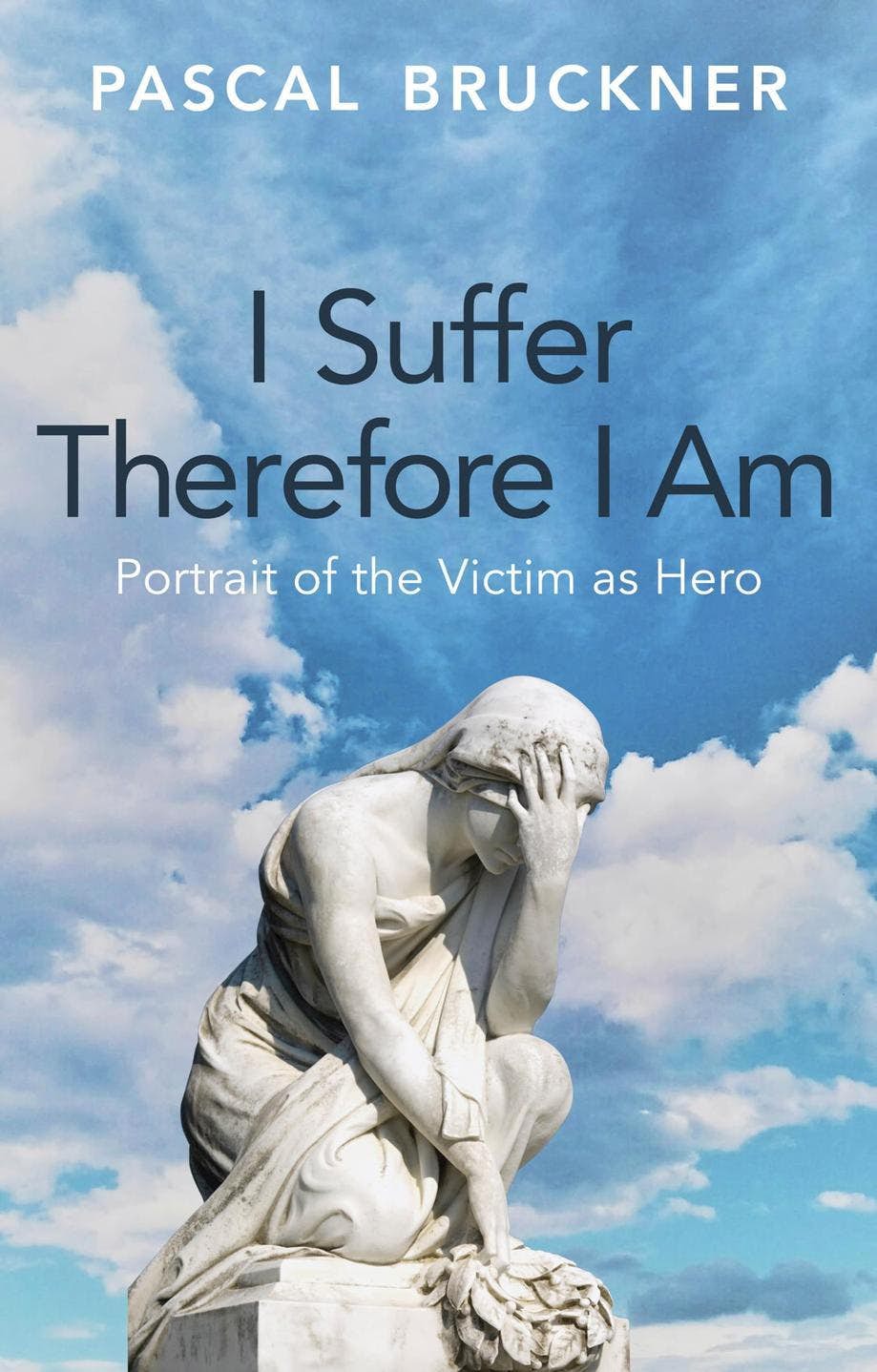
This privileging of the weak leaves it open to exploitation, argues French philosopher Pascal Bruckner in I Suffer Therefore I Am. The Beatitudes have been “transmuted into a pantheon of victimhood”. The thesis echoes Nietzsche’s “transvaluation of values” — the idea that the weak, fuelled by ressentiment, use religious “slave” morality to manipulate the strong into acting against their own interests.
But this transmutation, in Bruckner’s telling, begins only with the Enlightenment. Whilst Christianity had imbued suffering with meaning, the Enlightenment, with its spirit of progress, sought to eliminate suffering, duly dislodging it from its human position. Paradoxically, this left us unhappier: we fixate on suffering, and we are left disillusioned when optimisation efforts fall short of our heightened expectations.
Once suffering was seen as a bug rather than a feature of life, it demanded more attention. It became evidence of a wrong committed, elevating the sufferer to the status of victim. The book is crammed with examples of the victimhood “pantheon”, from US college admissions trauma essays to #MeToo to legal safetyism.
The book’s particular focus, though, is on how the Holocaust has been excised from its human context and been flattened into a kitschy symbol of victimhood par excellence. This reductio ad Hitlerum is adopted cynically in order to “Nazify” one’s opponent and thereby justify one’s own cause.
Bruckner cites as examples of this Putin’s Nazification of Ukraine, Abdelmadjid Tebboune’s Nazification of France, the Nazification of Israel (almost half of Brits now believe that Israel treats Palestinians the way Nazis treated Jews) and Pope John Paul II’s comparison of abortion to the Holocaust.
To borrow from Archilochus, via Isaiah Berlin, this is hedgehog scholarship: it tries to draw together disparate phenomena into one prior explanatory phenomenon. Bruckner’s impressionistic, very French, style whisks the reader from example to example without inviting them to scrutinise whether they really manifest the same phenomenon. A chapter about French negligence law veers into a diatribe about reckless cyclists, which reads as an overwrought attempt to shoehorn as many societal ills as possible into the book’s thesis.
In the same chapter, Bruckner scoffs at an infamous piece of American product liability litigation in which a customer sued McDonald’s after suffering burns from spilt coffee. But this was not a case of frivolous litigiousness, and it is only viewed as such due to McDonald’s spin. In fact, the superheated coffee caused third-degree burns to the 79 year-old victim’s groin, leaving her disabled for two years. That is simply not within the range of normal everyday risk.
That said, Bruckner’s contention that we are living in a pantheon of victimhood, and that interest groups co-opt the Holocaust for their own ends, is clearly right. This is a form of emotional terrorism, whose perpetrators feel entitled to invert normal rules of morality. Hence notional feminist Virginie Despentes, a former sex worker, progressed from publishing a novel about two hookers on a killing spree to writing a paean to the islamists responsible for the Charlie Hebdo massacre.
This inversion of morality and civility also manifests in internecine conflict between different groups in competition for ultimate victim status. Anti-Semitism and Holocaust denial go hand-in-hand with the postcolonial movement, for example, with lawyer and anti-colonial activist Jacques Vergès running a tu quoque defence against the French establishment whilst representing Gestapo commander Klaus Barbie.
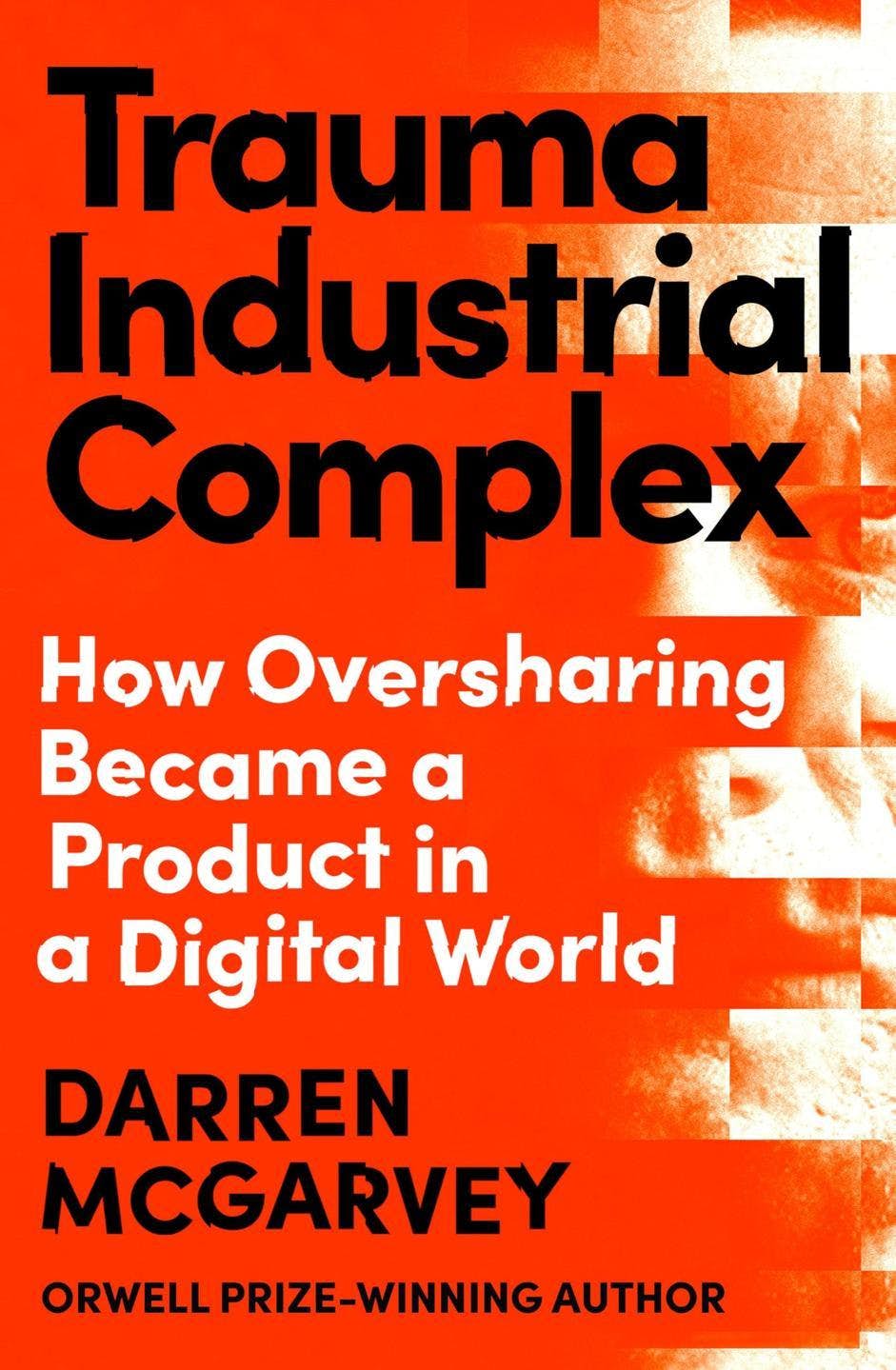
Suffering and victimhood have no moral content per se. Our attitude to these experiences can confer virtue and wisdom, but sometimes the residual trauma makes us behave worse towards others. In Trauma Industrial Complex, Glaswegian musician and sociopolitical commentator Darren McGarvey argues that popular online “trauma narratives” often gloss over the complex realities.
A far cry from its original meaning of a physical wound, “trauma” has become a trendy buzzword that can be used to extract social cachet — and indeed monetised content — from almost any negative experience. The narcissistic cult of victimhood incentivises a race to the bottom, with individuals appropriating the “trauma” label on ever flimsier grounds.
But McGarvey is more concerned with how this trauma industrial complex can backfire on victims of serious trauma, who are encouraged to over-share their experiences online before they have had the chance to process them. Such people are vulnerable to exploitation by an unregulated third sector which uses victims’ trauma narratives for their own ends without providing adequate support or remuneration.
McGarvey rose to prominence after publishing his own trauma story, Poverty Safari, recounting his childhood experiences of poverty and addiction, and his descent into addiction. Trauma Industrial Complex considers his career inside that complex, some of which he wishes he had handled differently.
The danger of disclosing a story publicly is that you become trapped in a narrative which, after more healing, you realise is false. You may have misremembered facts, wrongly imputed malice or sabotaged your own recovery by telling self-limiting stories about yourself.
Step four of the Alcoholics Anonymous 12-Step Programme is to conduct a “fearless and searching moral inventory” — to puncture one’s own self-narrativisation to get to the truth beneath. McGarvey does a great service to his readers by encouraging them to do this; the #BelieveVictims dogma of unquestioning obeisance to subjective “lived experience” is not conducive to healing. It is also admirable that he combines the individual empowerment of victims with his left-wing focus on the structural component of trauma.
Unfortunately, McGarvey deviates along the way into some heavy-handed meta-commentary about the power of narrative. He announces that he is going to draw the reader in through strategic trauma-dumping, then ends the segment with a fourth-wall-breaking gotcha moment, rounded off with exuberant line breaks.
The effect is offputting, especially when combined with the book’s forced air of self-deprecatory informality. More than once McGarvey describes himself as a “neurospicy fuck-up”. He doth protest too much: quoting several pages of his own song lyrics he refers to himself as the “Noam Chomsky of self-help”.
However, his emphasis on accountability and self-interrogation as the route to healing is valuable. If the stories we tell ourselves become self-fulfilling, we’d better get that story straight: Gnothi seauton is all.