If you regularly treat your pet pooch to fancy cuts of steak or chicken you could be sending their carbon pawprint rocketing, experts have warned.
Dog bowls filled with premium, meat-rich food can have a bigger impact on the environment compared to what’s on the owner’s plate, according to a new study.
In particular wet, raw and meat-rich products are linked with substantially higher greenhouse gas emissions compared to dry dog food.
Scientists from the Universities of Edinburgh and Exeter used ingredient and nutrient labelling information to calculate the carbon footprint of almost 1,000 commercially available dog foods based on emissions generated during the production of ingredients.
Their sample included a selection of dry, wet and raw foods, including plant-based and grain-free options.
They found using large amounts of prime meat – which could otherwise be eaten by humans – sends emissions skyrocketing.
‘I regularly see owners torn between ideals of dogs as meat‑eating “wolves” and their wish to reduce environmental harm,’ John Harvey, from the University of Edinburgh, said.
‘It’s important for owners to know that choosing grain-free, wet or raw foods can result in higher impacts compared to standard dry kibble foods.’
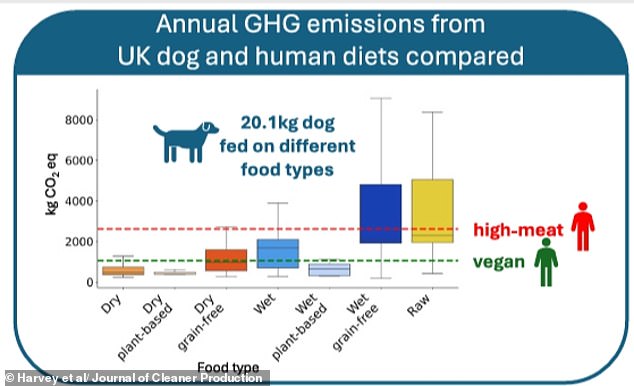
This chart shows how dogs on a wet grain-free or raw diet can have a greater environmental impact than humans on a vegan or high-meat diet
The researchers said that the diet of an average person in the UK, who eats a lot of meat, emits around 2,624kg of carbon dioxide equivalent each year.
However the average dog, weighing 20.1kg, fed on a raw or wet grain-free diet can have a dietary carbon pawprint of nearly double this.
Overall, the production of ingredients used in UK dog food is estimated to contribute to around one per cent of the country’s total greenhouse gas emissions, the team said.
And producing the same amount of UK dog food worldwide could generate greenhouse gas emissions equivalent to over half of those from burning jet fuel in commercial flights each year.
The analysis, published in the Journal of Cleaner Production, revealed striking differences in the environmental impact of commercial dog food, with the highest impact foods responsible for up to 65 times more emissions than the lowest rating options.
Dry food, not marketed as grain-free, tended to have a lower environmental impact than wet, raw or grain-free options.
Dog owners who want to reduce environmental impacts but not change food type should check the label description of meat cuts used in the food, aiming for a lower content of prime meat, experts say.
An increase in the use of plant-based dog foods is also likely to reduce emissions. However, the research team caution that only a small number of plant-based foods were available to test for this study.
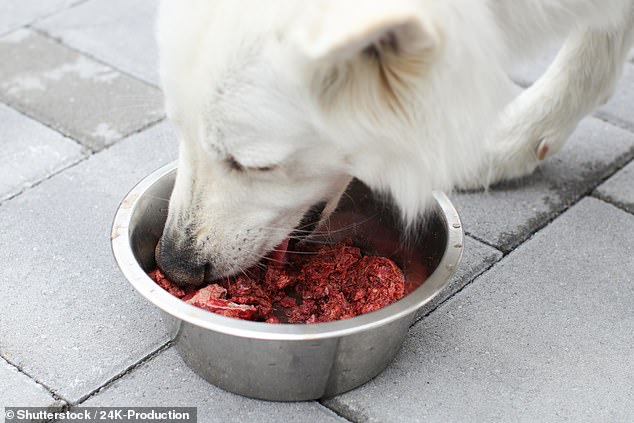
The researchers said grain-free, wet or raw foods can results in higher environmental impacts compared to standard dry kibble (file image)
‘The pet food industry should make sure meat cuts used are of the types not typically eaten by humans, and that labelling is clear,’ Mr Harvey added.
‘These steps can help us have healthy, well-fed dogs with a smaller pawprint on the planet.’
It comes amid a growing social media trend of owners feeding their pets platters of luxury raw meats.
Viral videos on TikTok and Instagram show canines being offered various cuts on platters, including chicken carcasses, goose necks, duck wings and lamb heads.
In the popular clips, the exceptionally–trained dogs wait for the signal from their master before devouring each one.
Often in less than a minute, the drooling mutts completely clear their plates accompanied by bone–crunching sound effects.
However, veterinarians now warn raw bones shouldn’t be given to dogs – regardless of how big or small the cuts of meat are.
Raw bones can cause choking, tooth fractures, gastrointestinal blockage or perforation, and bacterial contamination – while cooked bones are even worse.