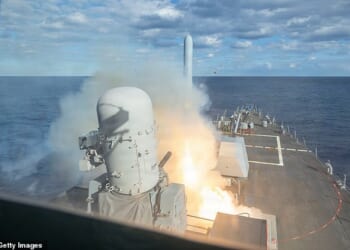
The market response to the United States’ and Israel’s military strikes against Iran has been global and almost universally negative. Stocks began slumping as early as Friday in a “risk-off” response as word of impending action spread. By Monday, major indexes in Asia and Europe were off by nearly 1% or more, relative to Friday’s close. Oil prices rose. The killing of the Middle Eastern nation’s supreme leader, Ali Khamenei, added extra uncertainty to the already volatile situation.
Key questions remain, including how long the conflict will last, the scope and consequences of counterattacks, and what Iran’s government will be like going forward.
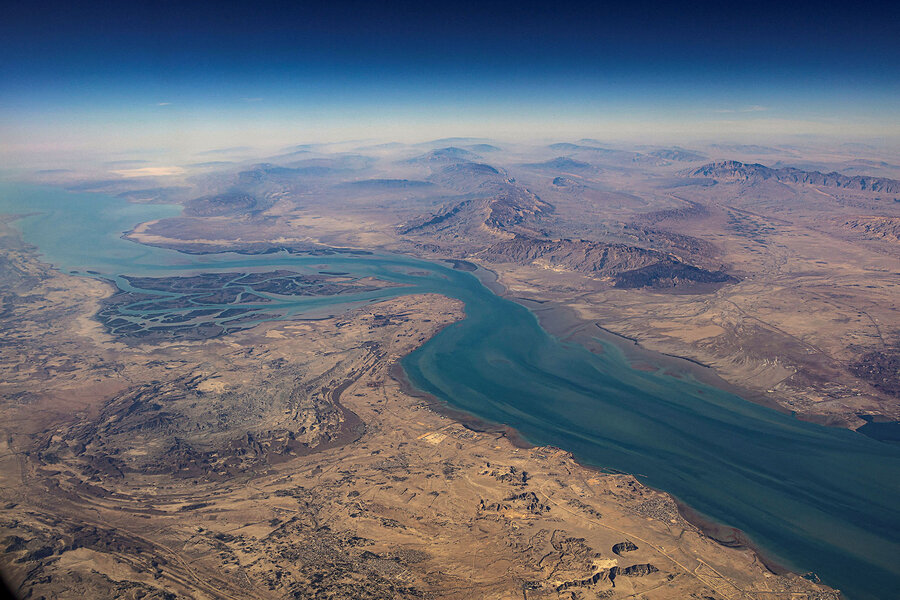
Oil prices represent the conflict’s key variable for the world economy. Besides its own output, roughly 4% of the world’s oil market, Iran also has the military capability to strike oil facilities throughout the Middle East. Iran also borders the strategic Strait of Hormuz through which almost a third of the world’s seaborne oil flows. As of Sunday, the strait has been effectively closed to commercial traffic, following the Iranian Revolutionary Guard Corps’ warning to ships not to pass.
Why We Wrote This
U.S. and Israeli strikes on Iran have pushed up oil prices and shaken global financial markets. Much depends on how long the conflict lasts and whether the Strait of Hormuz remains closed.
Three ships came under attack over the weekend, causing most oil tankers to drop anchor before entering the waterway, a critical energy chokepoint, through which over 20 million barrels per day of liquid petroleum pass, much of it bound for Asia. Brent crude, a benchmark for oil prices, surged more than 7% to nearly $80 a barrel. Some analysts say it could hit $100 if the conflict persists.
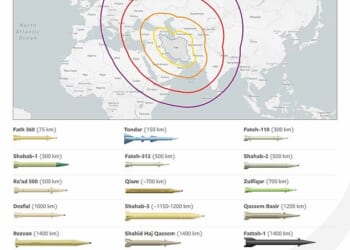
Since Saturday, Iran has launched missiles and drones toward the United Arab Emirates, Bahrain, Qatar, Kuwait, Jordan, and Saudi Arabia, hitting airports and other civilian infrastructure. But Ali Larijani, head of Iran’s National Security Council, said the targets aren’t Gulf nations, only U.S. bases in those nations. Iran has also retaliated against Israel.
In the U.S., energy analysts said the strikes against Iran would push average gasoline prices above $3 a gallon. (Earlier this year, the national average gas price briefly dipped below the $3-a-gallon mark for the first time in four years.)
By Monday, China’s Hang Seng index closed down more than 2%. Japan’s Nikkei lost 1.4%, and European bourses echoed those declines. In the U.S., futures prices for the S&P 500, the Dow Jones Industrial Average, and the tech-heavy NASDAQ were all down by 1% or more.
If the conflict drags on and oil prices stay high, the economic toll on nations, including the U.S., is likely to grow. One threat is higher prices, not only at the pump, but also for energy-intensive industries, such as airlines and trucking, chemical and steel manufacturing, and farming. Higher costs, in turn, typically act as a drag on growth.